2025 Holiday Stress Survey: Key Findings and Trends

The holiday season is a highlight for many, but the flurry of events, extra spending, and social obligations in November and December can leave people feeling overwhelmed. Balancing work, family, and personal needs during this time often strains mental and emotional well-being.
Grow Therapy’s 2025 Holiday Stress Survey shows people frequently put on a cheerful front while quietly struggling. That tension can make it harder to prioritize self-care or maintain regular mental health routines.
“As organizations close out the year and set new objectives, work can feel more demanding,” says Shae Williams, LMHC, a Grow Therapy provider. “Add family gatherings and social commitments, and it’s easy to run out of time for yourself.”
Key takeaways
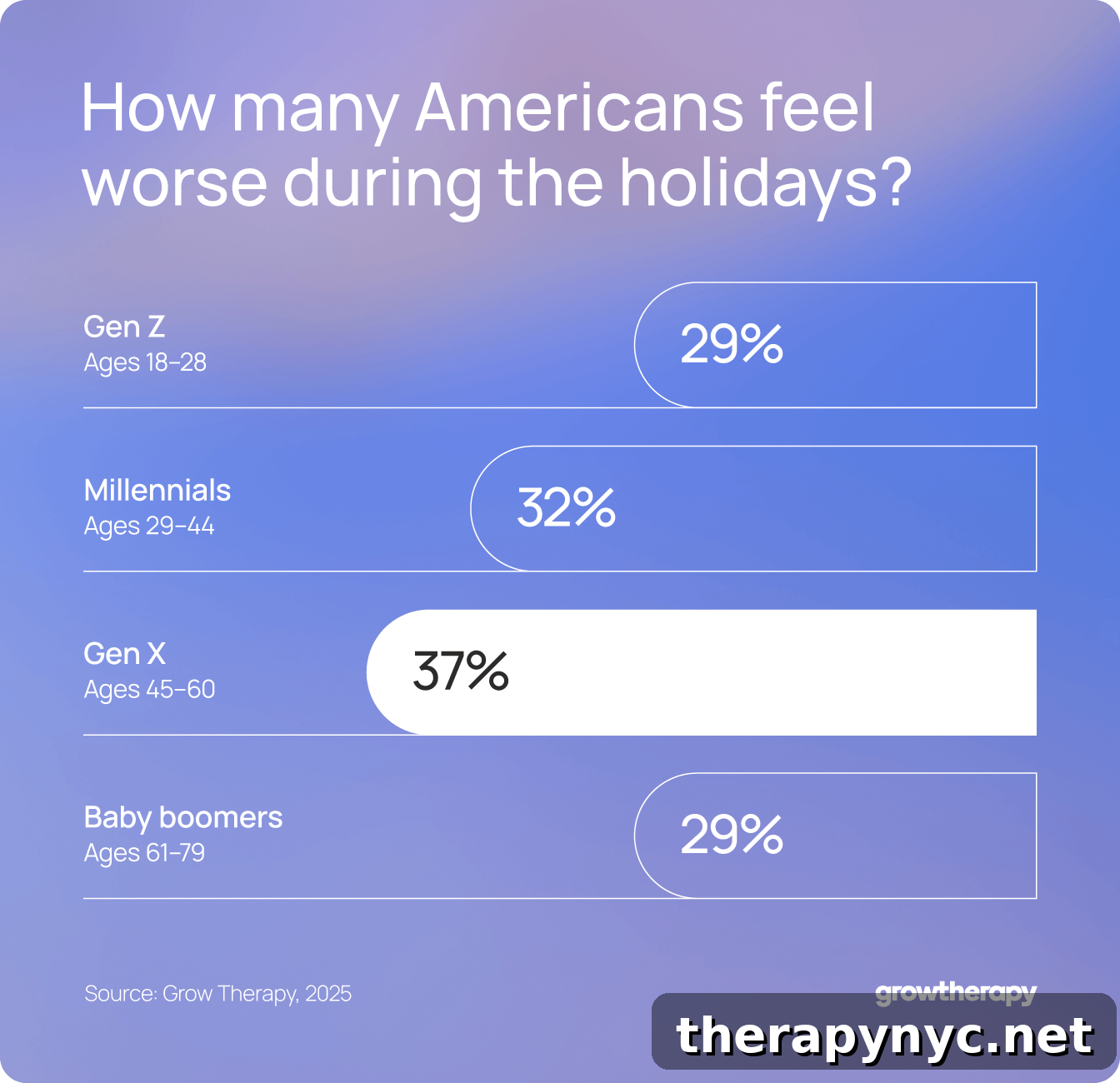
- 32% of Americans report feeling worse mentally or emotionally in November and December compared to other months.
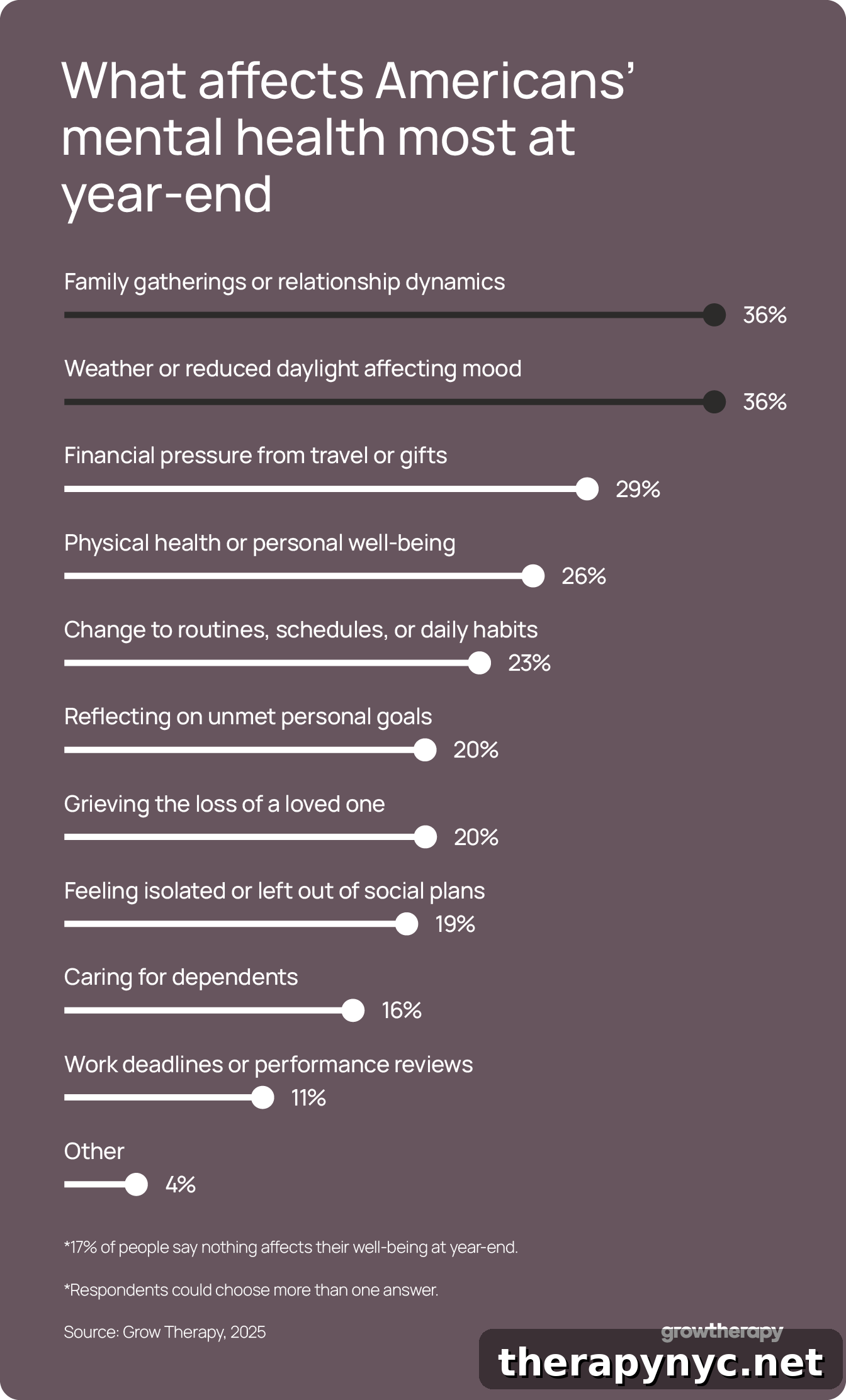
- Top stressors: family and relationship dynamics (36%), weather or reduced daylight affecting mood (36%), and financial pressures (29%).
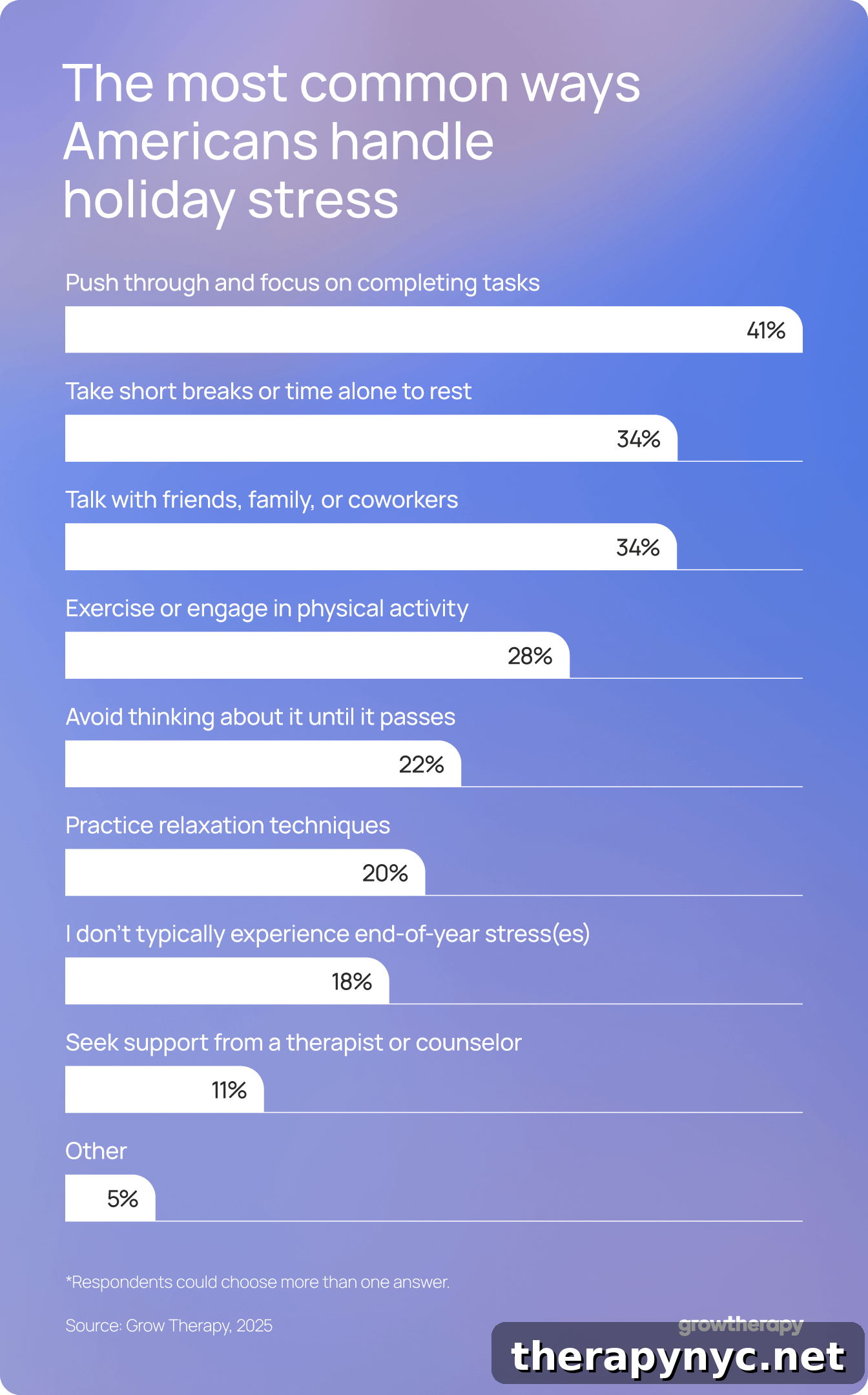
- Common coping strategies: 34% take short breaks or time alone to reset; 34% talk with friends, family, or coworkers.
- Barriers to continuing therapy: 42% of people who delayed or paused therapy say lower costs or better insurance would help; 37% say flexible or virtual scheduling would make it easier.
The hidden toll of the holidays
Holidays add tasks and expectations to already busy lives. For many, that means a noticeable rise in stress as they juggle year-end work demands, family responsibilities, and managing their own health. People who must meet multiple high-priority obligations at once are especially vulnerable to feeling burned out.
Stage of life matters. Gen X (ages 45–60), who are often raising children, caring for older relatives, and navigating peak career responsibilities, report the largest decline in mental and emotional well-being at year’s end. Gender also plays a role: many women shoulder a disproportionate share of household and childcare duties alongside their jobs, and over a third (37%) of women report feeling worse mentally and emotionally during the holidays compared with 26% of men.
Family and finances — America’s top holiday stressors
Holidays are meant for connection and celebration, but they can also mean more social obligations and higher spending. These pressures frequently contribute to mental strain.
More than one in three people (36%) say family gatherings and relationship dynamics have the biggest impact on their mood and mental health at the end of the year. The same share (36%) point to seasonal changes such as reduced daylight or colder weather. Financial strain from travel, gifts, and other holiday expenses is another leading source of stress (29%).
When family expectations and financial worries combine, the season can feel like “stressflation”—more emotional cost on top of monetary cost. Williams notes that disrupted routines, added obligations, and heightened expectations often amplify anxiety and burnout, particularly for women and Gen Xers.
The therapy trade-off: How holiday obligations push therapy off the to-do list
Busy seasonal schedules make it easy to deprioritize health. Nearly half (46%) of people who have attended therapy say they delayed or paused sessions at year’s end because other commitments took precedence. Younger clients are especially likely to put therapy on hold: 57% of Gen Z and 47% of millennials report deprioritizing therapy at the end of the year, compared with 42% of Gen X and 28% of baby boomers.
Parents of children under 18 are also more likely to delay therapy (59%) than those without young children (42%).
Common responses to rising end-of-year stress include powering through to complete tasks (41%), taking short breaks or time alone to rest (34%), and reaching out to friends, family, or coworkers for support (34%). These strategies can help in the short term, but sustained stress may require more focused care.
Costs, insurance, and scheduling block access to therapy during the holidays
Accessible, affordable care—like flexible online therapy—can help people manage seasonal stress, but cost and convenience often prevent follow-through. More than 2 in 5 (42%) of those who deprioritized therapy say lower costs or better insurance coverage would make it easier to continue, and 37% say flexible or virtual scheduling would help.
Other barriers include the perception that therapy is a long-term or expensive commitment, or uncertainty about finding a culturally compatible provider. Still, many Americans are open to short-term, goal-focused therapy to address seasonal stressors.
“If you’re struggling, you’re not alone,” Williams says. “Give yourself permission to set boundaries, slow down, and prioritize your well-being.”
Platforms like Grow Therapy aim to match people with licensed providers who fit their needs, offer flexible scheduling, and accept insurance or provide sliding-scale options.
Managing holiday burnout made easier with Grow Therapy
When emotional strain peaks near year’s end, accessible therapy can offer practical strategies and relief. Grow Therapy can’t handle your holiday checklist, but it can connect you with a licensed provider who helps you manage stress and build coping skills.
Consider exploring therapy options now to reduce burnout before the holiday rush. Book an appointment to find a provider who fits your schedule and needs.
Methodology
This survey of 2,458 U.S. adults (ages 18+) was conducted by YouGov for Grow Therapy from October 30 – November 3, 2025. Results are weighted to represent U.S. adults and have a margin of error of approximately ±3% at the 95% confidence level.