8 Online OCD Therapy Platforms Offering ERP-Based Care

Online therapy for obsessive-compulsive disorder (OCD) has expanded access to specialized care beyond local availability. Exposure and response prevention (ERP) remains the first-line psychological treatment for OCD, and research shows virtual ERP can be as effective as in-person treatment. However, ERP requires specialized training, and not every local clinician offers it. Online therapy platforms make it easier to find ERP-trained providers, compare costs, and coordinate therapy and medication when needed.
This guide compares leading online OCD therapy platforms, highlighting how they handle insurance, pricing models, and whether they offer medication management alongside therapy. Use these summaries to choose a platform that fits your needs, whether you prioritize ERP specialty, integrated psychiatry, or lower out-of-pocket costs.
Key takeaways
- ERP is the gold-standard treatment for OCD and can be delivered effectively via telehealth.
- Insurance-friendly and pay-per-session platforms can lower immediate costs compared with subscription models.
- Not every platform lists ERP-trained clinicians, so verify clinician training before booking.
- Some platforms combine therapy and psychiatry, which simplifies coordination when medication is part of care.
- Intensive virtual programs or higher levels of care may be appropriate for severe, treatment-resistant, or crisis-level OCD.
Best online OCD therapy platforms at a glance
| Platform | Takes insurance | Payment model | Medication management |
|---|---|---|---|
| Grow Therapy | Yes (wide network) | Pay-per-session | Yes |
| NOCD | Yes | Pay-per-session / program pricing | No |
| Talkspace | Yes (varies) | Pay-per-session and subscription | Yes |
| Talkiatry | Yes (in-network) | Pay-per-session | Yes (psychiatry-first) |
| Brightside Health | Yes | Subscription or bundled plans | Yes |
| BetterHelp | Limited by state | Subscription | Yes (via separate offering) |
| Charlie Health | Yes | Program-based (IOP) | Varies by state |
| Calmerry | No | Subscription | No |
1. Grow Therapy
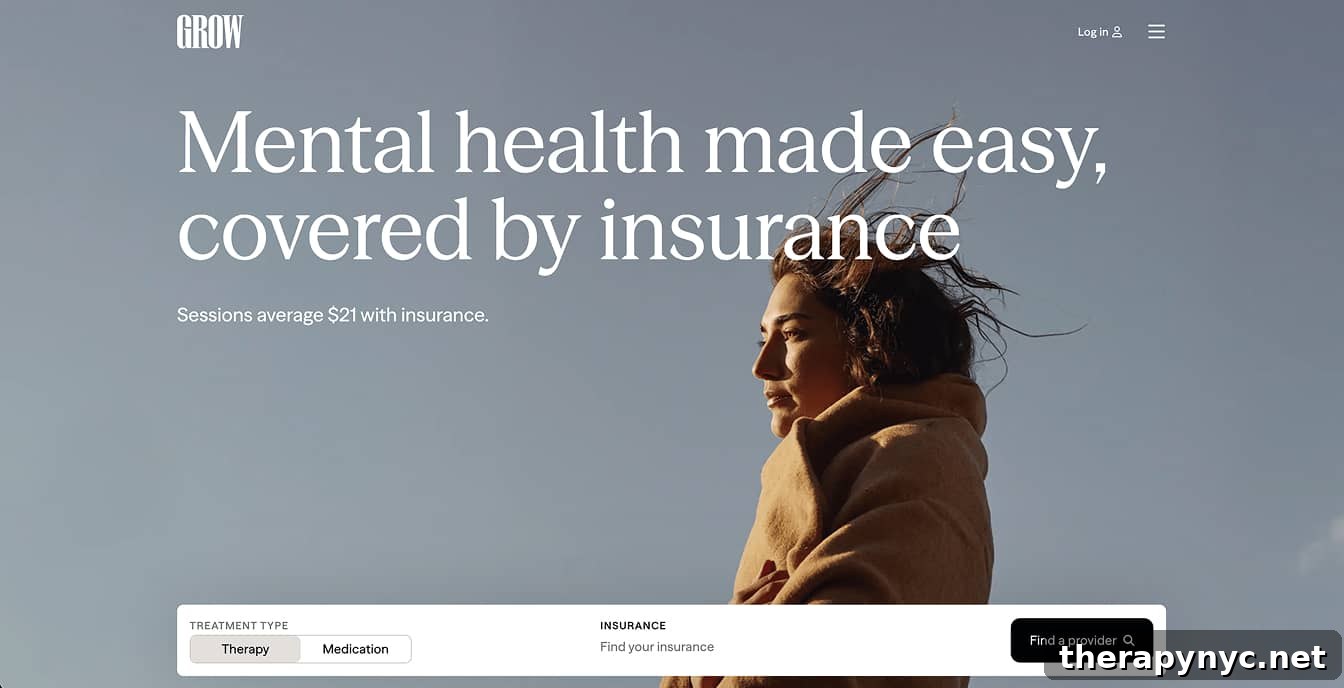
Grow Therapy is an insurance-friendly platform with a large national network of therapists and prescribers, many of whom list specialties such as exposure therapy and OCD treatment. Users can filter providers by insurance, specialty, language, identity, and availability. Sessions may be offered virtually or in person depending on the clinician. Grow Therapy also supports medication management, which is useful when SSRIs or other medications are part of an OCD treatment plan alongside ERP.
Cost and insurance
- Accepts many insurance plans, including Medicare and Medicaid in selected states.
- With insurance: many clients pay a typical copay (often low or $0 depending on plan).
- Without insurance: per-session cash rates vary by provider, often lower than subscription models for infrequent users.
Who it’s a good fit for
People who want to use insurance, choose a provider from a broad network, pay session-by-session, or integrate therapy with medication management.
| Pros | Cons |
|---|---|
| Online and in-person options depending on clinician | In-person availability varies by location |
| Transparent per-session pricing for many providers | Out-of-pocket costs depend on clinician and plan |
| Filtering tools to find ERP-trained clinicians |
2. NOCD
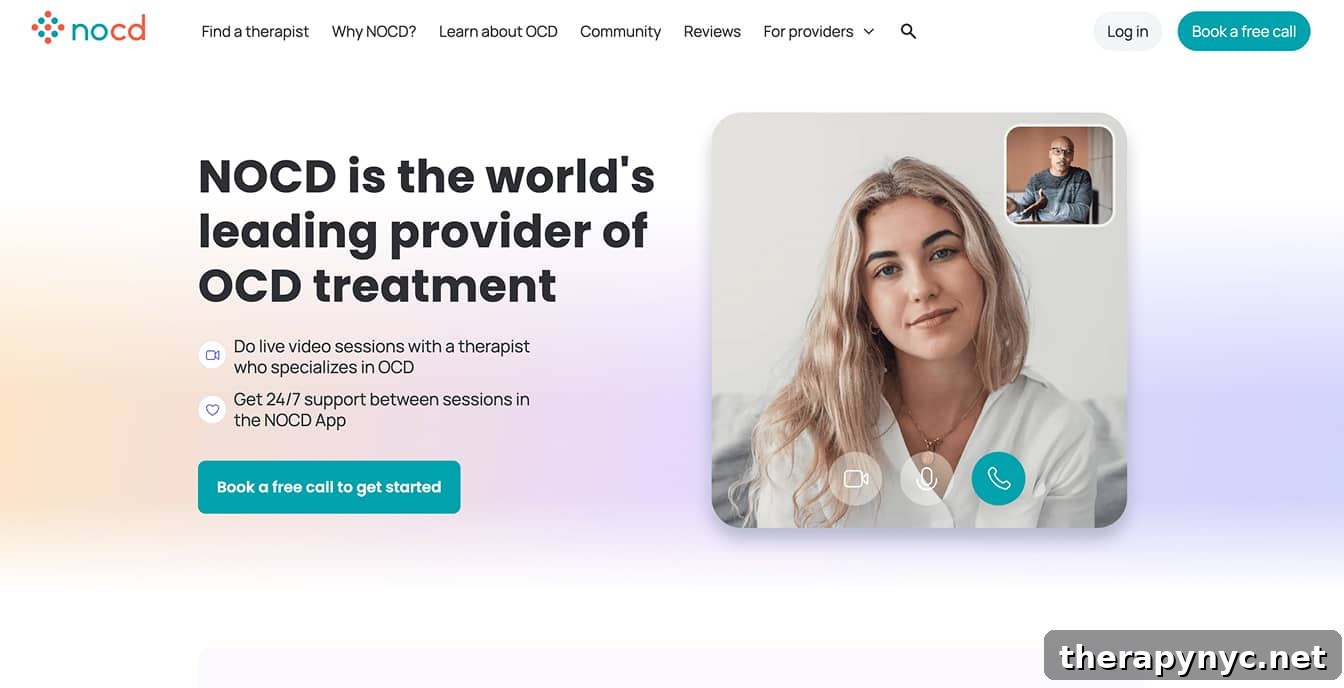
NOCD focuses specifically on OCD care and builds its services around ERP. All clinicians on the platform receive ERP-focused training, and NOCD combines live video sessions with between-session education, exposure-tracking tools, and peer support. Their offerings include care for children and family-involved options for younger patients.
Cost and insurance
- With insurance: costs can range from $0 to modest copays depending on your plan.
- Without insurance: NOCD may offer program pricing or pay-per-session options; payment plans are sometimes available.
Who it’s a good fit for
People who want a clinician who is specifically trained in ERP and who value structured tools and between-session support.
| Pros | Cons |
|---|---|
| All therapists trained in OCD-specific care | Does not include medication management on the platform |
| Structured supporting tools and community | Limited to OCD-focused care |
3. Talkspace
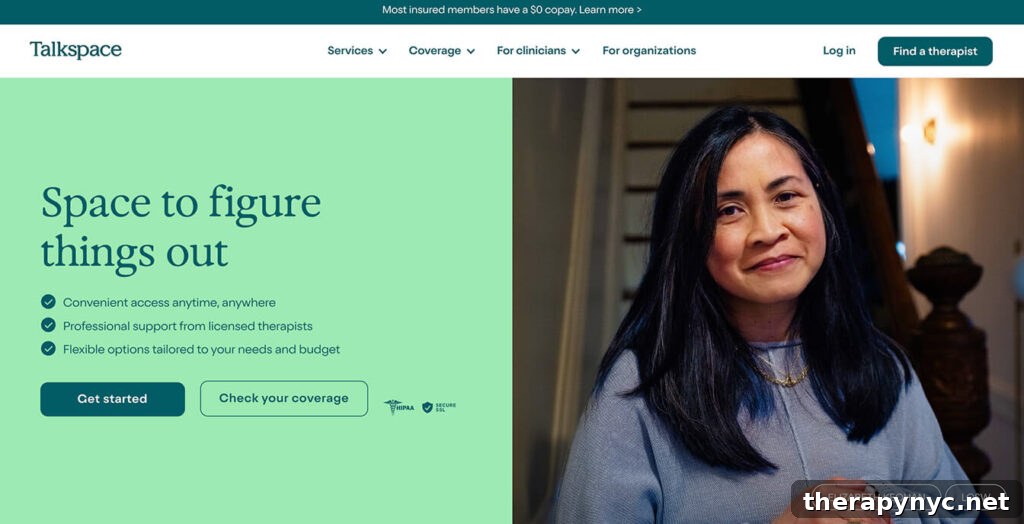
Talkspace is a general teletherapy platform combining messaging-based support with live video sessions. Therapist experience with ERP varies by clinician, so it’s important to review profiles and inquire about ERP training if OCD-specific care is your priority. Talkspace accepts many major plans and also offers psychiatric services on some plans.
Cost and insurance
- With insurance: copays vary by plan and carrier.
- Without insurance: subscription pricing is typical, often billed weekly or monthly with add-on sessions available.
Who it’s a good fit for
People whose insurance is in-network with Talkspace and who value a messaging-first experience alongside scheduled video sessions.
| Pros | Cons |
|---|---|
| Multiple communication formats (text, video, phone) | Therapist OCD training varies |
| Evening and weekend availability | Does not accept Medicaid in many states |
4. Talkiatry

Talkiatry is psychiatry-first and connects users to board-certified psychiatrists, with therapy offered in coordination with psychiatric care when appropriate. Talkiatry can refer to ERP-focused partners when intensive ERP is needed. This model is a strong option when medication evaluation and ongoing management are central to treatment.
Cost and insurance
- Generally in-network only; self-pay is not accepted.
- With insurance: many patients pay modest copays depending on their plan.
Who it’s a good fit for
People who expect medication to be a major part of their OCD care and who have in-network psychiatric coverage.
| Pros | Cons |
|---|---|
| Access to board-certified psychiatrists | No self-pay option |
| Good for medication-focused plans | May refer out for ERP-specific therapy |
5. Brightside Health

Brightside Health offers measurement-informed care with bundled monthly plans that can include therapy and/or psychiatry. The platform lists OCD among conditions treated and provides assessment-driven plans. Plans bundle a set number of video sessions with ongoing messaging, and higher levels of care may be available in select states.
Cost and insurance
- With insurance: varies by plan.
- Without insurance: subscription-style pricing with tiers for therapy, psychiatry, or combined care.
Who it’s a good fit for
People who want coordinated therapy and medication in a single subscription plan and those considering higher levels of virtual care.
| Pros | Cons |
|---|---|
| Coordinated treatment plans and measurement-based care | Session counts may be capped by plan |
| Free assessment and personalized plan | No in-person options |
6. BetterHelp
BetterHelp is a subscription teletherapy service that matches users to therapists based on an intake questionnaire. Communication options include messaging, live chat, phone, and video. Therapist expertise varies, so confirm ERP experience when seeking OCD-specific care. Psychiatry is typically provided through a separate offering where available.
Cost and insurance
- With insurance: limited acceptance; copays vary for eligible members.
- Without insurance: subscription pricing billed weekly or monthly.
Who it’s a good fit for
People who prefer subscription pricing and multiple communication formats and who do not require immediate ERP specialty verification.
| Pros | Cons |
|---|---|
| Many communication formats and group resources | Therapist ERP training varies and psychiatry is separate |
| Predictable subscription pricing | Limited insurance acceptance in many areas |
7. Charlie Health
Charlie Health provides virtual intensive outpatient programs (IOP) for ages eight through 64. Their OCD program is time-limited and focuses on combining individual therapy, peer groups, family sessions, and psychiatry as needed. IOPs are appropriate for people whose symptoms significantly disrupt daily life or who need a more intensive level of care than weekly therapy.
Cost and insurance
- Program-based billing; insurance coverage and self-pay availability vary by state and insurer.
- Many programs are billed as a complete episode of care rather than per session.
Who it’s a good fit for
People with severe, treatment-resistant, or crisis-level OCD who need structured, intensive treatment and family-inclusive care.
| Pros | Cons |
|---|---|
| Higher level of care with expert-led groups | Significant weekly time commitment |
| Includes psychiatry and family involvement | Pricing may not be publicly posted |
8. Calmerry
Calmerry is a subscription-based, cash-pay-only platform in many states that emphasizes unlimited messaging plus optional short live video sessions depending on the pricing tier. Calmerry lists evidence-based approaches such as cognitive behavioral therapy (CBT) among its treatment models, which can support OCD care when clinicians are ERP-trained.
Cost and insurance
- Does not accept insurance in many regions; receipts for out-of-network reimbursement may be provided.
- Subscription tiers vary by messaging and video session allowances.
Who it’s a good fit for
Uninsured people or those who prefer unlimited messaging and flexible, subscription-style access to a therapist.
| Pros | Cons |
|---|---|
| Unlimited messaging and journaling tools | Does not accept insurance widely |
| Multiple tiers to match needs | No integrated medication management on platform |
What to look for in an online OCD therapy provider
When seeking online OCD care, prioritize ERP expertise and a treatment plan tailored to your presentation. Before booking, ask clinicians or platforms these practical screening questions:
- Do they accept your insurance? Confirm coverage for mental health and whether telehealth sessions are covered in your state and plan.
- Are they trained in ERP? Ask about formal ERP training, supervision, and how much of their caseload involves OCD.
- Do they treat your OCD subtype and co-occurring conditions? OCD can present in many forms, and many people have anxiety, depression, or other co-occurring conditions that require experienced care.
- Do they offer psychiatry or medication management? If medication may be part of your plan, integrated care simplifies coordination.
- Can you review provider profiles and switch therapists? The ability to browse credentials and switch providers helps you find the right fit.
- Is scheduling flexible? ERP requires consistency and between-session work; evening or weekend availability can make adherence easier.
- Can they support higher levels of care? For severe or treatment-resistant OCD, check whether the platform can provide or refer to intensive programs.
Find the right OCD therapist
ERP asks you to tolerate discomfort and resist rituals—work that benefits from a clinician with ERP training and a collaborative relationship you trust. Online platforms broaden your options, making it easier to locate ERP-trained clinicians, compare cost and coverage, and coordinate therapy and medication when needed. Review profiles, ask about ERP experience, and choose the platform and clinician that best match your clinical needs and practical preferences.