Grief in America: Why 67% of Americans Grieve Alone
Grief is often associated with death, but many life changes that aren’t fatal can cause profound loss. Job loss, financial instability, the end of a relationship, or a decline in health can all trigger deep emotional pain and long-lasting disruption.
To better understand how Americans experience and cope with grief beyond bereavement, Grow Therapy commissioned a national survey. The findings reveal a large gap between the number of people struggling with loss and those seeking professional help. This report summarizes what people are feeling, how grief affects daily life, and how different generations approach care.
What you should know
- 67% of grieving Americans have not sought professional help, often relying on informal coping strategies like time alone or humor.
- The emotional toll of loss often disrupts daily life: 39% report feeling disconnected or numb, and 36% experience trouble sleeping.
- Grief now frequently involves financial loss: 37% cite loss of financial stability and 20% report job loss as major triggers.
- Younger adults report the most benefit from professional care: Millennials (25%) and Gen Z (23%) are the most likely to say therapy helped them process grief.
Almost 70% of grievers skip professional help
The survey finds a significant treatment gap: 2 in 3 Americans (67%) who have experienced grief did not seek professional support. Many rely on personal strategies or community support, but without clinical guidance, complex or prolonged grief can be harder to resolve.
As Grow Therapy provider Rugiatu Bahr, PMHNP, notes, “Healthy coping strategies are essential, but they work best when combined with deeper support for grief that is complex, traumatic, or long-lasting.”
When people do not access clinical care, they typically use informal methods to manage their emotions. The most common approaches include:
- Spending time alone to process feelings — 53%
- Using humor or shared laughter — 47%
- Spending time in nature or with animals — 43%
- Small acts of kindness — 41%
- Talking with someone who has experienced similar loss — 39%
- Spiritual or religious guidance — 31%
- Journaling or creative expression — 16%
These coping tools can be helpful, especially in the immediate aftermath of a loss. Mental health professionals emphasize that while these strategies support resilience, they should not replace care when grief is persistent or interferes with functioning.
“Humor, acts of kindness, and time in nature nourish the spirit,” says Grow Therapy provider Monica D. Randle, LPCC, LPC. “They are healthy so long as they don’t prevent someone from processing the grief fully.”
How grief impacts daily functioning
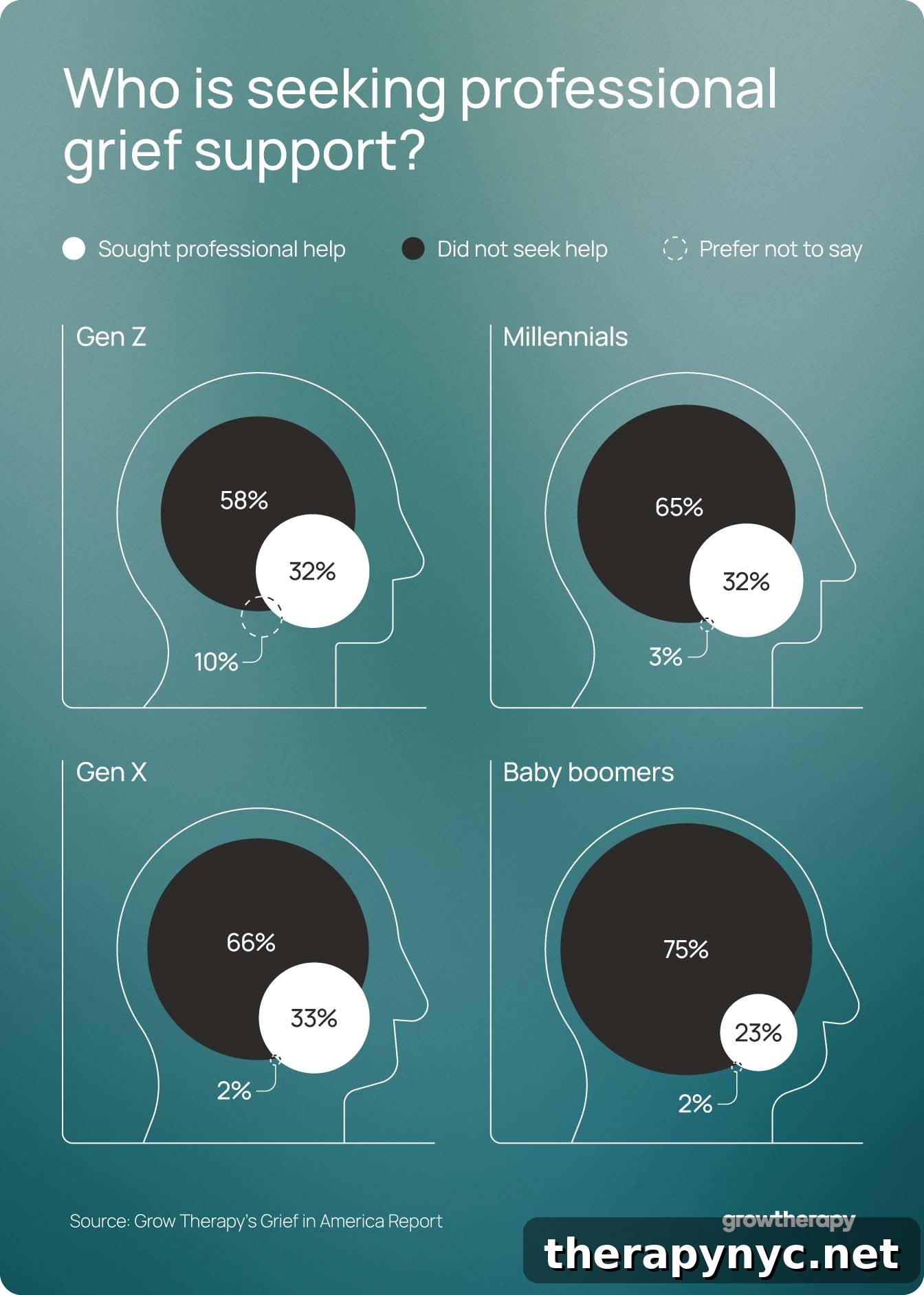
Grief can produce emotional and physical symptoms that overlap with clinical depression and interfere with daily life. Survey respondents reported a range of reactions that affect their mood, sleep, and motivation.
Common symptoms include:
- 40% report crying or frequent waves of sadness.
- 39% feel disconnected or emotionally numb, losing interest in activities they once enjoyed.
- 36% experience trouble sleeping or insomnia.
- 21% struggle to get out of bed in the morning.
These experiences vary by gender and generation. Women are more likely to report overt crying (52% of women vs. 28% of men), while both genders report similar difficulties with daily motivation, such as getting out of bed.
Men report slightly higher use of substances to cope (11% vs. 7%), whereas women more often describe emotional numbness (42% vs. 35%). Age also influences how grief shows up: younger adults report more challenges with self-care and hygiene, while some sleep and numbness issues are equally or more common among older adults. These differences show that grief manifests in diverse ways and that supports should be tailored to individual needs.
Loss of financial stability ranks as a top emotional trigger
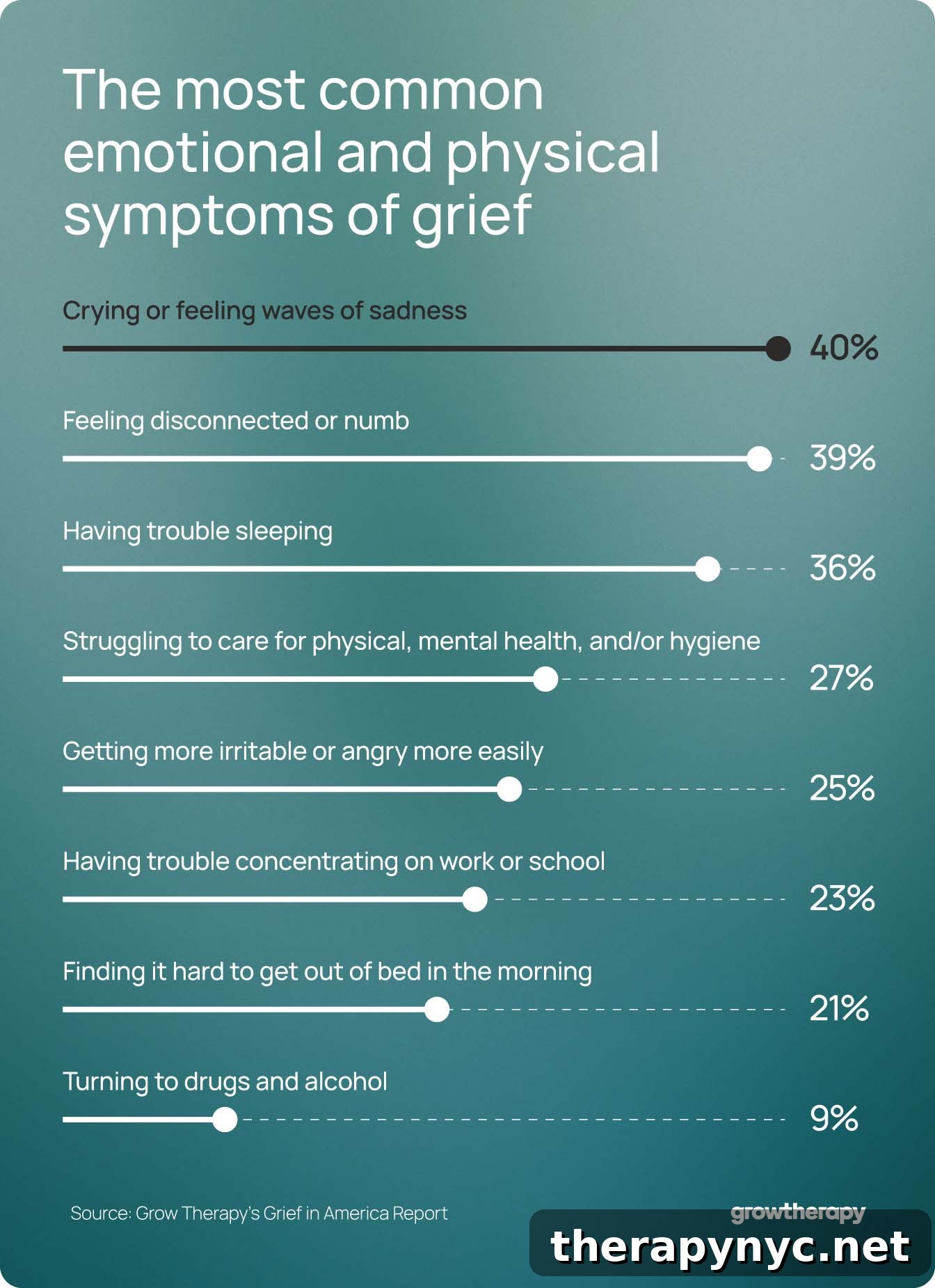
Not all grief stems from death. While the death of a family member or loved one is the most commonly reported disruption (53%), many other life changes cause strong emotional reactions. The survey highlights non-death losses that carry significant emotional weight, including:
- Loss or disruption of financial security — 37%
- Loss of a pet — 33%
- Decline in personal health or physical ability — 30%
Younger generations report different priorities: financial hardship is the top emotional trigger for millennials (45%), slightly higher than the death of a loved one (44%). By contrast, baby boomers are most affected by the death of a family member (69%), followed by declines in their own health (36%).
These generational differences show how economic insecurity, health changes, and bereavement create different emotional burdens. Regardless of the trigger, the common denominator is the need for care and compassionate processing to move forward.
As Monica D. Randle, LPCC, LPC, emphasizes, giving yourself grace and allowing the stages of grief to unfold are essential. Healthy coping and self-regulation support healing, but they should not distract from confronting and processing the underlying loss.
Generational attitudes toward professional support
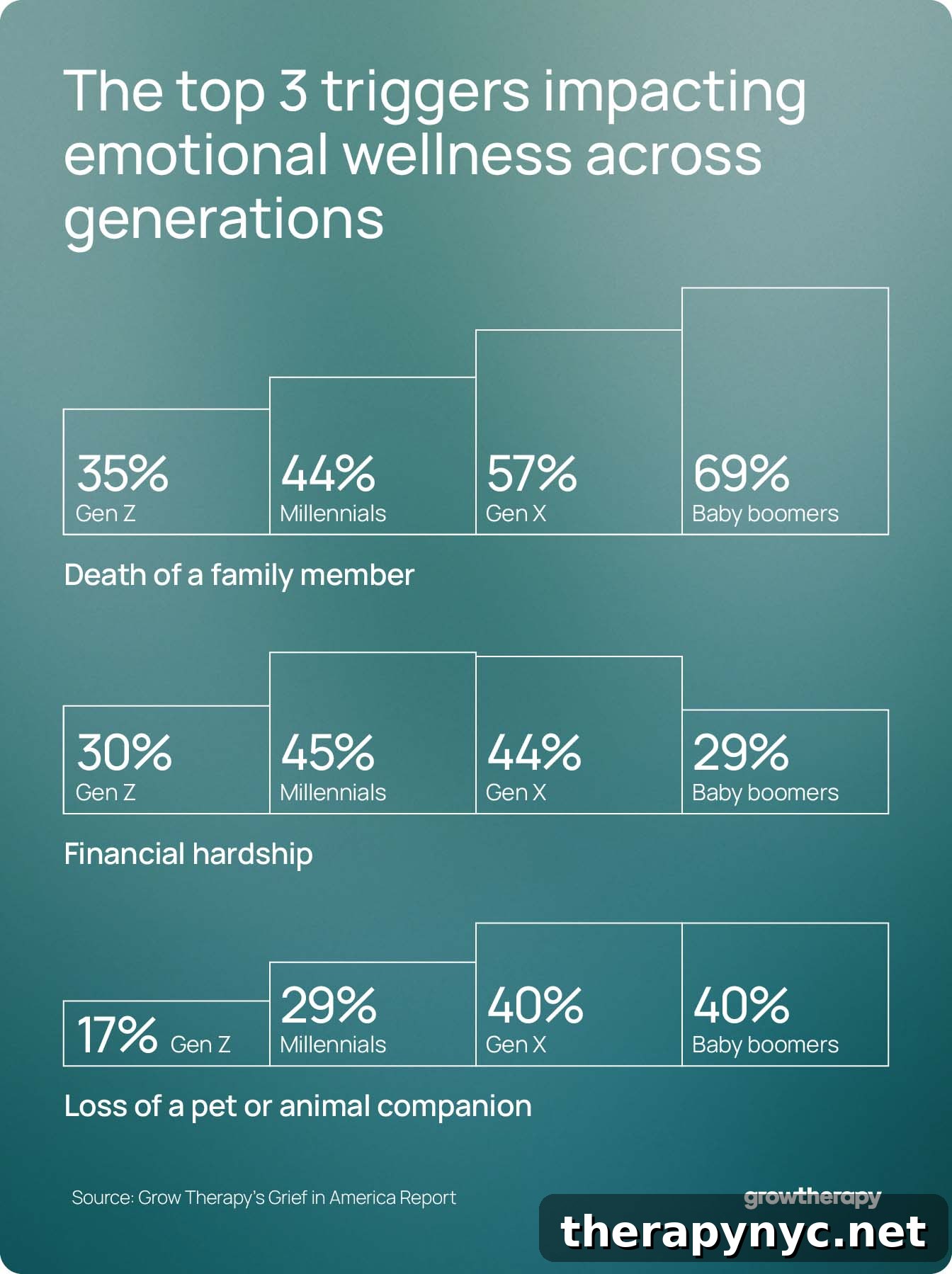
Although many people use non-clinical strategies, younger generations are more likely to seek professional help. Gen Z (32%), Millennials (32%), and Gen X (33%) report higher rates of obtaining therapy or counseling for grief compared to baby boomers (23%).
These groups also report that therapy was helpful in processing their loss, indicating growing acceptance of evidence-based mental health care for both death and non-death losses. This trend underscores the importance of accessible grief therapy and clinical support for those dealing with financial stress, relationship loss, or health declines.
What this means for healing grief
Grief in America is varied and widespread. While many people rely on personal and communal coping strategies, the fact that nearly 70% of grieving Americans have not sought professional help means millions may be managing persistent distress without clinical support.
Grow Therapy connects people with licensed therapists and providers who offer evidence-based, personalized grief interventions. Integrating informal coping methods with professional tools can support deeper and more durable recovery.
If you or someone you know is navigating a major life change, you do not have to manage it alone. Professional grief support can help you process loss, restore daily functioning, and rebuild stability.
Methodology
The survey was conducted by YouGov for Grow Therapy and was fielded between November 6–7, 2025. The results are based on 1,254 completed surveys. Data are weighted, and the margin of error is approximately ±3% for the overall sample at the 95% confidence level.