Perimenopause Mental Load: Hidden Strain on Mood and Memory

Awareness of perimenopause is high among many women, yet open, informed conversations remain uncommon. Grow Therapy surveyed 1,007 U.S. adults assigned female at birth, ages 18 and older, to explore this gap between awareness and care. The findings show that while most people recognize perimenopause as a natural life stage, discussions about its emotional and mental impacts are often missing from medical visits.
That silence frequently pushes people to seek answers on their own. Without professional guidance, many may misattribute or internalize symptoms that have psychological roots, increasing confusion and distress.
Perimenopause is the transitional period before menopause when menstrual cycles begin to change and the body shifts hormonally. According to the Mayo Clinic, it typically starts in the 40s but can begin in the 30s or even the 50s. While this report uses the term “women” for brevity, we acknowledge that this transition affects most people assigned female at birth (AFAB), regardless of gender identity.
Popular culture often reduces perimenopause to hot flashes, but the reality is broader. For many, perimenopause combines physical symptoms with significant psychological changes. Our data shows that anxiety, mood swings, and cognitive difficulties such as “brain fog” are as commonly reported as physical signs.
This report focuses on the often-overlooked mental and emotional toll of perimenopause, the barriers preventing people from seeking care, and how different generations experience and respond to this transition.
Key takeaways
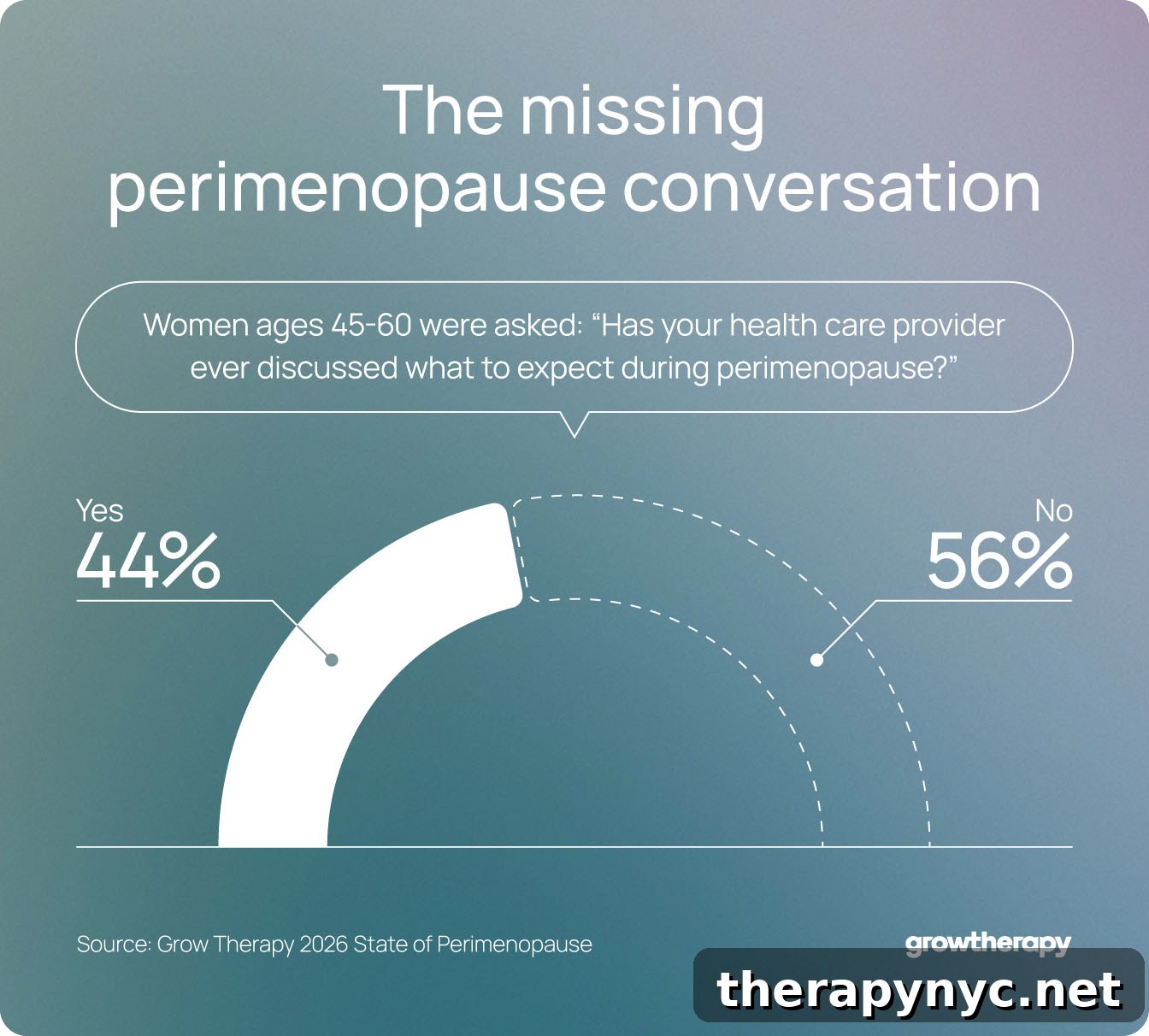
- Most (94%) of respondents are familiar with perimenopause, yet 56% of people aged 45–60 report that a health care provider has never discussed it with them.
- Respondents recognize the mental impact: 74% cite mood swings and 51% cite anxiety as symptoms.
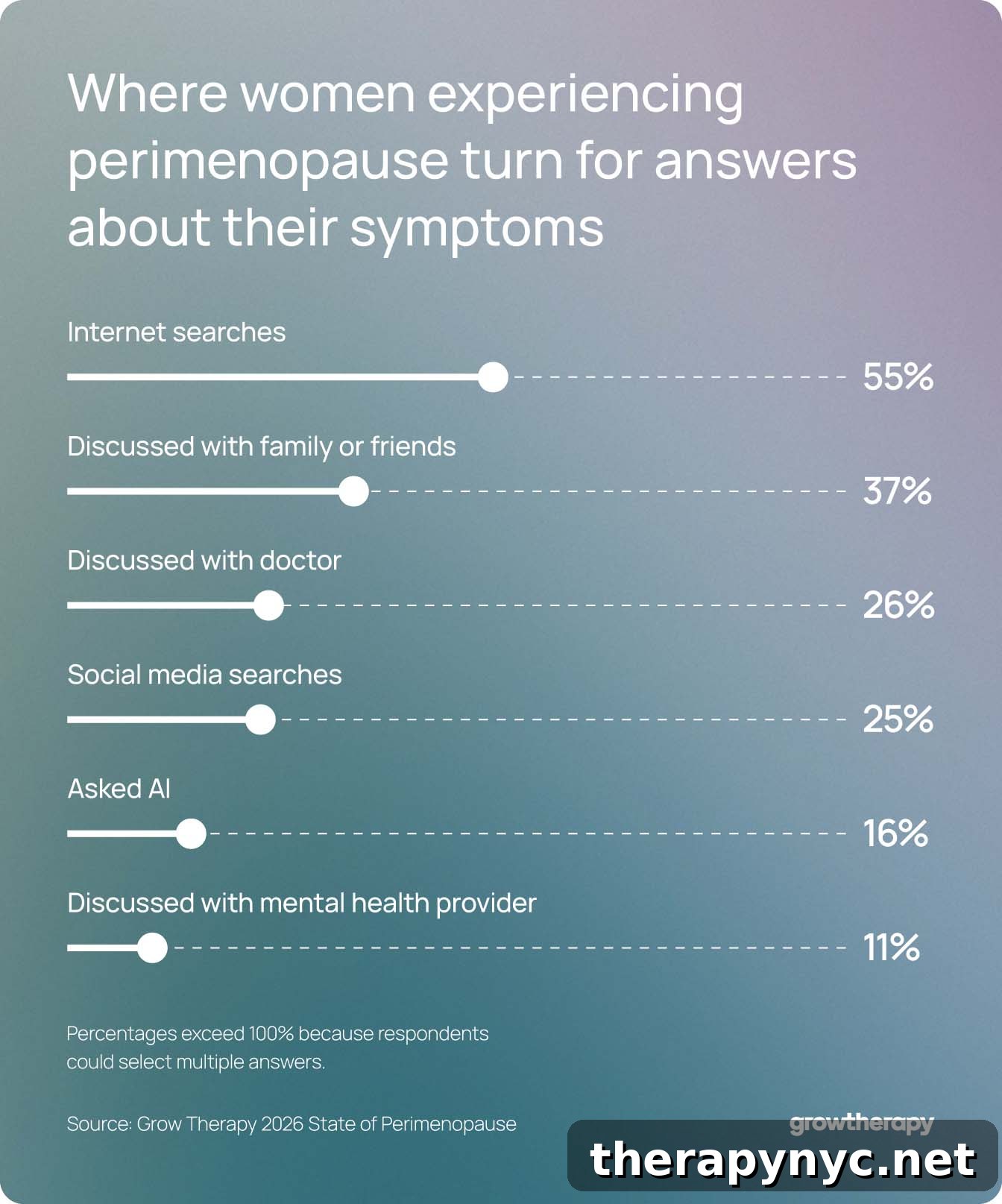
- While 55% searched online for information about symptoms, only 11% discussed them with a mental health therapist.
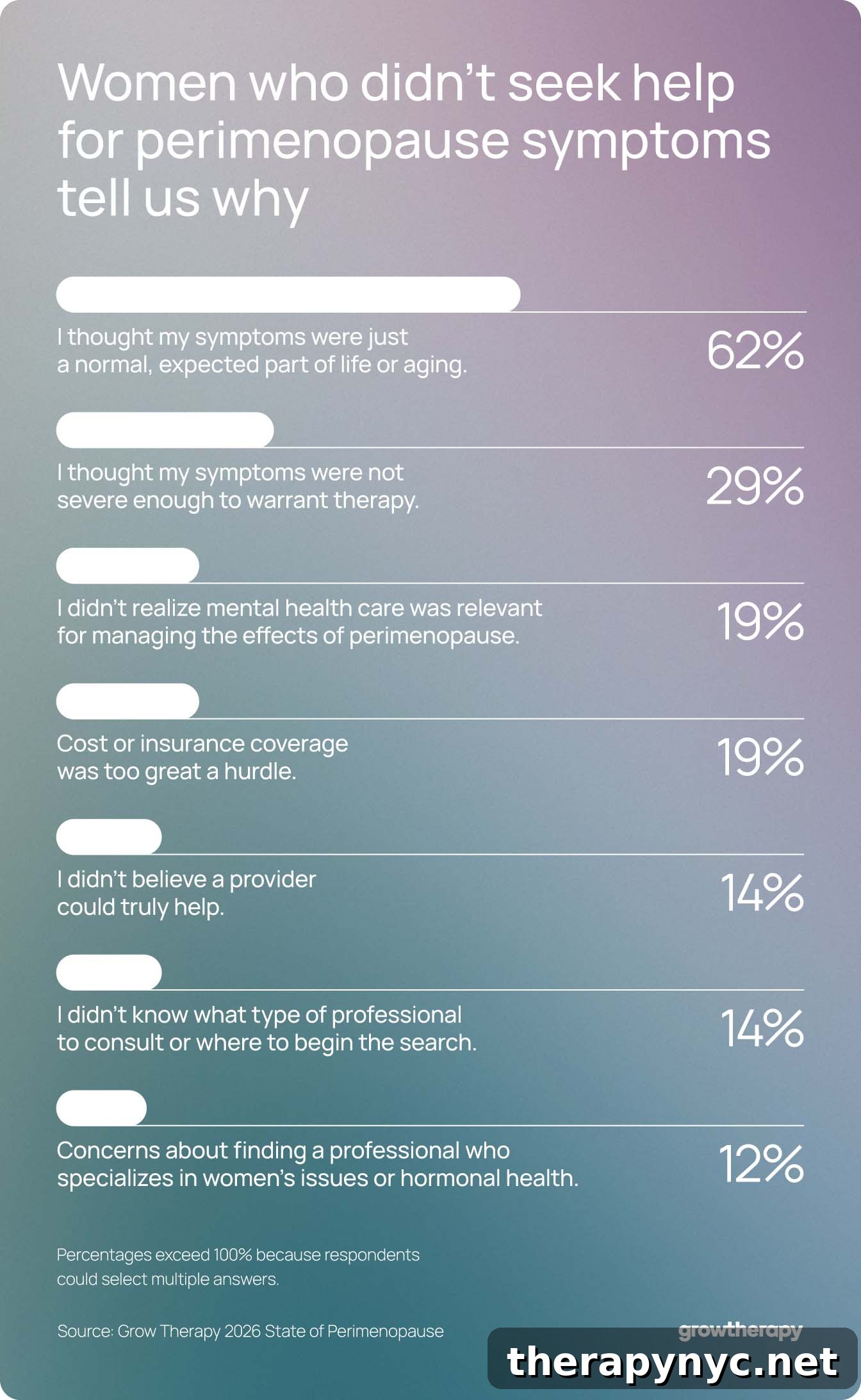
- Beliefs that symptoms are “normal” or “not severe enough” prevent many from seeking care—62% and 29%, respectively.
The “silence gap” between awareness and care
Perimenopause is widely recognized, but conversations that could guide care are often absent from clinical visits. Although 94% of respondents know the term perimenopause, discussions about what to expect and how to manage symptoms are not happening regularly in the exam room.
This gap is evident across age groups. Among respondents:
- Ages 18–29: 73% have never discussed perimenopause with a provider
- Ages 30–44: 58% have never discussed it
- Ages 45–60: 56% have never discussed it
- Ages 60+: 63% have never discussed it
Without clear medical guidance, many are left to manage sudden physical and emotional changes alone. Social norms also play a role: as Lauren Jones, LICSW and Grow Therapy provider, explains, many people have spent years prioritizing others’ needs and may be unfamiliar with asking for help, which contributes to feelings of isolation and fear.
The gap shows up in care-seeking behavior. Less than half (45%) of those who experienced symptoms consulted a primary care doctor or OB-GYN, and only 13% spoke with a mental health professional—revealing a breakdown in the pathway from recognition to treatment.
The mental toll of anxiety and mood swings takes center stage
Medical research historically emphasized physical symptoms like hot flashes, partly because women were underrepresented in clinical trials for many years. Today, growing awareness and patient advocacy are expanding attention to mental health impacts.
The survey confirms that mental and cognitive symptoms are commonly associated with perimenopause: 74% link mood swings or irritability, 51% link anxiety, and 51% associate “brain fog” or difficulty focusing with the transition. Forty-six percent identify depression, 36% report lowered self-image, and 30% report impacts on family relationships.
Recognition of symptoms varies by generation. Sixty percent of Gen X respondents identify brain fog as a symptom, compared with 39% of Gen Z. Millennial respondents (ages 29–44) name mood swings and anxiety as top concerns, while those ages 45–60 more often point to hot flashes as their primary issue. This pattern likely reflects evolving awareness of mental health among younger cohorts.
Dr. Google is filling the therapist gap, but at a risky cost
When professional conversations are missing, the internet becomes a primary source of information. Fifty-five percent of respondents who experienced perimenopause symptoms searched online for answers, while 37% turned to family and friends.
Online communities can provide valuable connection and reassurance, but they are not a substitute for clinical care. Lauren Jones, LICSW, highlights common challenges she sees in clinical practice—anger, exhaustion, anxiety, and isolation—and notes that therapy can help people name their experiences, express needs, and develop coping strategies.
Although 49% of respondents learned most about their symptoms online, the quality of online information is uneven: 59% of those who looked online say they trust what they find only “with caution” or encounter conflicting advice. Trust in digital information also differs by age—56% of millennials say they trust online health information “completely,” compared with 12% of baby boomers—underscoring generational differences in how people use the web for health guidance.
The “normal” becomes a barrier to care
Many respondents who did not seek professional help explained that they believed symptoms were simply “normal” (62%), or “not severe enough” to justify a visit (29%). This belief prevents people from accessing support that could improve daily functioning and quality of life.
Rugiatu Bahr, PMHNP and Grow Therapy provider, stresses that normal does not have to mean suffering. Seeking care is not a sign of weakness but a way to gain tools, understanding, and support during a significant life transition.
About 29% of survey respondents said they navigated symptoms without seeing a health care professional, highlighting the need to change perceptions so that “normal” does not mean “unsupported.”
What this means for navigating perimenopause
Choosing a therapist or health provider who offers objectivity, clinical knowledge, and empathy can make a meaningful difference. Perimenopause involves real physical and emotional changes, but you do not have to manage them in isolation.
Grow Therapy aims to bridge the gap between symptom recognition and professional support by connecting people with clinicians who understand hormonal transitions and their mental health effects. Therapists in our network work with clients to address brain fog, depression, anxiety, and other challenges with practical strategies and compassionate care.
You don’t need to reach a breaking point to seek help. Prioritizing mental health during this transition can improve daily life. Find a Grow Therapy provider who specializes in women’s health and hormonal transitions for AFAB individuals and take the first step toward better support.
Methodology
The survey was conducted by SurveyMonkey Audience for Grow Therapy and fielded November 20–21, 2025. The results reflect 1,007 completed surveys from U.S. adults assigned female at birth. Data are unweighted; the margin of error for the overall sample is approximately +/- 3% with a 95% confidence level.