Study Finds Women Caregivers Face Higher Mental Strain Than Men

Many Americans now juggle a paid job alongside unpaid caregiving for children, aging parents, or sick relatives—and that dual responsibility often comes at the cost of their own mental and physical health. A recent Grow Therapy survey of 1,260 U.S. adults found that 53% of employed caregivers say their caregiving duties interfere with attending to their own mental well-being.
The burden is unevenly distributed. Women carry a substantially heavier emotional load than men. Overall, two-thirds (66%) of caregivers describe the stress of balancing work and home as “intense,” and that rises to 75% among working women.
Yet women are also more likely to seek help: 65% of women are open to or are actively receiving mental health support compared with 60% of men.
Key takeaways
- 75% of working women caregivers report intense emotional and mental strain, versus 56% of men.
- 58% of working women say balancing work and caregiving gets in the way of managing their mental health, compared with 47% of men.
- Women report higher rates of stress-related symptoms, including sleep problems (49%) and brain fog (44%).
- Despite the strain, 52% of women view their job as a source of personal fulfillment, compared with 40% of men.
- Women (65%) are more open to therapy than men (60%), but only 14% of those currently struggling are receiving professional support.
Caregiving often prevents women from meeting their own emotional needs
Working women who provide care face unique challenges when it comes to self-care. In the survey, 58% of female caregivers reported that caregiving responsibilities prevent them from meeting their emotional needs, compared with 47% of male caregivers.
This gap likely reflects how household and caregiving duties remain disproportionately assigned to women. Studies such as Deloitte’s 2025 Women at Work report show women still handle the majority of child and adult care responsibilities. When women shoulder more of the logistical and emotional labor at home, the cumulative effect makes it harder to preserve their own health.
Caregiving takes a measurable toll. The AARP’s 2025 Caregiving in the US report finds caregivers lose an average of four days per month to poor mental or physical health that prevents normal activities—days when they can’t function well enough for themselves, much less for others. For a woman juggling career and household responsibilities, those lost days can mean the difference between stability and crisis.
Different stress, same struggle: How gender shapes caregiver burnout
Caregiver stress shows up in different ways for men and women. Our survey reveals distinct patterns in burnout-related symptoms.
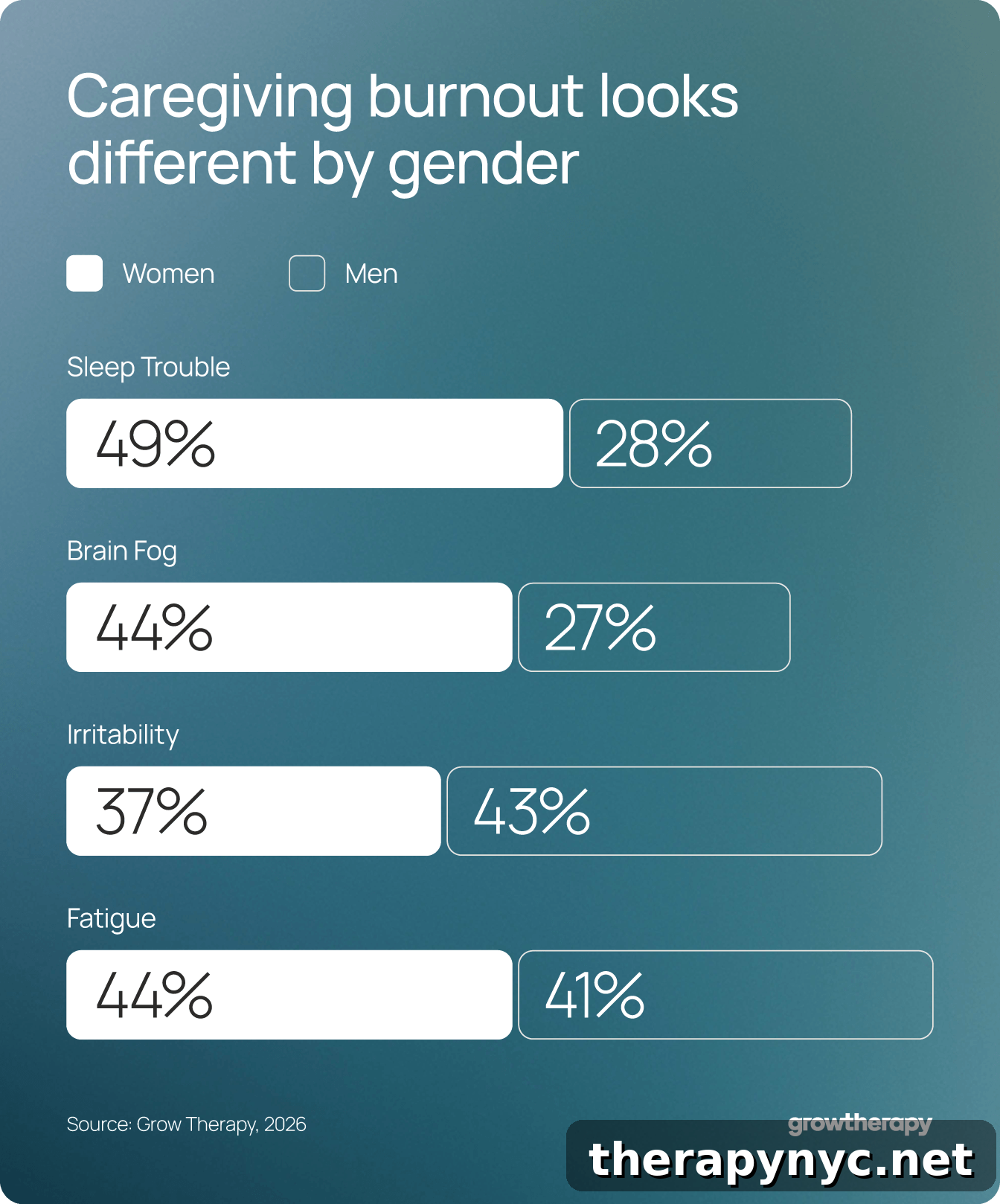
Men were more likely to report irritability or a short temper (43% vs. 37% of women). Women, however, reported much higher rates of exhaustion and cognitive symptoms:
- 49% of women report sleep trouble, compared with 28% of men
- 44% of women report brain fog, compared with 27% of men
These symptoms often carry into the workplace. Difficulty concentrating, memory lapses, or emotional volatility raise the risk of burnout on the job and make it harder to sustain performance and meet expectations. Recognizing when stress has moved beyond normal overload to a health concern is a critical first step toward getting support.
Grow Therapy provider Monica D. Randle, LPCC, LPC, advises watching for signs such as excessive worry, persistent fatigue, loss of interest in usual activities, heightened irritability, and social withdrawal—signals that caregiving demands may have become overwhelming and professional care could help.
The relationship between sleep and mental health is especially important. Research shows sleep problems can both trigger and worsen anxiety and stress, creating a cycle where lack of rest increases emotional strain and that strain further interferes with sleep. Breaking that loop is essential for recovery and maintaining daily functioning.
Why work matters to women caregivers
For many women, paid work provides identity, financial stability, and personal fulfillment alongside caregiving duties. In this survey, 52% of female caregivers said their job is a source of personal fulfillment, compared with 40% of men. Preserving mental health can therefore protect an important source of meaning in their lives.
At the same time, ongoing stress undermines that fulfillment. Other research shows a sizable share of working women report declining mental health and rising stress over the past year. Supporting the mental well-being of women caregivers not only helps them personally but can also sustain their engagement and satisfaction at work.
Many caregivers want therapy, but few have started
There is an encouraging willingness to seek help: 65% of women caregivers and 60% of men are open to professional mental health support. Yet only 14% of working women caregivers currently report being in therapy. That gap indicates barriers between intent and access.
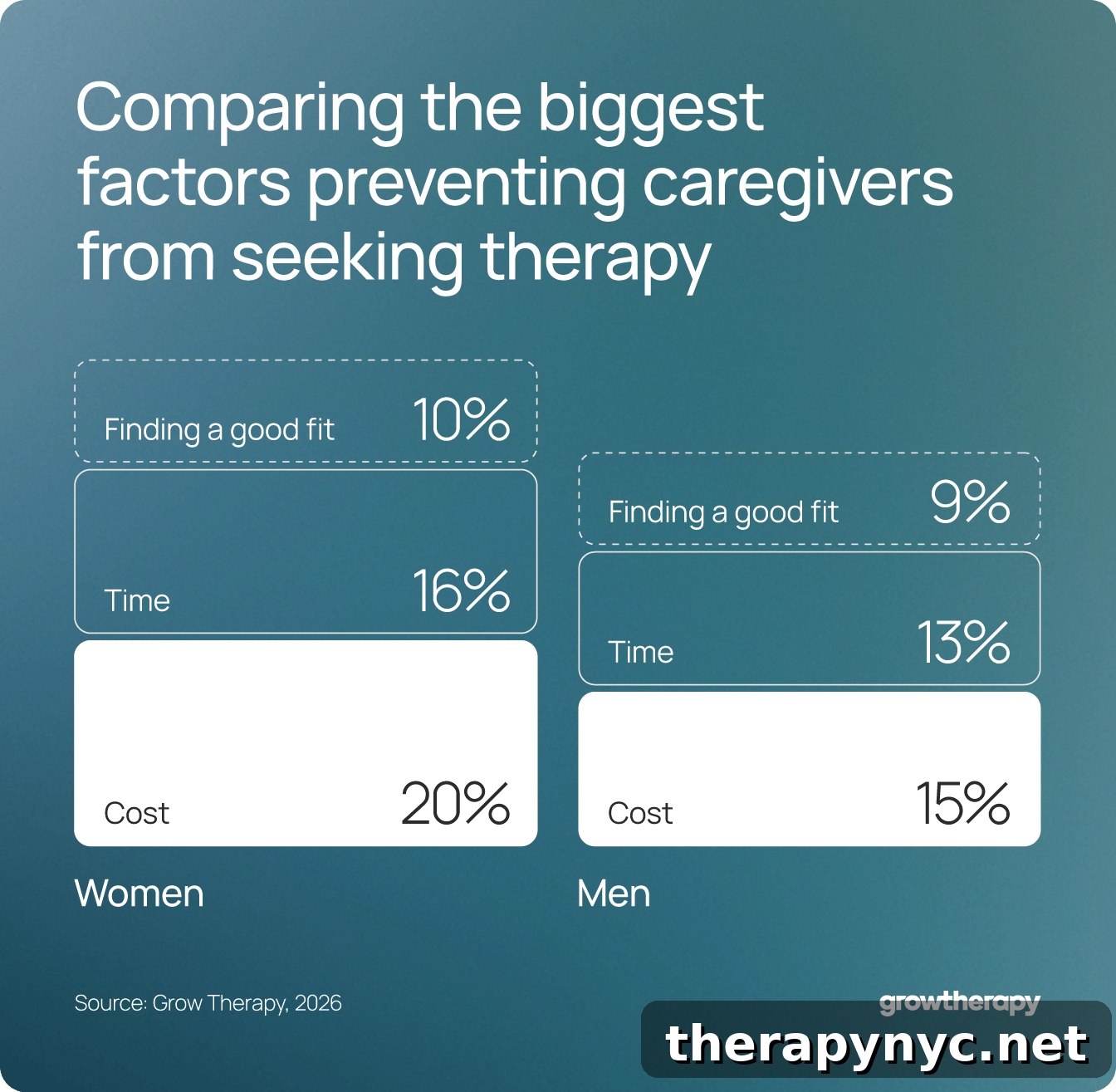
Common obstacles include cost (20% of women cited this) and lack of time (16%). These issues were slightly less common among men in the survey. Additionally, 10% of caregivers said they don’t know where to find a therapist who would be a good fit.
Addressing practical barriers—cost, scheduling, and finding the right provider—can make it easier for caregivers to start therapy. Virtual care, insurance coverage, and flexible appointment times are solutions that reduce friction and allow caregivers to fit sessions into busy weeks without major disruptions.
Providers experienced in caregiver stress recommend practical changes to free up time: use available supports from family or friends, schedule appointments consistently, and treat therapy as an essential part of maintaining the capacity to care for others.
How Grow Therapy supports caregivers trying to ‘do it all’
Grow Therapy aims to simplify access to care by matching caregivers with in-network therapists who offer virtual sessions and flexible hours. Many clinicians focus on caregiver burnout, parenting stress, and work-life balance. This model can help caregivers protect their mental health while meeting family and work commitments.
Methodology
The survey was conducted online by YouGov with 1,260 adult respondents. Results were weighted to be representative of U.S. adults aged 18 and older. Fieldwork took place from Feb. 6 to Feb. 9, 2026. Participants were selected from the YouGov panel using randomized invitations and completed an online survey; the analysis focuses on respondents who self-identified as employed and as caregivers for at least one child under 18 and/or an aging or ill family member.