End-of-Life Psychotherapy: Dignity and Meaning-Centered Methods

When people approach the end of life, medical care rightly focuses on alleviating physical suffering. Equally important, however, is the emotional and spiritual work that can help patients find peace, meaning, and connection. Clinicians from many backgrounds can support this work—your role need not be limited to hospice or palliative care settings.
Over two decades working with individuals facing life-altering and terminal illness, I have witnessed powerful transformations: unexpected acceptance, deeper relationships with loved ones, and renewed senses of meaning. These outcomes are not guaranteed, but when they occur, they can be profoundly healing. Below is a concise, research-informed overview of prominent psychotherapeutic approaches used at the end of life, their typical formats, and the benefits they offer.
Dignity Therapy (DT)
Overview: Dignity Therapy is a brief, individualized intervention designed to reduce existential distress and strengthen a person’s sense of meaning and dignity. It centers on guided life reflection using a set of structured questions. Sessions are usually recorded and edited into a written legacy document that patients can share with family.
DT sessions often take place at the bedside and typically range from 20 to 60 minutes. The therapist guides the patient through core questions about life values, memories, and messages they wish to leave behind; the final product is a polished narrative that preserves the patient’s voice.
Benefits:
- Improved quality of life: Studies indicate DT can enhance perceived dignity and quality of life compared with standard palliative approaches.
- Reduced distress: Research has shown DT reduces symptoms of depression and anxiety and can foster greater hope and peacefulness for both patients and their families.
Life Review Therapy (LRT)
Overview: Life Review Therapy guides patients through a structured, chronological reflection on life phases—childhood, adolescence, adulthood—culminating in an integrated life narrative. The process helps patients reconcile difficult memories, reinforce valued identities, and achieve ego-integrity as they face the end of life.
LRT is usually delivered over 4–8 weekly sessions of about 60 minutes each, although the schedule can be adapted to the patient’s condition. Sessions may be recorded or summarized to create a tangible record for the patient and family.
Benefits:
- Enhanced spiritual and emotional well-being: Life review can reduce existential isolation and foster a sense of coherence and meaning.
- Better coping: Patients often report decreased negative emotions and increased feelings of support and life value following LRT.
Meaning-Centered Psychotherapy (MCP)
Overview: Meaning-Centered Psychotherapy, inspired by existential and logotherapy principles, is a structured approach designed to help patients preserve or rediscover meaning and purpose in the face of serious illness. Originating from work at major cancer centers, MCP focuses on practical and reflective exercises that reconnect patients with sources of meaning—past, present, and possible future ways of being.
MCP sessions can be individual or group-based and emphasize identity, legacy, and creating intentional responses to suffering.
Benefits:
- Reduced existential distress: Clinical trials report improvements in spiritual well-being and reductions in anxiety and desire for hastened death when MCP is offered alongside usual care.
- Greater sense of purpose: Participants commonly describe increased clarity about what remains meaningful to them, which supports coping and emotional resilience.
Managing Cancer and Living Meaningfully (CALM)
Overview: CALM is a semi-structured therapy developed for people with advanced cancer. It combines symptom-focused discussion with meaning-making conversations and attention to relationships, practical concerns, and future planning. Typically delivered in 3–8 sessions of 45–60 minutes, CALM can be integrated into routine medical care and can involve caregivers when appropriate.
Benefits:
- Depression management: Evidence shows CALM can reduce depressive symptoms over time compared with usual care.
- Holistic focus: By addressing physical symptoms, communication with providers, identity changes, and spiritual concerns, CALM offers a broad framework suitable for early palliative interventions.
Narrative Therapy
Overview: Narrative Therapy invites patients to tell and reframe their life stories, highlighting strengths, values, and alternative meanings. Therapists use techniques such as “double listening” to attend both to the immediate story and deeper themes, helping separate the person from the problem and opening space for new, more hopeful narratives.
Benefits:
- Emotional relief: Narrative interventions have been associated with reduced depression and increased feelings of peace among seriously ill patients.
- Potential survival and quality gains: Some research suggests narrative work may be linked with longer survival and improved overall well-being in certain populations, though findings vary and require careful interpretation.
Cognitive Behavioral Therapy (CBT)
Overview: CBT targets unhelpful thoughts and behaviors that fuel anxiety and emotional distress. At the end of life, clinicians adapt CBT techniques—cognitive restructuring, relaxation, behavioral activation, imagery, and problem-solving—to address fear, catastrophic thinking, and activity withdrawal.
Benefits:
- Anxiety reduction: CBT reliably reduces anxiety symptoms in palliative populations.
- Variable impact on depression: Findings for depression are mixed; CBT helps some patients but may be less consistently effective for depressive symptoms than meaning-centered or dignity-focused approaches.
Conclusion
Multiple psychotherapeutic modalities can improve quality of life, reduce psychological distress, and enhance a sense of meaning and dignity for people receiving end-of-life care. No single approach fits every person; effective care often combines elements from several modalities, tailored to the patient’s needs, values, and physical capacity.
As clinicians and care teams, staying informed about these evidence-based interventions and learning how to adapt them for bedside or outpatient settings enhances our ability to support patients and families during this critical time.
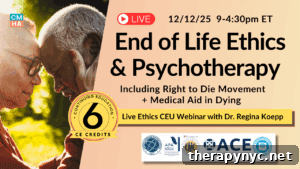
Register for the End of Life Ethics & Psychotherapy 6-Hour Ethics CE Course (course registration available through the course provider)
Resources
- End of Life Decisions vs. Suicide: What’s the Difference?
- State-by-state information on Death With Dignity laws and requirements
- Role of Mental Health Professionals in Death With Dignity
- Compassion & Choices (information on medical aid in dying)
- Death With Dignity organization (advocacy and resources)