Guide: 10 Online Therapy Platforms for Kids by Age and Insurance

Parenting is hard, and spotting that your child is struggling—and then figuring out where to turn—can feel overwhelming. In addition to concerns about cost and insurance, many caregivers say not knowing where to begin is the biggest obstacle to finding help for kids.
Online therapy platforms have made mental health services more accessible for families by offering evening and weekend virtual appointments and clinicians who specialize in working with children and adolescents. Still, choosing the right platform and provider can feel heavy when you’re advocating for your child.
Below we reviewed leading services to identify the best online therapy options for kids, comparing cost, age ranges served, parent involvement, and how care is delivered. Use this guide to help pick the option that best fits your family.
Key takeaways:
- The best online therapy for kids depends on your child’s age, your insurance coverage, and the issues you want to address.
- Insurance-based platforms typically offer the lowest out-of-pocket costs.
- Age ranges and offerings vary: some services support infants and toddlers, others focus on teens, and some cover all ages up to young adulthood.
- Caregiver involvement differs by platform and by the child’s developmental stage—check how each provider includes parents or guardians.
- Certain platforms combine therapy and medication management in one place, while others focus on talk therapy or coaching.
Best online child therapy platforms at a glance
| Platform | Age | How providers are chosen | Accepts Medicaid? | Medication management for minors? |
|---|---|---|---|---|
| Grow Therapy | 6+ | Browse and choose | ✓ | ✓ |
| Thriveworks | 0–17 | Browse and matching | ✓ | ✓ |
| Brightline | Up to 18 | Provider matching | ✗ | ✓ |
| Little Otter | 0–18 | Provider matching | ✗ | ✓ |
| Emora Health | 0–25 | Provider matching | ✓ | ✓ |
| LifeStance Health | 2+ | Provider matching | ✓ | ✓ |
| Rula | 5+ | Provider matching | ✓ | ✓ |
| Amwell | 10+ | Browse and choose | ✗ | ✗ |
| Talkspace | 13–17 | Provider matching | ✗ | ✗ |
| Teen Counseling | 13–19 | Provider matching | ✗ | ✗ |
1. Grow Therapy

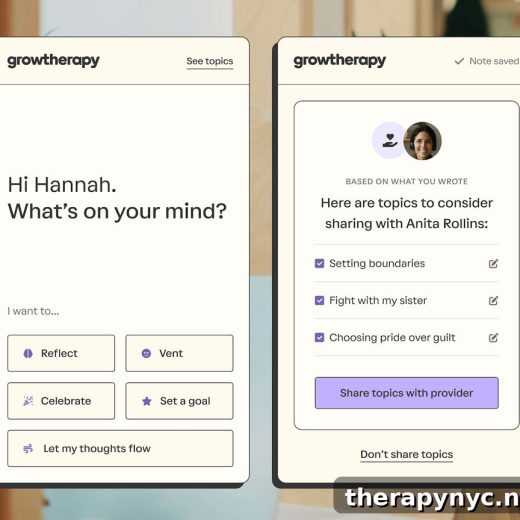
Grow Therapy connects families to licensed therapists and prescribers for virtual and in-person care and works with many insurance plans. Rather than assigning a therapist, the platform lets families browse providers and filter by specialty, identity, language, and treatment approach. If the match isn’t right, switching providers is typically available at no extra cost.
Cost and insurance
- Insurance acceptance varies by plan and clinician—check your plan for exact pricing.
- With insurance: many families pay roughly $20 per session on average; some pay $0 depending on coverage.
- Without insurance: private session rates typically range from $75 to $250 or more, depending on provider credentials and location.
Ages served and care type
Grow Therapy’s network includes clinicians who treat children, teens, and adults. Services typically include evidence-based talk therapies such as cognitive behavioral therapy (CBT) and medication management for common pediatric concerns like trauma and grief.
Parent involvement
Caregiver involvement varies by clinician. You can select providers who describe family-centered approaches and who use parent-child therapies such as PCIT and CPP when appropriate.
Who it’s a good fit for
Grow Therapy suits families who want to use insurance while retaining the ability to choose a therapist and coordinate medication and therapy in one place.
| Pros | Cons |
|---|---|
| Works with many insurance plans, including some Medicaid plans | Cash rates vary by clinician |
| Offers in-person and online options where available | In-person availability depends on clinician location |
| Filters let you narrow by specialty and clinician background |
2. Thriveworks
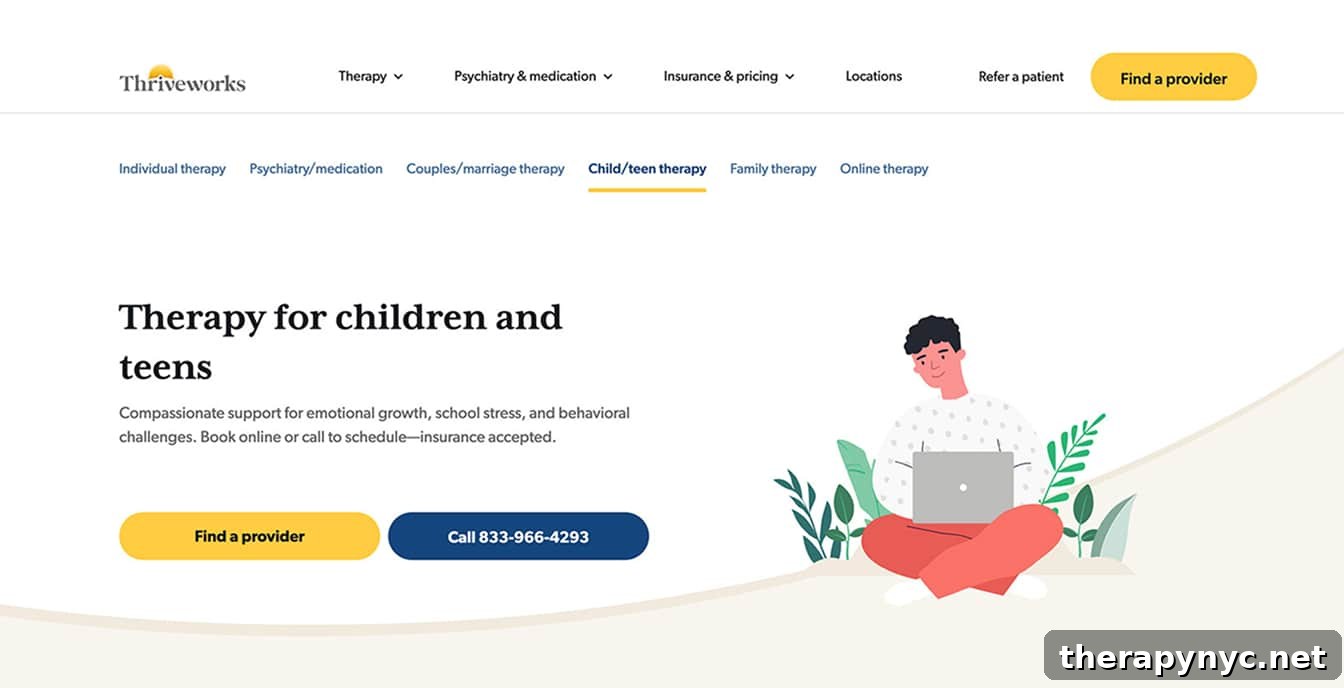
Thriveworks provides therapy and psychiatry in nearly all U.S. states, with a network of in-person offices for families who prefer local visits. They offer child and teen therapy using age-appropriate, evidence-based methods and, in some states, virtual medication management. Thriveworks also runs play-focused centers for younger children.
Cost and insurance
- With insurance: many clients pay copays ranging from $0 to about $55 per session.
- Without insurance: fees vary by service—initial therapy sessions and psychiatry visits are typically higher than follow-ups.
Ages served and care type
Thriveworks treats children from infancy through late teens, offering play-based therapy for younger kids and developmentally tailored interventions for older children.
Parent involvement
Caregivers usually receive periodic updates and may take part in parent sessions. The level of parent involvement depends on the child’s age and treatment plan.
Who it’s a good fit for
A strong choice for families who want both the option of a nearby office and flexible virtual care.
| Pros | Cons |
|---|---|
| Many in-person locations across the U.S. | Not available in every state; child psychiatry access varies |
| Child-specific services, including play therapy | Some specialized centers limited to select states |
| Accepts many major insurance plans |
3. Brightline
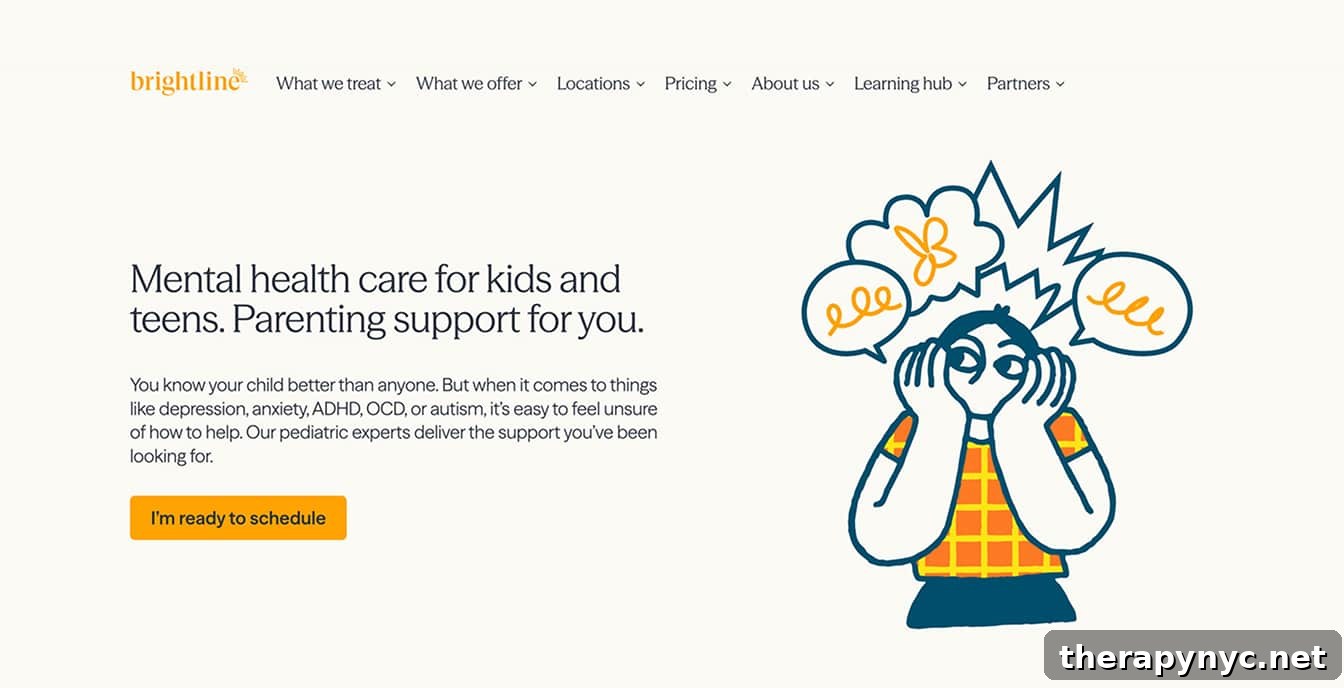
Brightline focuses on pediatric behavioral health—offering therapy, psychiatry, psychological testing, and coaching. It treats common pediatric concerns like ADHD, anxiety, OCD, and disruptive behavior with family-centered approaches and parent coaching where available.
Cost and insurance
- When insurance is accepted, session co-pay estimates are often lower than cash rates; out-of-network fees are higher.
- Without insurance: therapy and psychiatry fees vary by service; testing can be a larger up-front expense.
Ages served and care type
Brightline treats children and teens up to 18 with evidence-based therapies and includes parent coaching options—some early coaching programs are offered free in certain regions.
Parent involvement
The model intentionally involves caregivers through coaching and progress tracking so families stay engaged with treatment.
Who it’s a good fit for
Best for families in Brightline’s service areas who want a pediatric-focused program with integrated coaching and testing.
| Pros | Cons |
|---|---|
| Specialized pediatric care and family coaching | Full clinical services limited to certain states |
| Offers testing, psychiatry, therapy, and coaching | Focus is limited to a defined set of concerns |
4. Little Otter
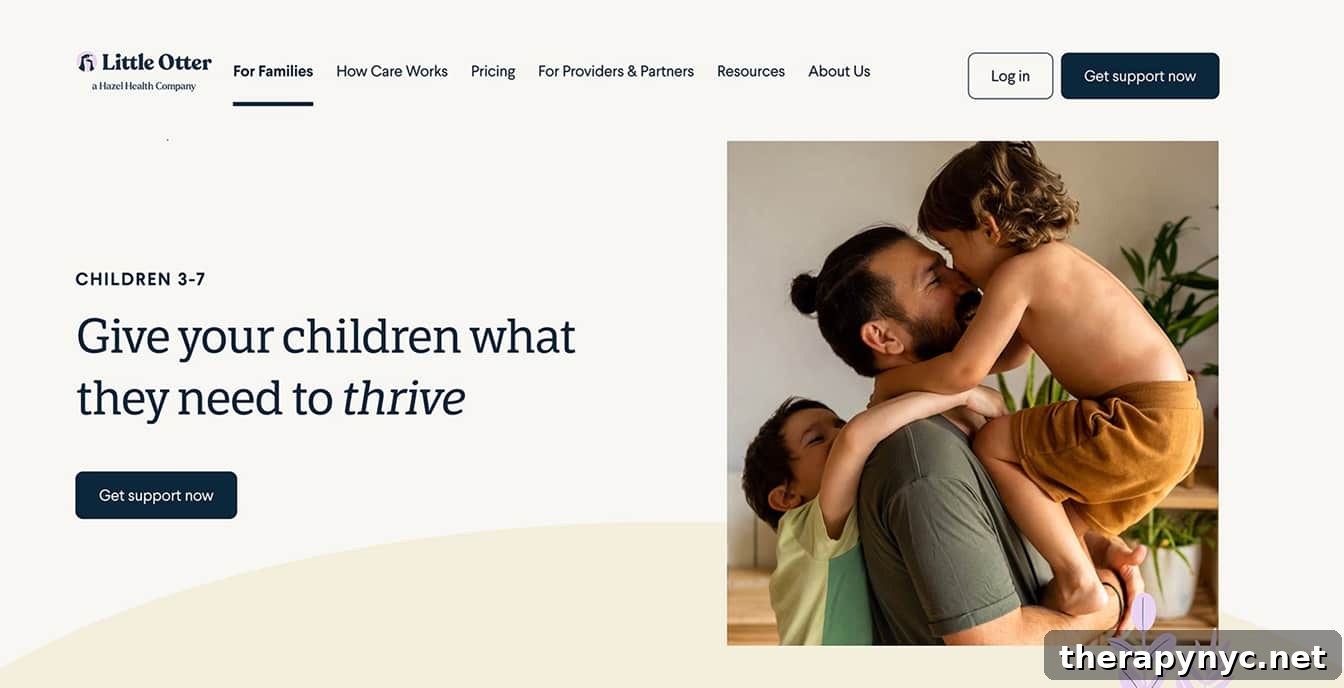
Little Otter takes a whole-family approach, treating children and caregivers together. Services include individual and family therapy, parent coaching, and an app to track care plans and progress. The platform emphasizes caregiver involvement and shared treatment goals.
Cost and insurance
- Insurance coverage varies; many families use out-of-network benefits or pay directly.
- Without insurance: assessment and session fees are typically set rates for therapy, coaching, and psychiatry.
Ages served and care type
Little Otter offers virtual therapy and psychiatry for children and caregivers across childhood and adolescence, along with family-centered treatment plans.
Parent involvement
Caregiver participation is central: parent coaching and shared progress tracking are core to the model.
Who it’s a good fit for
A good match for families in service regions who value a whole-family approach and can use out-of-network coverage or pay privately.
| Pros | Cons |
|---|---|
| Focused on pediatric and family care | Limited availability across states |
| App-based tracking of treatment and progress | Largely out-of-network |
5. Emora Health
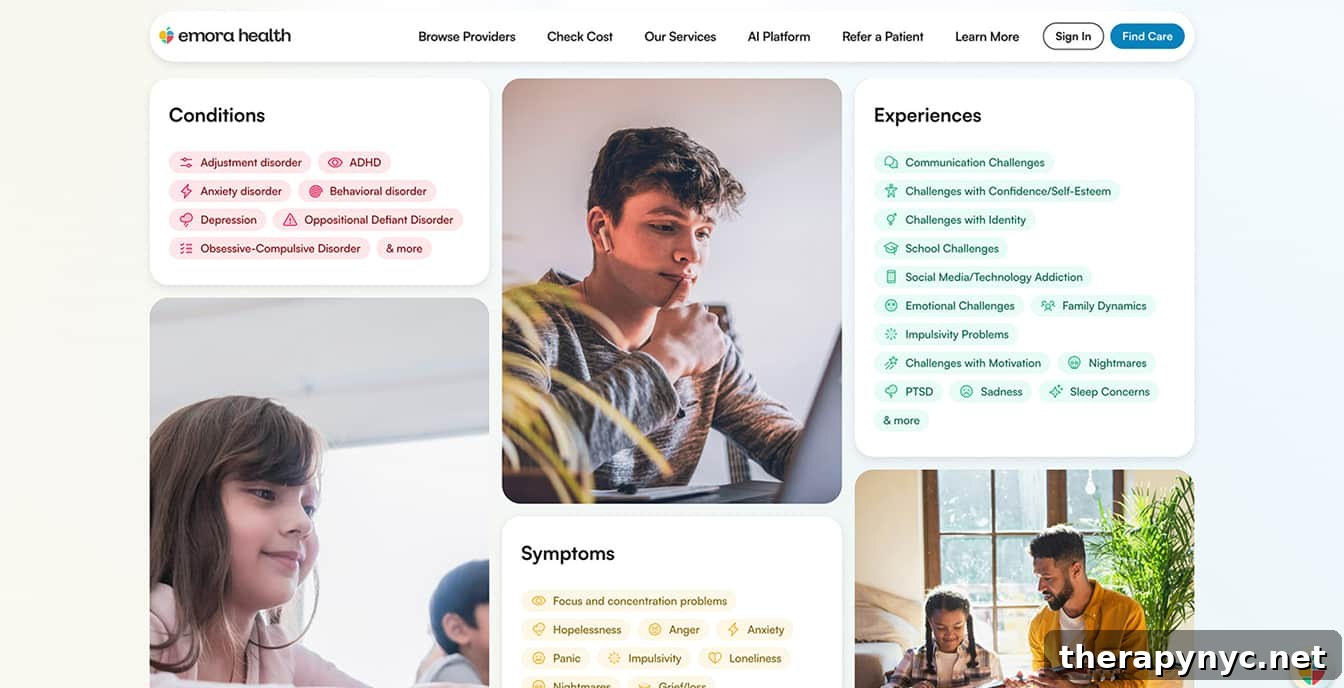
Emora Health is built for youth, matching clinicians to developmental stages from early childhood through emerging adulthood. Services include therapy, medication management, and psychological evaluations for ADHD and autism when needed.
Cost and insurance
- With insurance: copays are often modest and vary by plan.
- Without insurance: evaluation and testing fees are higher up-front; therapy session rates are typically moderate.
Ages served and care type
Emora treats clients roughly ages 0–25 using evidence-based therapies, clinical evaluations, and medication management when appropriate.
Parent involvement
Emora emphasizes family involvement and adapts care based on feedback from both parents and young clients. Parent therapy options are also available.
Who it’s a good fit for
Families seeking age-specialized youth care and who have commercial insurance accepted by the platform will likely find Emora a strong option.
| Pros | Cons |
|---|---|
| Specializes in youth and family-based approaches | Focuses primarily on commercial insurance |
| Often offers quick access for initial sessions | Clinician availability depends on licensing across states |
6. LifeStance Health

LifeStance is a large national practice with both telehealth and in-person care across many states. They offer child and teen services including play, art, and music therapy for younger children, plus testing and psychiatry in many clinics.
Cost and insurance
- Coverage differs by state, provider, and plan; some locations accept Medicaid or Medicare.
- With insurance: typical copays range moderately depending on plan.
- Without insurance: session fees vary widely by location and clinician type.
Ages served and care type
LifeStance serves children, teens, and adults, offering a range of therapies and in-person options for younger children in many clinics.
Parent involvement
Parents often have an active role in child therapy, and clinics typically coordinate care with schools and families as needed.
Who it’s a good fit for
A good choice for families who want the option to see clinicians in person or online and who need access to testing and psychiatry.
| Pros | Cons |
|---|---|
| Both telehealth and in-person services | Availability and specialties vary by office |
| Accepts many commercial plans and some public plans by state | Experience varies across locations |
7. Rula
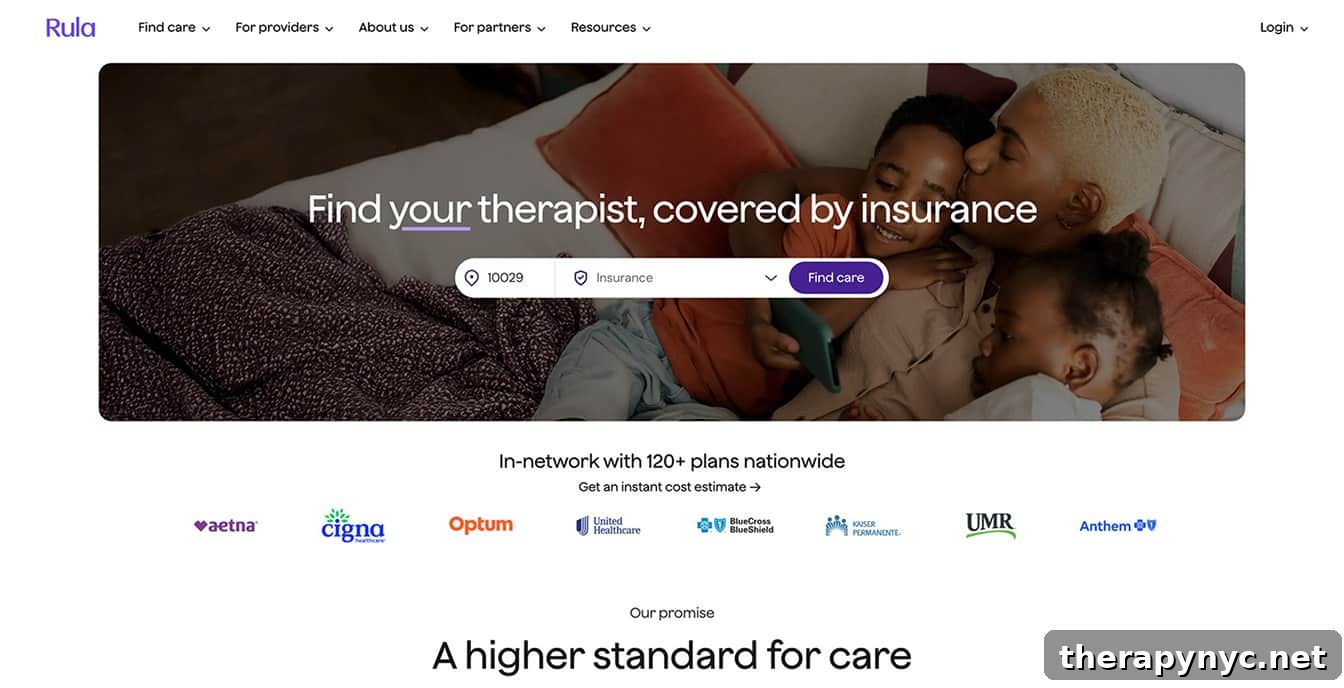
Rula offers virtual therapy nationwide and works with many major insurance plans. Families select a clinician from a curated list in their state, making it a straightforward option for insurance-covered care for children age five and older.
Cost and insurance
- With insurance: average copays are generally modest.
- Without insurance: session rates are published and charged per appointment.
Ages served and care type
Rula treats children ages five and up and offers psychiatry and medication management for older teens where available. Therapists commonly use play-based approaches, CBT, and family therapy.
Parent involvement
Caregivers must attend an initial session for children under 13 and are encouraged to stay engaged throughout care.
Who it’s a good fit for
Rula is a good fit for families seeking insurance-covered therapy for school-age children and teens.
| Pros | Cons |
|---|---|
| No subscription fees; pay per session | Limited in-person options |
| Available across all 50 states | Psychiatry generally available only for older teens |
8. Amwell

Amwell is a national telehealth marketplace where families can connect with licensed therapists by live video. It’s convenient for older kids and teens who need timely talk therapy, offering next-day and after-school appointment options in many cases.
Cost and insurance
- Pay-per-visit fees depend on the service and your insurance copay or coinsurance.
Ages served and care type
Amwell offers therapy for children roughly ages 10–17 with parental consent. Psychiatry and medication management are generally available only for adults, so Amwell is best when medication is not required for minors.
Parent involvement
A parent or guardian sets up the account and provides consent; the clinician then determines how much the parent participates in sessions.
Who it’s a good fit for
Amwell is ideal for families seeking fast, convenient video therapy for older children without medication management.
| Pros | Cons |
|---|---|
| Large national network and flexible scheduling | Limited options for children under 10 |
| Pay-per-visit model | No psychiatry for minors |
9. Talkspace

Talkspace provides a teen-focused therapy program that combines unlimited messaging with scheduled live sessions. It emphasizes privacy for teens and flexible, asynchronous support that fits busy schedules.
Cost and insurance
- Costs vary by plan and whether your insurance covers the service. Self-pay options are subscription-based.
- Without insurance: messaging-plus-live plans and psychiatry services are available at set weekly or per-session rates.
Ages served and care type
Talkspace serves teens ages 13–17 with secure messaging and live therapy sessions.
Parent involvement
Parental consent is usually required, but teen sessions are treated as private under HIPAA rules; therapists will notify caregivers only when safety concerns arise.
Who it’s a good fit for
A strong choice for teens who value privacy and want flexible, message-based support alongside live sessions.
| Pros | Cons |
|---|---|
| Flexible messaging plus live sessions | Not available for children under 13 |
| Covered by some employer or city programs | Subscription model rather than pay-per-session |
10. Teen Counseling
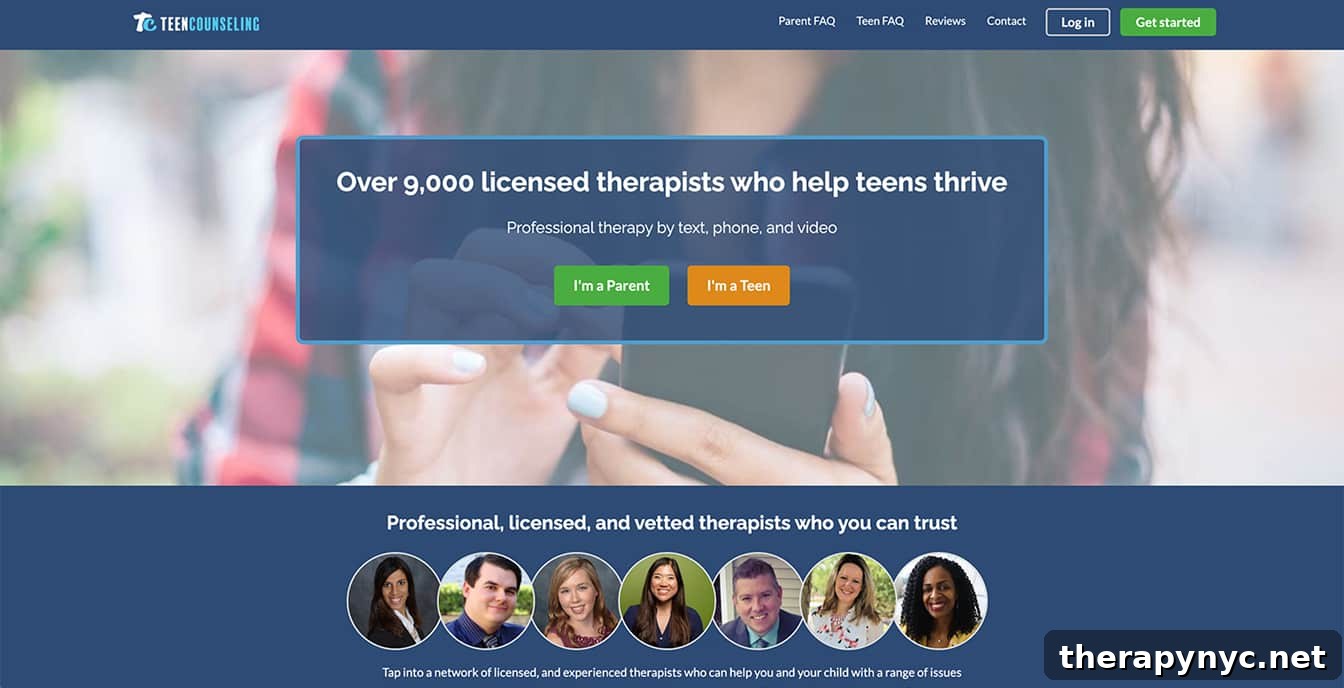
Teen Counseling, affiliated with a large online therapy provider, offers weekly live sessions plus unlimited messaging in a private online space. It is designed for teens experiencing mild to moderate concerns such as anxiety and depression.
Cost and insurance
- Subscription prices vary; Teen Counseling generally does not accept insurance.
- Self-pay weekly plans are the most common option.
Ages served and care type
Teen Counseling supports teens ages 13–19 nationwide with talk therapy and messaging; it does not provide medication management.
Parent involvement
A parent typically signs up and has an initial conversation with the therapist, while the teen’s sessions generally remain confidential except for required safety disclosures.
Who it’s a good fit for
Best for families who want convenient, private support for teens and do not require insurance reimbursement.
| Pros | Cons |
|---|---|
| Weekly live sessions plus unlimited messaging | Does not accept insurance |
| Nationwide availability | No medication management or diagnosis-related paperwork |
What to look for in an online therapy provider for kids
Every child and family is unique. When searching for care, focus on providers that treat your child’s age group, address the specific concerns you’ve noticed, accept your insurance, and clearly explain how they involve caregivers. Availability outside school hours and the ability to change providers if needed are also important for consistent care.
“Therapy gives children a safe space to talk through emotions and learn coping strategies that reduce symptoms and help them manage challenges,” says Monica Randle, LPCC, a licensed provider.
- Confirm whether the platform accepts your insurance and what your out-of-pocket costs will be.
- Choose clinicians trained to work with children and teens, not just adults.
- Look for programs that address co-occurring challenges, such as anxiety with ADHD.
- Ask how parents and caregivers are included in treatment and whether parent coaching is available.
- Prioritize flexibility in scheduling to maintain regular sessions around school and family life.
Get your child the support they need
Finding the right online therapy is a personal process that depends on your child’s needs and your family’s resources. If you think your child could benefit from support, start by checking providers who specialize in pediatric care and confirm insurance coverage. Choosing a clinician who fits your child’s age and temperament and who involves caregivers appropriately will increase the chances of a positive, lasting outcome.
When you feel ready to move forward, review providers’ specialties and availability, and ask about how they coordinate therapy and any recommended medical care. Taking this step can be an important part of helping your child learn tools to manage emotions and thrive.