How Grow Therapy’s Telehealth Tools Transformed My Practice
My name is Tahara DeBarrows. I am a Licensed Marriage and Family Therapist (LMFT) with a specialization in attachment theory and assertiveness skills. I work with individuals navigating life transitions, relationship challenges, and workplace stressors. I have been a provider with Grow Therapy since 2021.
Recently, Grow Therapy introduced several telehealth tools designed to streamline administrative work, boost client engagement, and support clinicians in delivering high-quality care. Incorporating these features into my practice has improved my workflow and record-keeping, allowing me to spend more of my energy on therapeutic work with clients.
Transforming administrative tasks
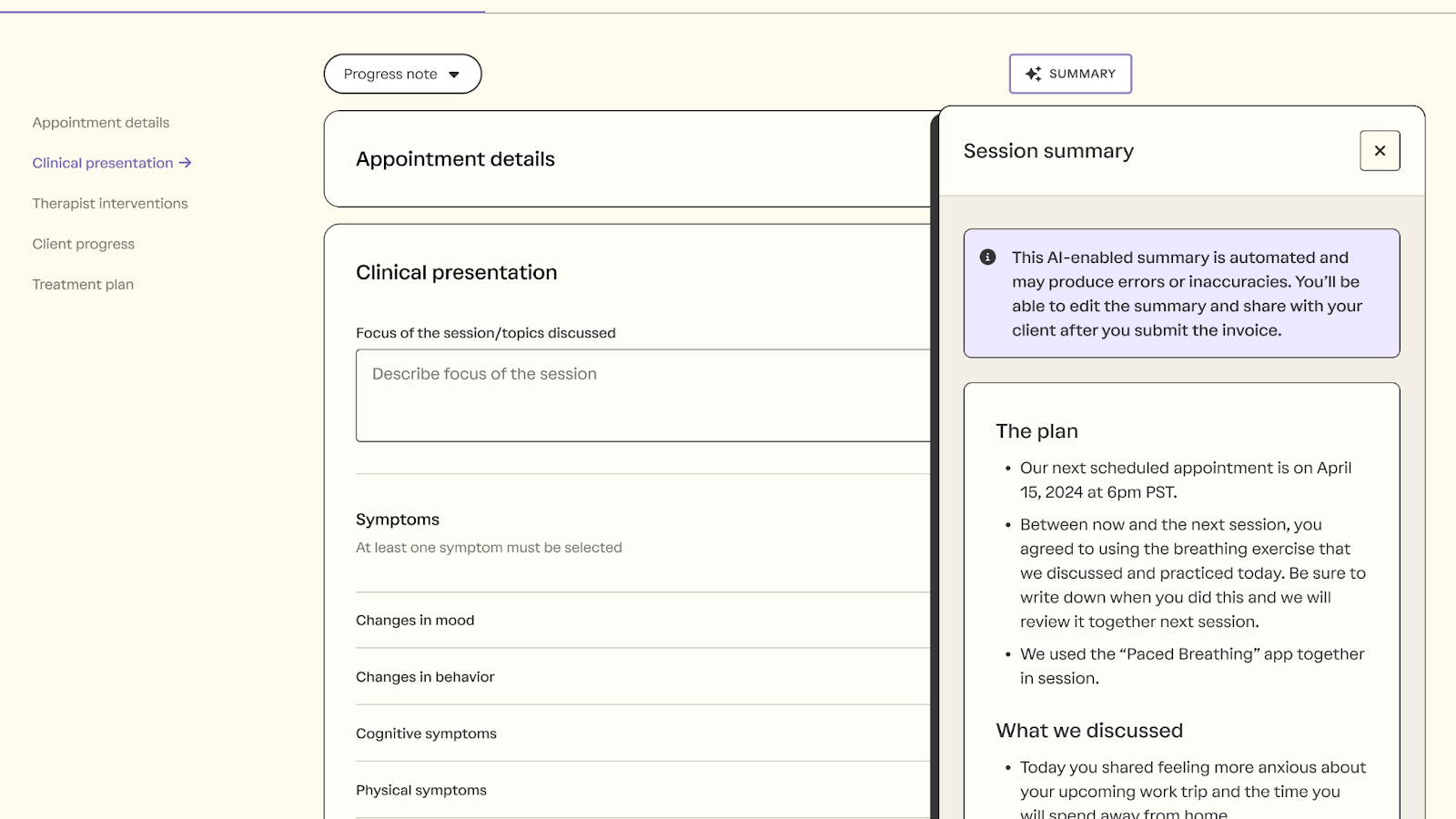
One of the most useful additions is AI-powered summarization. This feature automates transcription and generates clear after-visit summaries (AVS) and note drafts, which I can quickly review and refine. That automation reduces time spent on documentation while improving accuracy and consistency in my notes.
During a telehealth session, the tool captures audio and creates a transcription; once the session ends, it produces a summary I can access, edit, and approve. These AI-generated summaries are stored securely and available for review within a 30-day window, which helps me maintain accurate records and comply with documentation requirements.
The new AI tools have allowed me to deepen my focus during sessions, as I no longer have to divide my attention between the conversation with my client and note-taking.
The interface is straightforward. To enable summaries, I simply select the transcription icon when meeting with a client online. That simple workflow minimizes interruptions and lets me stay present in the therapeutic moment. In addition to summarization, Grow’s in-session whiteboard is a flexible, interactive feature I use to map ideas, sketch frameworks, and co-create visual tools with clients.
Improving the client experience
Freeing myself from manual note-taking has deepened the quality of my clinical interactions. When I’m not dividing my attention between typing and listening, clients describe sessions as more focused and connected, and I notice stronger rapport and clearer therapeutic progress.
My clients appreciate the transparency and control provided by Grow’s new AI summarization process.
The whiteboard is valuable for clients who think visually or benefit from structured diagrams. I use it to map relationships between thoughts, emotions, and coping strategies, which helps clients understand patterns and collaborate on concrete steps. Visual tools can make abstract concepts more tangible and increase engagement in therapy.
Transparency and client autonomy are built into the process. Before any transcription begins, I obtain explicit consent from the client and explain how the summarization works. Clients can pause transcription at any time, which reinforces trust and supports comfort during sessions. I describe the practical benefits—more accurate documentation, faster availability of notes, and less administrative lag—and reassure clients that their privacy is respected and their information is handled appropriately.
When introducing these tools, I focus on how they improve care rather than on technology for its own sake. Most clients are willing to try the features once they understand the safeguards and the ways the tools help structure our work together.
Supporting self-care for therapists
Reducing administrative burden has a direct impact on clinician well-being. With automatic summaries and visual documentation, I spend less time chained to my notes and more time on restorative activities that prevent burnout. That balance promotes sustained job satisfaction and better long-term care for clients.
Overall, these tools help me free up time so that I can engage in restorative activities such as mindfulness or one of my hobbies.
For example, automatic draft notes help prevent the end-of-day pileup that used to make documentation feel overwhelming. The whiteboard reduces cognitive load during complex conversations, allowing me to reinforce key points visually without losing the therapeutic flow. As a result, I’m less likely to ruminate about sessions after hours and more able to take effective breaks.
That reclaimed time lets me step away from screens, practice mindfulness, enjoy hobbies, or simply reset between sessions. Small restorative habits supported by efficient workflows contribute to better clinical presence and durability as a clinician.
New technology that benefits both clients and clinicians
Integrating Grow’s AI tools into clinical practice has reduced administrative load, improved documentation quality, and reinforced data security. By shortening the time needed for notes, I can give more attention to direct clinical work and to tailoring care to each client’s needs.
The after-visit summary feature supports accurate records with minimal extra effort, and the whiteboard helps me intentionally design interventions that clients can see and interact with. As AI and telehealth tools evolve, I expect continued refinements that further streamline care delivery and enhance therapeutic outcomes.