How to Do Square Breathing: Step-by-Step for Stress Relief

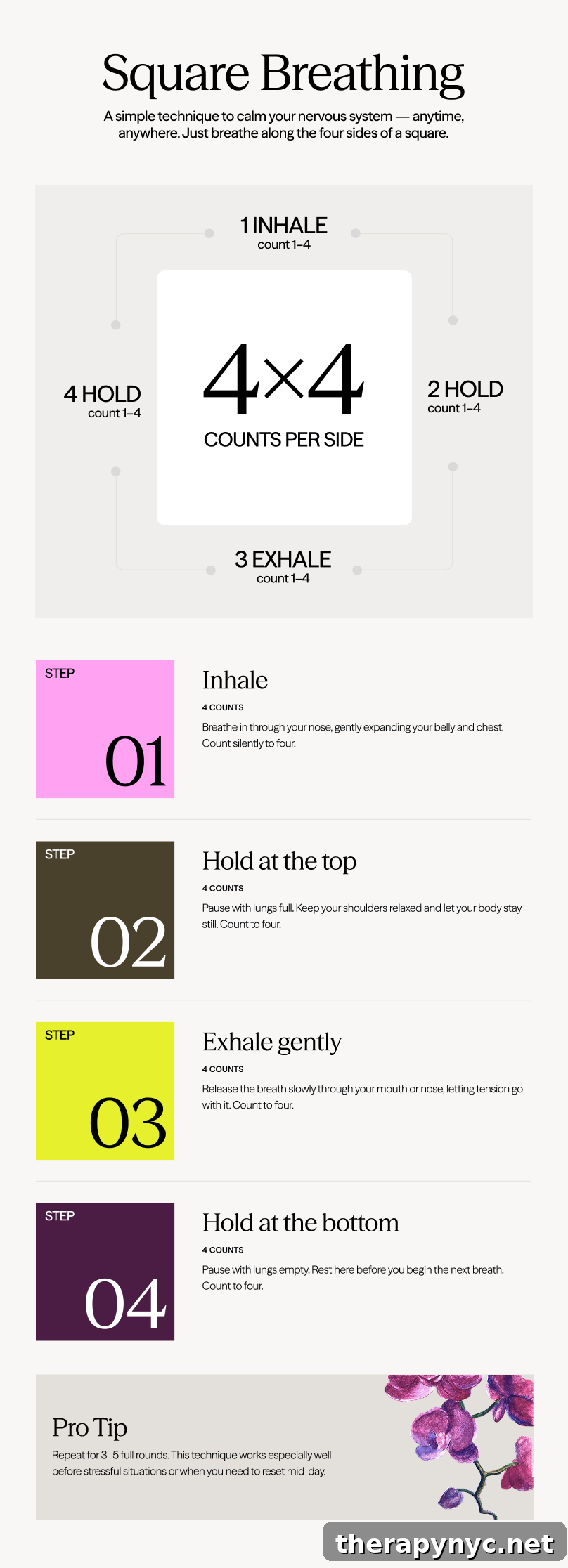
Square breathing—also called box breathing or four-square breathing—is a simple, structured breathing technique that follows four equal phases: inhale, hold, exhale, hold. By pacing and balancing the breath, it helps interrupt the body’s stress response and restore calm without any equipment or special setting.
If you’ve ever felt your heart race before a meeting or stared at the ceiling at 2 a.m. as your mind kept working, you know how powerful the body’s alarm system can be. Square breathing gives you a fast, portable method to shift out of that reactive state. This article explains what it is, how it works, when to use it, and safe variations so you can try it today with confidence.
“Square breathing is a breathing technique that can reduce feelings of stress and instill a feeling of calm,” says Cynthia Mobley, a licensed clinical social worker. “It’s simple: breathe in, pause, breathe out, pause—each phase for the same length of time.”
Key takeaways
- Square breathing is a structured breathing method that balances inhalation, holds, and exhalation to calm the nervous system.
- Basic pattern: inhale for a count, hold, exhale for the same count, hold again—then repeat.
- Flexible use: it works for quick resets (30 seconds), short sessions (3 minutes), or longer daily practice.
- Modify if needed: people with panic, trauma, dizziness, or respiratory or cardiac issues may prefer a no-hold or longer-exhale variation and should consult a clinician if unsure.
How can square breathing calm my body?
When you feel stressed, the sympathetic nervous system triggers the fight-or-flight response: heart rate increases, muscles tighten, and breathing becomes fast and shallow. Deliberate, slow breathing helps activate the parasympathetic nervous system—the body’s natural “rest-and-digest” response. By slowing and regularizing breath, square breathing lowers heart rate and muscle tension and encourages deeper, diaphragmatic breathing, which promotes relaxation.
How does square breathing help?
Pacing and extending the breath stimulate the vagus nerve, which signals the brain that the threat has passed and reduces the stress response. Even a few cycles can create a noticeable change in how you feel. Repeating the practice over days or weeks can improve baseline regulation, focus, and mood.
Science-backed benefits of square (box) breathing for stress and anxiety
Research on paced, slow breathing supports several benefits that people report from square breathing. The effects can be both immediate (calming, clearer thinking) and cumulative with regular practice.
- Can lower physiological stress markers and reduce cortisol with consistent practice
- May lower resting heart rate and support blood pressure regulation over time
- Activates the parasympathetic nervous system to promote relaxation
- Improves mental focus by giving the mind a simple counting anchor
- Can support mood and emotional regulation when used regularly
Stress and anxiety reduction
Square breathing is accessible for managing acute stress and is often used as a first-line tool to reduce short-term anxiety intensity. When added to a daily routine, breathing exercises can help sustain better mental well-being over time.
Nervous system regulation
Slow, rhythmic breathing supports regulation of stress hormones like cortisol and helps the body return to a calmer baseline. Regular, proactive use—rather than only reacting in high-stress moments—builds familiarity so the technique is easier to use when it matters most.
Improved focus and mental clarity
The structured counting in square breathing gives your attention a single, simple task. That focus grounds racing thoughts and can improve concentration immediately. Over time, practicing breathwork can also reduce the physical wear of chronic stress.
How to do the square breathing exercise: Step-by-step
Square breathing is easy to learn. Follow these steps and adjust the count to what feels comfortable for you.
Before you begin: Check your breath
Take five seconds to notice your natural breath. Are you breathing primarily into your chest or your belly? If your chest is rising more than your belly, gently shift toward diaphragmatic (belly) breathing—this tends to trigger relaxation more effectively. If nasal breathing is difficult, breathe through your mouth and keep the focus on the rhythm and count.
- Find a comfortable position. Sit or lie down so your body can relax—this can be a chair, a couch, or bed. Drop your shoulders and rest your hands comfortably.
- Inhale for a count of four. Breathe in slowly for four counts. Feel your belly expand without forcing anything.
- Hold for a count of four. Pause gently at the top of the inhale for four counts. Keep the throat soft—don’t clamp.
- Exhale for a count of four. Breathe out slowly for four counts, imagining tension leaving your body.
- Hold for a count of four. Pause again at the bottom of the exhale for four counts. That completes one square; repeat.
If you’re new
Start with three counts if four feels long or the holds feel uncomfortable. The goal is a sustainable practice, so adjust the rhythm to what keeps you practicing.
Choosing your count
Use a three-count if four feels too long during high stress. Move gradually to four, and only increase to five when the shorter counts feel effortless. The count is a tool, not a test.
| Your situation | Recommended count |
|---|---|
| First attempt or acute stress | Three-count |
| Daily practice | Four-count |
| Experienced practitioners | Five-count |
What if square breathing doesn’t feel right?
Not every breathing technique suits every person. It may feel strange at first, and that’s normal. If you experience physical discomfort or a spike in anxiety, try a simple tweak—most common issues have easy fixes.
| If you’re experiencing | What to do |
|---|---|
| Dizziness | Stop, breathe normally for 30 seconds, then restart with a three-count |
| Increased anxiety | Skip the holds and use equal inhale/exhale only |
| Unable to hold breath | Soften the hold—a gentle pause, not a clamp |
| Racing thoughts | Count aloud or trace a square with your finger |
| Chest tightness | Shift to belly breathing and reduce inhale depth |
No-hold version (mini-protocol)
If breath holds feel activating, try:
- Inhale for four, exhale for four (no holds) for 6–8 breaths.
- Rectangle breathing: inhale for four, exhale for six (no holds) for 6–8 breaths—longer exhale emphasizes relaxation.
When and where to use square breathing
Square breathing is highly flexible. You can do it anywhere, even in short bursts when you need an immediate reset.
The 30-second reset vs. the 3-minute session
Two cycles take under 30 seconds and make an effective quick reset. Six to eight cycles—about three minutes—create a fuller calming session. Use the short reset before presentations or during sudden spikes in stress; use the longer session for daily practice or pre-sleep wind-down.
- 30-second reset: Two cycles—good for immediate grounding before speaking or during a tense moment.
- 3-minute session: Six to eight cycles—use for daily regulation, before sleep, or after a draining day.
Discreet variations for public spaces
Trace a square on your thigh or palm with a finger as you cycle through the breath phases. Count silently to keep the practice private and unobtrusive.
Safety note
Avoid extended breath holds while driving or operating machinery. Use the no-hold equal inhale/exhale version when you need to keep attention on the road.
Square breathing vs. other breathing techniques
Different techniques suit different goals. Below is a brief comparison to help you choose.
| Square breathing | Diaphragmatic breathing | 4-7-8 breathing | Alternate nostril breathing | |
|---|---|---|---|---|
| Difficulty | Beginner | Beginner | Intermediate | Intermediate |
| Pattern | Inhale 4 / Hold 4 / Exhale 4 / Hold 4 | Slow belly breathing, no fixed count | Inhale 4 / Hold 7 / Exhale 8 | Alternate nostril inhale/exhale |
| Best for | Acute stress and focus | General relaxation | Sleep onset | Balance and pre-meditation |
| Requires breath hold? | Yes | No | Yes | No |
| Typical session length | 30 seconds–5 minutes | 5–10 minutes | 3–5 minutes | 5–10 minutes |
When to modify or skip square breathing
Although safe for most people, some should adapt the technique:
- Panic disorder, panic attacks, or trauma: Breath holds can trigger panic sensations. Try rectangle breathing (inhale 4, exhale 6, no holds) or the no-hold version.
- Dizziness during holds: Shorten counts and soften or remove holds.
- Cardiac or respiratory conditions: Consult your doctor before practicing breath holds.
- Stop if you feel dizzy, lightheaded, or short of breath.
- Avoid breath holds while driving or doing tasks that require full attention.
- If panic rises, switch to equal inhale/exhale only.
Building a daily square breathing practice: 7-day plan
Consistency matters more than session length. Short daily practice builds reliable access to the method. This simple plan helps you form the habit.
| Day | Duration | Sessions/day | Goal | Habit cue |
|---|---|---|---|---|
| 1–2 | 1 minute | 1 | Familiarize with the count | After morning coffee |
| 3–4 | 2 minutes | 2 | Practice without instructions | Before checking email |
| 5–6 | 3 minutes | 2 | Use during a mild stress moment | Before a meeting |
| 7 | 3 minutes | 1 | Apply to one real stress trigger | When you need it |
Final thoughts on square breathing
Square breathing is effective because it’s simple, portable, and easy to learn. Two cycles take under 30 seconds and can change how you respond to stress. If holding your breath consistently feels activating, try the no-hold or rectangle versions and consider discussing your experience with a therapist—sometimes those reactions point to underlying trauma or anxiety that benefit from professional support.
Used regularly, square breathing becomes a practical tool you can rely on to calm your nervous system, improve focus, and support emotional regulation.