Mild Cognitive Impairment: How Psychotherapy Can Help

Imagine someone I’ll call Margaret.
She’s 74, sharp-witted, funny, and active in her community. Lately she’s been misplacing her keys more often, blanking on a neighbor’s name she’s known for decades, and missing a dentist appointment for the first time in her life. She called her daughter in tears: “Do I have Alzheimer’s? Am I losing my mind?”
Margaret doesn’t have Alzheimer’s. She has mild cognitive impairment (MCI), a condition many older adults experience. The encouraging news is that psychotherapy and targeted interventions can meaningfully improve quality of life, mood, and coping for people like Margaret.
AARP’s 2022 Second Half of Life study found that brain health topped older adults’ concerns about aging, with 54% rating it as extremely or very worrying—more than independence, relationships, or other aging worries (AARP Research, 2022).
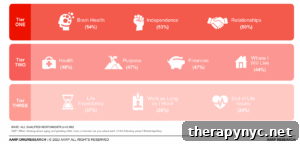
If you’re a therapist working with older adults or considering geropsychology, brain health is a crucial clinical topic. Below is a clear, practical overview of MCI, how it presents, why early identification matters, and how therapy can help.
What Is Mild Cognitive Impairment (MCI)?
Mild cognitive impairment is a clinical syndrome marked by measurable decline in one or more cognitive domains—most often memory, though attention, executive function, language, and visuospatial skills can also be affected. MCI represents cognitive decline that exceeds typical aging but generally leaves day-to-day independence intact. In DSM-5 terms, MCI is classified as a “minor neurocognitive disorder” (American Psychiatric Association, 2013).
People with MCI usually can still manage medications, finances, and household tasks, perhaps with extra effort or helpful systems. The in-between nature of MCI—beyond normal aging but not meeting criteria for dementia—makes early detection valuable: it allows for interventions, planning, and patient-centered conversations while the person can fully participate (Anand & Schoo, 2024).
How Common Is MCI?
MCI is more common than many expect. A 2023 meta-analysis of 233 studies with over 676,000 participants estimated a global prevalence of roughly 19.7% in adults aged 50 and older (Song et al., 2023). Prevalence rises with age—about 10% in people aged 70–74 and over 25% in those aged 80–84 (Medscape, 2024). If you work with older adults, you are likely already seeing clients with MCI, whether or not it’s been formally diagnosed.
Causes and Contributors: Why Cognition Changes
MCI is heterogeneous—there isn’t a single cause. Understanding this diversity matters clinically because it points to different treatment and prevention strategies.
Neurodegenerative Causes
Alzheimer’s disease pathology is the most common underlying cause and MCI is often a prodromal stage of Alzheimer’s dementia. Cerebrovascular disease is another frequent contributor—small vessel disease, silent infarcts, and white matter changes can erode cognition. Less common neurodegenerative causes include Parkinson’s disease, Lewy body disease, and frontotemporal degeneration (Frontiers in Psychology, 2025; Anand & Schoo, 2024).
Medical and Reversible Contributors
Many cases are driven or worsened by treatable conditions. Clinical guidelines emphasize addressing reversible contributors such as:
- Obstructive sleep apnea and other sleep problems
- Depression and anxiety
- Hypothyroidism and metabolic issues
- Vitamin deficiencies (notably B12 and folate)
- Polypharmacy—especially anticholinergic medications that impair cognition
Polypharmacy (commonly defined as five or more medications) is associated with nearly double the odds of MCI in older adults (Huang et al., 2018). The American Geriatrics Society’s Beers Criteria flags many older-adult medications—antihistamines, certain sleep aids, bladder drugs, and some antidepressants—for their cognitive risks (American Geriatrics Society, 2023).
Modifiable Risk Factors
Research points to modifiable risks for incident MCI—diabetes, multiple chronic conditions, anxiety, apathy, depressive symptoms, and physical frailty among them. This is hopeful: many factors that influence cognitive decline can be addressed through clinical care and lifestyle interventions (He et al., 2024).
Does MCI Always Lead to Dementia?
No. Conversion to dementia is not inevitable. Annual progression rates in population-based and clinical studies range roughly from 10% to 15%, though rates vary by sample and the presence of neuropsychiatric symptoms (McGrattan et al., 2022; Rabin et al., 2022). Over longer follow-ups, some meta-analyses report that 27–42% progress to dementia, with higher rates in clinical samples (Taragano et al., 2024).
Equally important, nearly half of people with MCI remain stable, and a notable proportion revert to normal cognition—reversion rates range from roughly 8% in clinical settings to as high as 28% in community studies. Younger age, higher education, better baseline memory, and treating reversible contributors predict improvement (Taragano et al., 2024; Yuan et al., 2025; Anand & Schoo, 2024).
A Note of Hope
MCI is not a life sentence. For many people, it is a call to action—an opportunity to address modifiable risk factors, strengthen coping skills, deepen relationships, and live with purpose. Therapists play a key role in making that possible.
What People With MCI Experience
MCI affects more than memory tests. The emotional landscape is often profound:
- Grief: Mourning the person they used to be and the ease of prior abilities.
- Fear: Worry about decline and the uncertainty of prognosis.
- Embarrassment and isolation: Withdrawing to avoid perceived stigma.
- Relational strain: Family dynamics shift—roles change, disagreements about driving or planning arise.
Therapeutic Stance: How to Show Up
Good psychotherapy for MCI normalizes without minimizing and offers realistic hope. Frame MCI as a brain health condition with modifiable factors—not a moral failing. Be honest about uncertainty, focus on what’s possible, and support autonomy through collaborative care planning.
Use Psychoeducation
Explaining what MCI is—and how it differs from dementia—reduces fear and increases agency. Education about brain-healthy behaviors and practical strategies can improve mood and quality of life on its own.
Therapy Techniques That Work
Effective therapy for MCI adapts standard approaches rather than reinventing them.
Simplify and Scaffold
Shorter segments, concrete language, repetition, written summaries, and visual cues help. Practice skills in session rather than relying solely on homework.
CBT and Behavioral Activation
Depression and anxiety are common and treatable in MCI. Cognitive-behavioral therapy, behavioral activation, and problem-solving therapy are recommended first-line nonpharmacologic treatments for neuropsychiatric symptoms (Petersen et al., 2018).
Compensatory Strategy Training
Help clients build practical systems: memory notebooks, phone reminders, pill organizers, labeled storage, and structured daily routines. Therapist-guided calendar and memory-support training improves memory self-efficacy, daily functioning, and confidence (Petersen et al., 2018).
Acceptance, Meaning, and Life Review
Acceptance- and meaning-focused therapies—ACT, dignity therapy, life review, and values clarification—address identity and existential concerns. These approaches restore a sense of wholeness and help clients prioritize what matters most.
Promote Brain-Healthy Behaviors
Exercise, good sleep, social connection, and stress management benefit both mood and cognition. When therapy supports these behaviors, it functions as both psychological treatment and neuroprotective care.
Including Care Partners
Guidelines recommend involving a care partner with the client’s consent. Care partners provide collateral history, help reinforce compensatory strategies, and monitor changes. They also need support—interventions that address communication, role changes, and caregiver stress improve outcomes for both parties (Petersen et al., 2018).
What a Typical Session Might Look Like
- Brief mood and anxiety check-in with a consistent structure.
- Review the memory notebook and daily schedule—celebrate wins and troubleshoot setbacks.
- Problem-solve a recent cognitive slip and design a system to prevent it.
- Rehearse communication scripts for important conversations.
- Set one or two concrete, achievable tasks (for example, short walks several times a week).
- End by reinforcing progress and what remains possible.
Planning for the Future
Early conversations about healthcare proxies, financial planning, driving, and advance care preferences are compassionate and empowering. Discussing values and plans while the client’s voice is clear preserves their authorship over future decisions (Petersen et al., 2018).
A Word to Therapists
Many clinicians feel uncertain about working with MCI, but the core skills you already have—building alliance, treating mood disorders, supporting grief and identity work, and enabling behavior change—are exactly what this population needs, with thoughtful adaptations. This is meaningful clinical work that honors the dignity and resilience of older adults.
Key Takeaways
- MCI involves cognitive decline beyond normal aging while daily independence is largely preserved.
- Causes are varied: neurodegenerative disease, vascular changes, and reversible contributors like depression, sleep disorders, and polypharmacy.
- Not everyone with MCI develops dementia; many remain stable or improve, especially when modifiable factors are treated.
- Psychotherapy plays an evidence-based role in mood, coping, compensatory strategies, identity, relationships, and future planning.
- Adapting therapy means simplifying structure, scaffolding practice, and integrating compensatory training and brain-health behaviors.
- Involving care partners and addressing advance planning are essential components of quality care.
You Can Make a Difference — Starting Now
People living with MCI need clinicians who will sit with uncertainty, build practical tools for daily life, honor grief, celebrate resilience, and help preserve meaning and connection. This work is important and deeply rewarding.
If you want to deepen your skills in working with older adults and MCI, consider specialized training through professional organizations such as the Center for Mental Health & Aging, which offers courses and certificate programs focused on this clinical population.