Muhammad Ali’s Techniques for Punching Through Walls
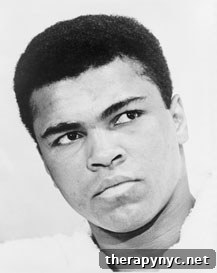
“I’ll be floating like a butterfly and stinging like a bee.”
“I wish people would love everybody else the way they love me. It would be a better world.”
“A man who views the world the same at fifty as he did at twenty has wasted thirty years of his life.”
Muhammad Ali needs little introduction. He won Olympic gold as an amateur, went on to become a three-time World Heavyweight Champion, and in 1999 was named “Sportsman of the Century” by Sports Illustrated and the BBC. Beyond his athletic achievements, Ali’s mindset and words offer practical lessons about risk, resilience, and the inner work required for lasting success.
Below are five concise, actionable lessons from Muhammad Ali to help you break mental barriers, cultivate confidence, and move toward your goals.
1. Take calculated risks.
“He who is not courageous enough to take risks will accomplish nothing in life.”
Progress usually requires stepping out of comfort. To make risk-taking more manageable:
- Clarify your motivation. The stronger your desire, the easier it is to push past fear. A compelling why shrinks perceived risk.
- Ask: What’s the worst that could happen? Most imagined disasters never materialize. When fear builds, list realistic outcomes and plan responses for the true worst-case scenarios.
- Focus on the process, not the outcome. While acting, stay present. Concentrating on the next step reduces anxiety and improves performance.
Each attempt builds experience and confidence. Over time, taking leaps becomes less intimidating and more habitual.
2. Stop self-sabotage and remove small obstacles.
“It isn’t the mountains ahead to climb that wear you out; it’s the pebble in your shoe.”
Often the biggest barrier is the negative loop inside your head. We confuse anxious predictions with reality and then behave as if the imagined outcomes are inevitable. To disrupt self-sabotage:
- Face the real risks. Use sober assessment to separate realistic concerns from catastrophizing.
- Build a deserving identity. Do the right things consistently — small acts of integrity, discipline, and kindness. These actions reinforce a self-image that welcomes success instead of undermining it.
Small habits compound. The more often you choose constructive actions over avoidance, the less likely you are to create inner resistance that derails your goals.
3. Cultivate positive self-talk.
“It’s the repetition of affirmations that leads to belief. And once that belief becomes a deep conviction, things begin to happen.”
How you talk to yourself shapes what you feel and how others perceive you. Negative self-talk drains energy and narrows options; positive inner dialogue fuels resilience and action. Practical steps:
- Interrupt the negative loop. When you notice a destructive thought, say “Stop” or mentally switch to a constructive question like “What can I learn from this?”
- Reinforce with evidence. Pair positive statements with real actions and small wins so your confidence is grounded, not just asserted.
Positive self-talk is not empty cheerleading — it’s a tool that becomes credible when supported by consistent, real-world behavior.
4. Don’t make a bigger deal of success than it is.
“It’s just a job. Grass grows, birds fly, waves pound the sand. I beat people up.”
Humility and perspective keep pressure manageable. When you inflate your own importance, you invite defensiveness, fear of failure, and unnecessary stress. Benefits of staying grounded:
- Less defensiveness. Without an oversized ego, feedback becomes usable instead of threatening.
- More enjoyment. Treating skill and success as part of the work — not an identity to protect — keeps effort sustainable and fun.
5. Use emotional leverage from your low points.
“Only a man who knows what it is like to be defeated can reach down to the bottom of his soul and come up with the extra ounce of power it takes to win when the match is even.”
Tough experiences can be a powerful catalyst. When you’ve had enough — whether from poor health, debt, procrastination, or another low — that dissatisfaction can become fuel. Practical use of emotional leverage:
- Remember how hard it was, and let that memory motivate change when challenges arise.
- Use discomfort as a signal: it shows what you value and where meaningful effort is required.
Your hardest moments may be painful, but they often generate the clarity and urgency that propel lasting change.
Muhammad Ali’s legacy goes beyond boxing. His lessons about courage, discipline, mindset, humility, and resilience apply to anyone pursuing growth. Apply these principles consistently and you’ll find they change not only what you do, but how you see yourself — and how the world responds.