Nearly 4 in 5 Dads Parent More Openly Than Their Fathers

Fathers pass down far more than genetics or surnames. The way a father handled stress, vulnerability, and emotional conversations often becomes a behavioral template for his children. For many men, those early lessons translated into keeping feelings private rather than sharing them.
Historically, men have been less likely than women to seek mental health care. Recent research into caregivers shows women more consistently reach out for mental health support. To better understand how modern fathers are approaching emotional openness and mental health with their children, Grow Therapy surveyed 1,534 fathers of children under 18.
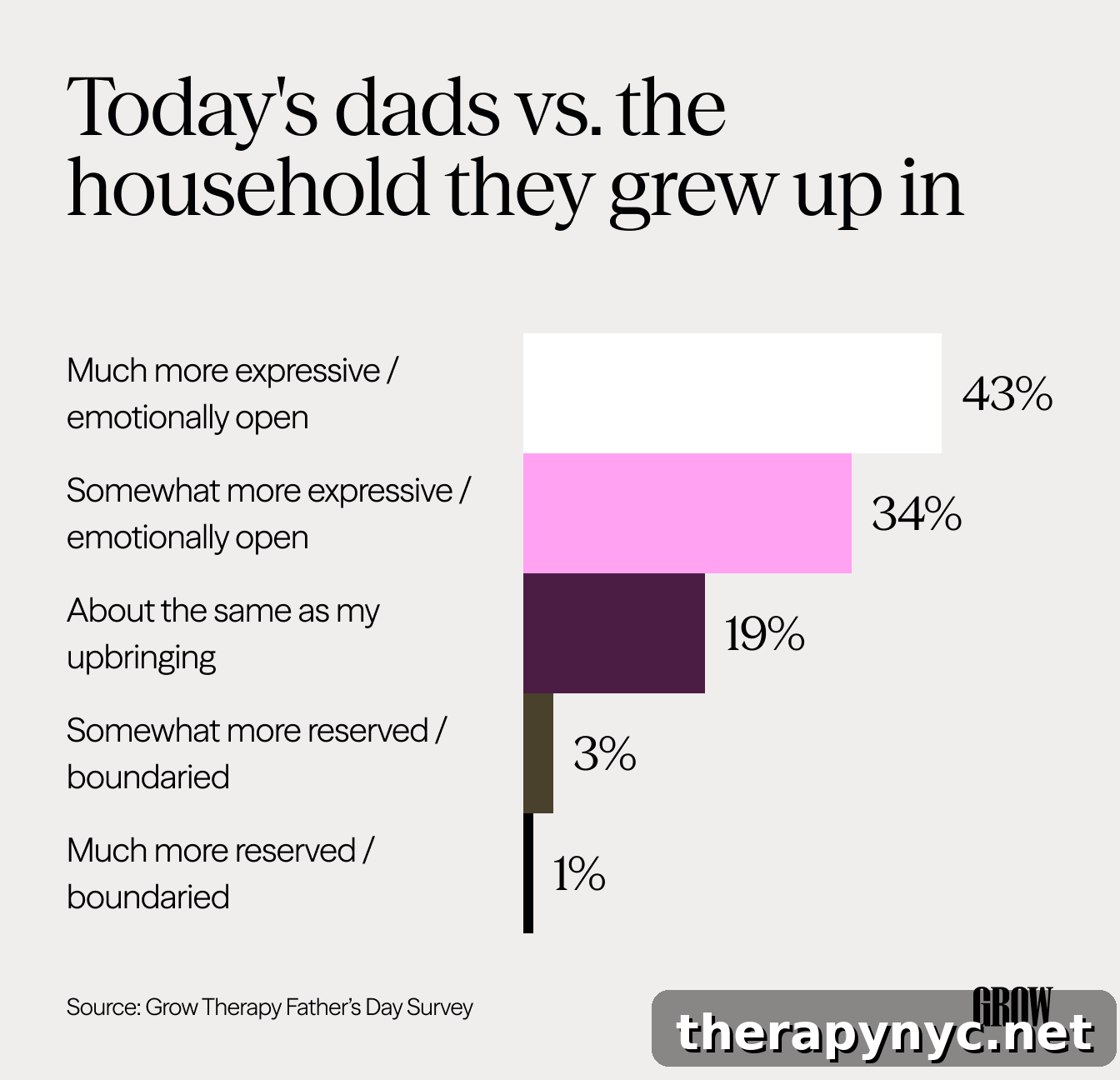
The results reveal progress and remaining gaps. While 78% of surveyed fathers say they talk about emotions and mental health with their children more openly than the household they grew up in, turning that intention into consistent modeling—showing vulnerability in healthy, age-appropriate ways—remains a work in progress.
Key takeaways
- 78% of fathers report being more open about emotional and mental health conversations with their children than the environment in which they were raised.
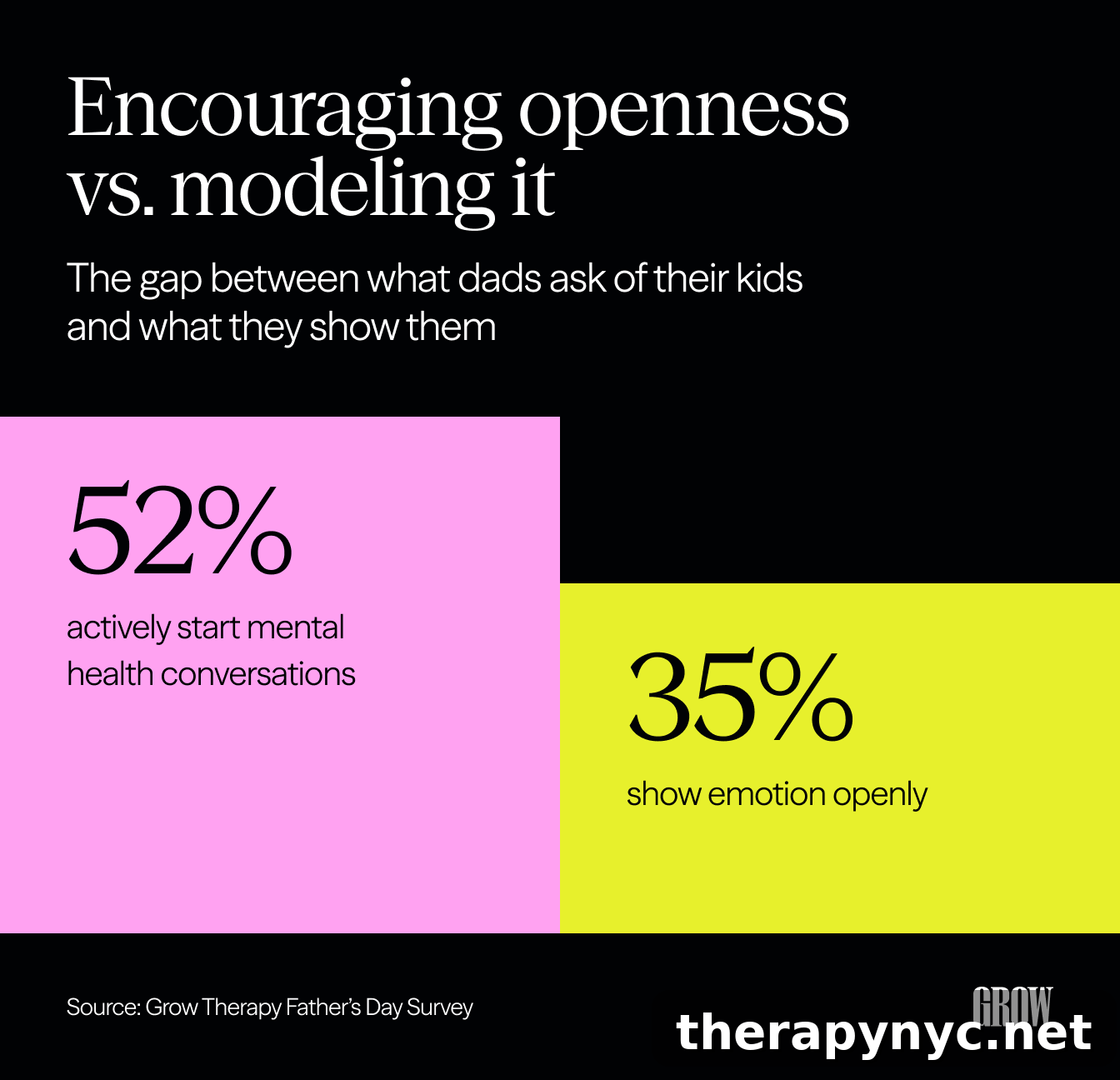
- 70% encourage their children to bring emotional or mental health concerns to them, but only 52% proactively start those conversations and feel prepared to lead them.
- Just 35% of fathers say they “express vulnerability openly” as part of their parenting approach, indicating many are still figuring out what healthy emotional modeling looks like in practice.
- Only 20% would tell their children if they had attended therapy, even though 38% said professional support for their child would be most helpful right now and 35% said the same for themselves.
Today’s fathers are having the mental health conversations their own dads largely didn’t
Nearly four in five fathers describe their approach to emotional and mental health conversations as more expressive than what they experienced growing up. Those patterns are shaped by early male role models: 82% of respondents named a father or stepfather as their primary male adult during childhood. For many, the choice to be more open is deliberate—rooted in what they remember needing and what they now want to offer their own children.
Most fathers in the survey weren’t raised in completely closed households. Three-quarters of those with a primary male figure in childhood felt at least somewhat comfortable bringing emotional or mental health problems to that person. That foundation helps many fathers feel confident encouraging similar conversations in their own homes: 70% say they actively invite their children to come to them about emotional or mental health concerns.
Did you know?
Among fathers who felt very uncomfortable opening up to their own primary male adult figure growing up, 88% now describe themselves as more emotionally expressive with their children—compared with 77% of fathers who had a very comfortable relationship with their own dad.
Even fathers who had more emotionally available role models often aim to go further. The data suggests that motivation comes from different starting points, but the trend is consistent: most fathers want to do things differently and more openly than previous generations.
Most dads are starting the conversation, but modeling is the harder step
Opening a conversation about feelings is not the same as modeling vulnerability. Vulnerability is a practiced skill: it requires naming what you feel, tolerating the discomfort of exposure, and trusting others to respond constructively. Many adults never had models of healthy vulnerability growing up, so learning how to show it to children takes time and practice.
In this survey, 52% of fathers say they proactively start mental health and emotional conversations with their children and feel prepared to lead them. Another 26% try to start conversations but sometimes feel unsure of the right words, while 15% do not initiate conversations but make themselves available when their child comes to them.
Active listening—being available and receptive—is already a meaningful form of care and can create a secure foundation. Yet only 35% of fathers selected “express vulnerability openly” as a parenting approach. That gap suggests many fathers are still navigating how to balance steadying presence with visible emotional honesty.
Survey responses also highlighted practical approaches fathers are using:
- 53% encourage their children to talk about emotions.
- 47% teach that mental health is as important as physical health.
- 42% create routines that support emotional well-being.
- 42% model staying calm and composed during stress.
- 35% emphasize resilience and managing emotions so they do not overwhelm daily life.
- 31% avoid phrases like “tough it out” or “suck it up.”
Calmness can be an asset when children need reassurance, but without emotional visibility it can be mistaken for stoicism or emotional withholding. The challenge many fathers face is showing steadiness while still making emotions visible enough for children to learn healthy expression.
Change rarely happens overnight. Wanting to parent differently and consistently doing so in difficult moments are two distinct challenges. Many fathers in this survey are actively learning and practicing emotional openness—an important step for the next generation.
Dads are warming up to therapy — talking about it at home is the next frontier
While fathers increasingly accept the value of professional mental health support, therapy still feels personal and private for many. Only 31% of fathers discuss therapy at home as a normal part of life, and just 20% would tell their children if they had attended therapy.
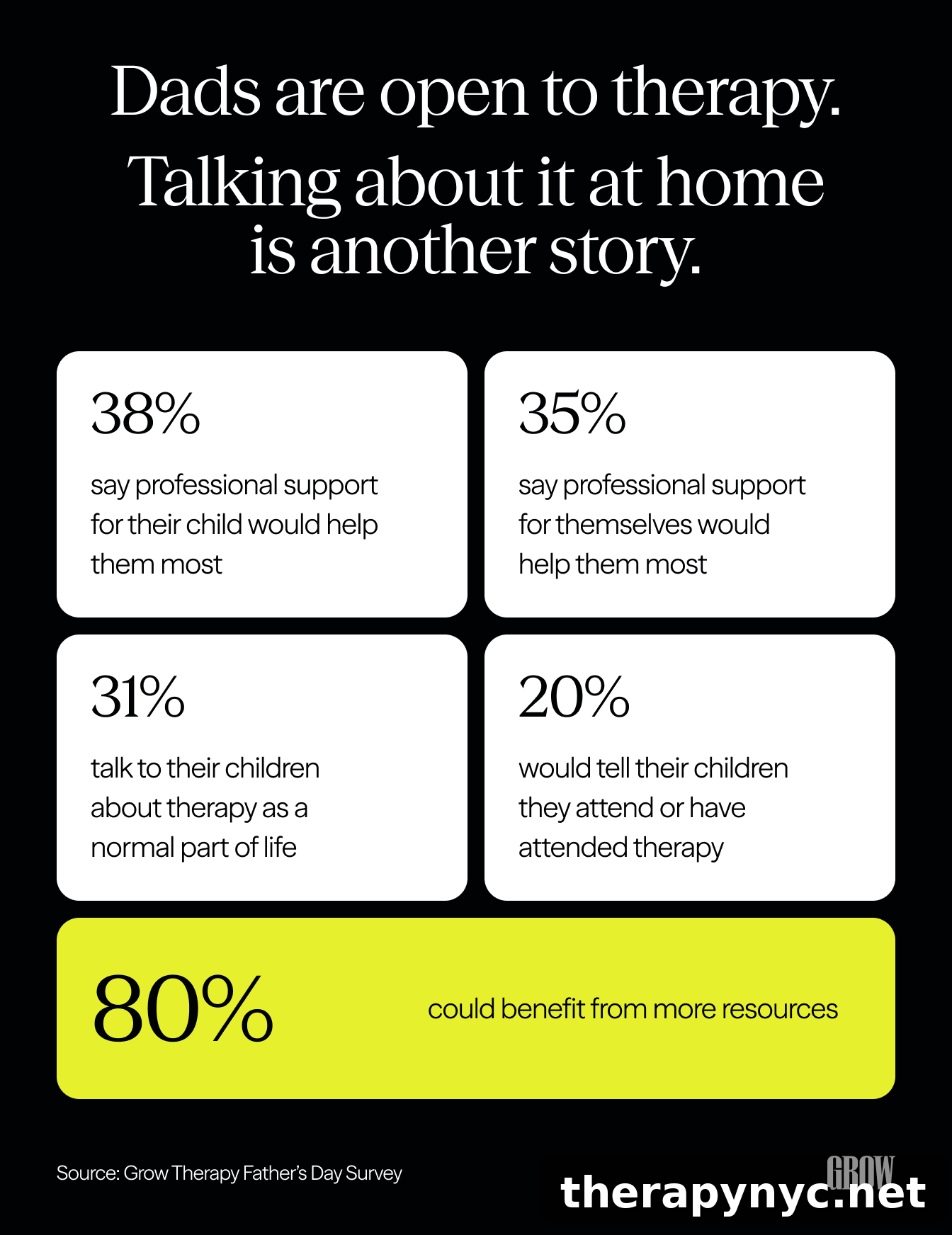
That reluctance does not reflect disinterest. In the survey, 38% of fathers said professional support for their child would be most helpful right now, and 35% said professional support for themselves would be most helpful. Fathers tend to recognize therapy’s value before they feel ready to normalize it at home—especially when weighing how to explain it in honest, reassuring, age-appropriate ways.
Many fathers want more practical resources: 37% said books, podcasts, or content made specifically for fathers would help; 31% wanted a community of other fathers; 28% asked for language or scripts to start conversations. Only 20% feel adequately equipped, meaning four in five fathers see room for additional support.
Framing therapy as a healthy tool adults use to care for themselves can make mental health care feel ordinary rather than alarming to children. Finding the right balance—modeling openness without asking children to bear adult burdens—remains a skill many fathers are learning.
What this means for the next generation
The data show fathers today understand what’s at stake and are actively trying to do something about it. They want to parent differently, and many are already taking steps toward more open emotional communication. The practice of emotional openness grows over time: small, consistent changes in how parents talk about feelings and ask for help can reshape how the next generation understands mental health.
For fathers seeking professional support—either for their child or for themselves—looking for licensed clinicians who specialize in parenting, child and adolescent care, or men’s mental health can be helpful. Many child therapists also offer family-focused support that includes coaching for parents on how to model emotional expression and build new parenting strategies.
Methodology
This survey was conducted by Centiment for Grow Therapy and fielded from May 11–15, 2026. The results are based on 1,534 completed surveys. To qualify, respondents were screened to be U.S. residents, at least 18 years old, and fathers of at least one child aged 18 or younger. Data are unweighted; the margin of error for the total sample is approximately +/-3% at a 95% confidence level.