Online Trauma Counseling: Compassionate Support for Recovery

Traumatic experiences are common: nearly 90% of people encounter a traumatic event in their lifetime. Choosing to pursue healing—by reaching out for professional help—can significantly improve your long-term quality of life. But looking for the right trauma therapist online can feel overwhelming, and it’s easy to run out of energy before you find a good fit.
This guide helps you navigate top online trauma counseling options. It summarizes platform types, highlights trauma-focused therapies recommended for treating PTSD, and offers practical tips for choosing an online trauma therapist—whether you’re an adult working through past trauma, a parent supporting a child, or somewhere in between.
Key takeaways:
- Full-service counseling platforms let you view provider bios, confirm estimated in-network costs, and book directly.
- Directories surface trauma-trained clinicians and prioritize identity-fit, but leave billing and scheduling to you.
- For trauma and PTSD, major evidence-based treatments include cognitive processing therapy (CPT), prolonged exposure (PE), and trauma-focused cognitive behavioral therapy (TF-CBT).
- Insurance acceptance and medication management differ by platform, so check each provider’s coverage and services before booking.
An overview of the top online trauma counseling platforms
Below are leading platforms and directories that offer trauma-focused care. They range from insurance-supported networks to searchable directories with inclusive filters for identity and specialty.
| Platform | Takes insurance? | Accepts Medicare/ Medicaid? | Offers medication management? | Payment model |
|---|---|---|---|---|
| Grow Therapy | ✓ (Accepts 135+ plans) | ✓ | ✓ | Pay-per-session |
| BetterHelp | ◑ (Limited by state) | ✗ | ✓ (via a separate partner) | Subscription |
| Talkspace | ✓ | ◑ (Does not accept Medicaid) | ◑ (not controlled substances) | Pay-per-session and subscription (varies) |
| Talkiatry | ✓ | ◑ (Does not accept Medicaid) | ✓ | Pay-per-session (insurance required) |
| Inclusive Therapists | Provider dependent | ✓ (Provider dependent) | ✓ (Provider dependent) | Provider dependent |
| Reclamation Collective | ◑ (Individual providers may offer coverage) | ✗ | ✗ | Provider-dependent or pay-as-you-can for groups |
| TherapyDen | Provider dependent | ✓ (Provider dependent) | ✓ (Provider dependent) | Provider dependent |
| Thriveworks | ✓ | ◑ (Does not accept Medicaid) | ✓ | Pay-per-session |
| Little Otter | ◑ (Limited) | ✗ | ✓ | Pay-per-session |
1. Grow Therapy

Grow Therapy is an insurance-supported online network of licensed therapists and psychiatric providers. The platform emphasizes transparency: you can review full provider bios and credentials, see real-time availability, and get in-network cost estimates before booking. Many providers offer evening and weekend appointments, and you can switch therapists at no charge if the fit isn’t right.
Cost and insurance
- Accepts 135+ insurance plans, including major carriers and Medicare/Medicaid where available.
- Cost with insurance: potentially $0 at first session; average client-reported cost around $21 per session depending on plan.
- Cost without insurance: $75–$250 per session, depending on provider credentials and location.
Features
- Search filters for trauma specialties, identity-affirming care, language, and clinical background
- In-network cost estimates and real-time calendar availability
- Both virtual and in-person sessions where offered
- Medication management and integrated care options
Who it’s best for
People who want to search detailed provider profiles, use in-network benefits, and coordinate therapy with medication management in a single platform.
| Pros | Cons |
|---|---|
| Full bios, transparent in-network pricing | In-person availability varies by region |
| Pay-per-session—no subscription | Self-pay rates differ by provider |
| Progress tracking and integrated notes |
2. BetterHelp
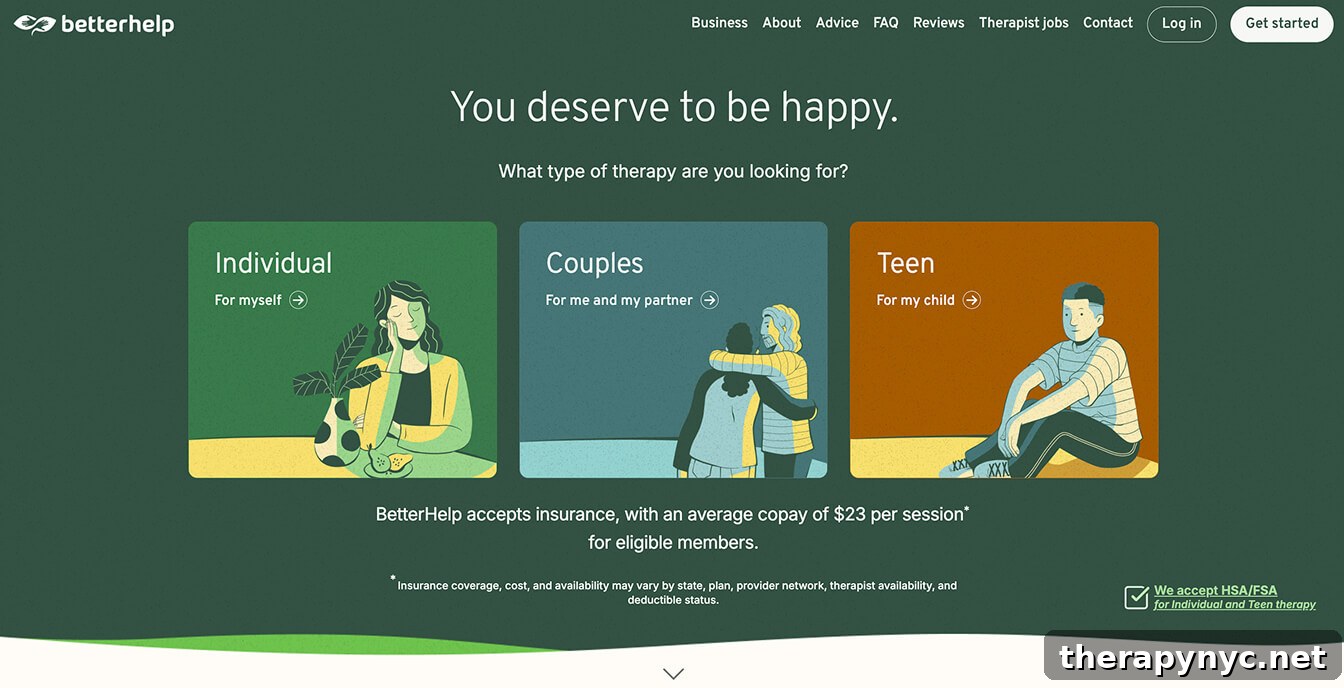
BetterHelp is a popular subscription-based therapy platform that pairs users with therapists, some of whom have trauma experience. Insurance coverage is limited by state, and most users pay a weekly subscription rather than per session. Sessions include phone, video, and live chat, plus between-session messaging.
Cost and insurance
- Insurance: limited and varies by state
- Cost with insurance: copays average around $23/session for eligible members
- Cost without insurance: $70–$100 per week on a subscription plan
Features
- Weekly live sessions and unlimited messaging
- Financial aid options for qualifying users
- Therapist switching at no extra charge
Who it’s best for
People without behavioral health coverage who want predictable monthly or weekly costs and robust between-session messaging.
| Pros | Cons |
|---|---|
| Large provider network | Limited insurance coverage |
| Flat rate covers messaging and sessions | Therapist assignment is algorithmic, which may not prioritize trauma specialty |
3. Talkspace
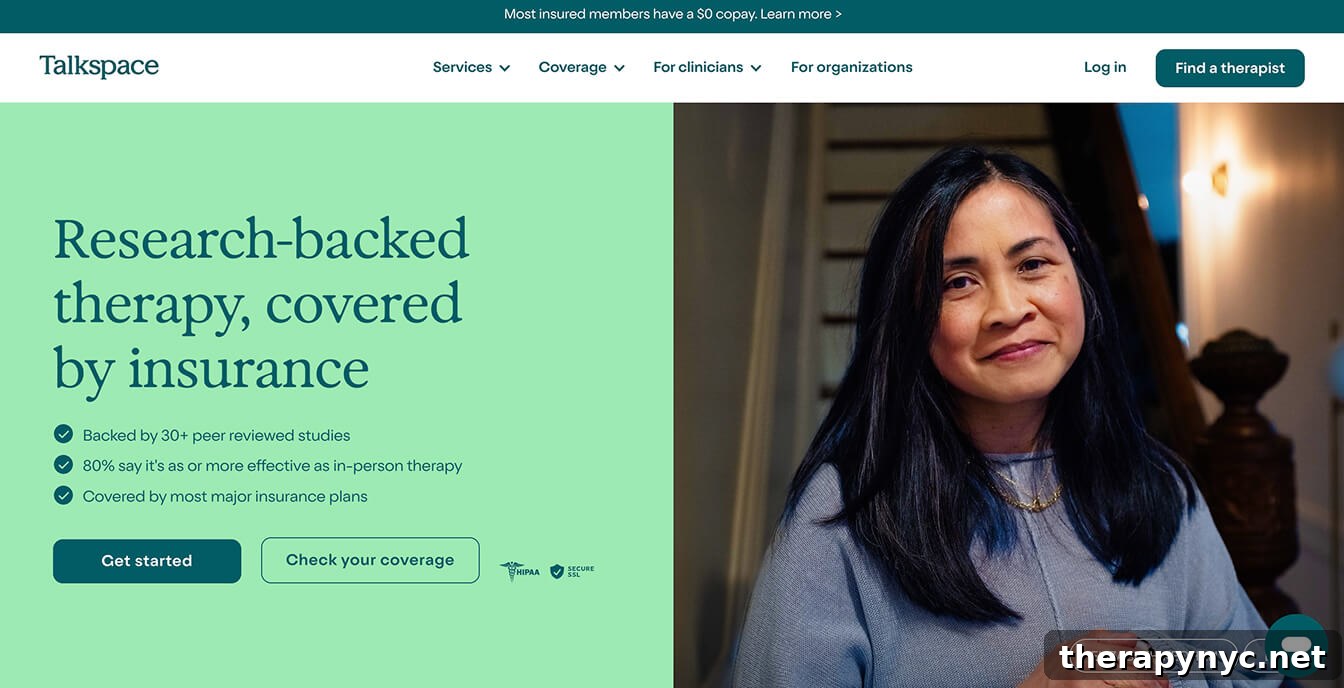
Talkspace combines scheduled live sessions with asynchronous messaging. Its network includes providers trained in many approaches relevant to trauma and PTSD. Out-of-pocket plans are subscription-based, and insurance relationships vary by plan and state.
Cost and insurance
- Cost with insurance: clients report average copays between $0 and $25/session depending on plan
- Cost without insurance: $69–$109 per week (subscription tiers vary)
Features
- Video, audio, and chat-based sessions
- Provider switching and superbills for out-of-network reimbursement
- Integrated psychiatry services in many markets
Who it’s best for
Insured clients who value between-session messaging and might want therapy and psychiatry coordinated on one platform.
| Pros | Cons |
|---|---|
| Messaging between sessions | Live video sessions can be shorter on standard plans |
| Psychiatry options available | No in-person options |
4. Talkiatry

Talkiatry is an insurance-first psychiatry practice that also provides therapy when medication is part of care for trauma-related symptoms. It requires insurance and generally does not accept self-pay. The service operates a dedicated PTSD treatment track for children, teens, and adults.
Cost and insurance
- Self-pay is not accepted
- Cost with insurance: typically $30 or less per visit depending on your plan
Features
- Personalized copay estimator before booking
- Board-certified psychiatrists and longer appointment times
- Secure messaging and assessment tools
Who it’s best for
Insured individuals who need psychiatric evaluation and medication management alongside therapy for trauma symptoms.
| Pros | Cons |
|---|---|
| No upfront payment at visit | Cannot self-pay |
| In-network guarantee for first appointment | Therapy typically occurs in combination with psychiatry |
5. Inclusive Therapists
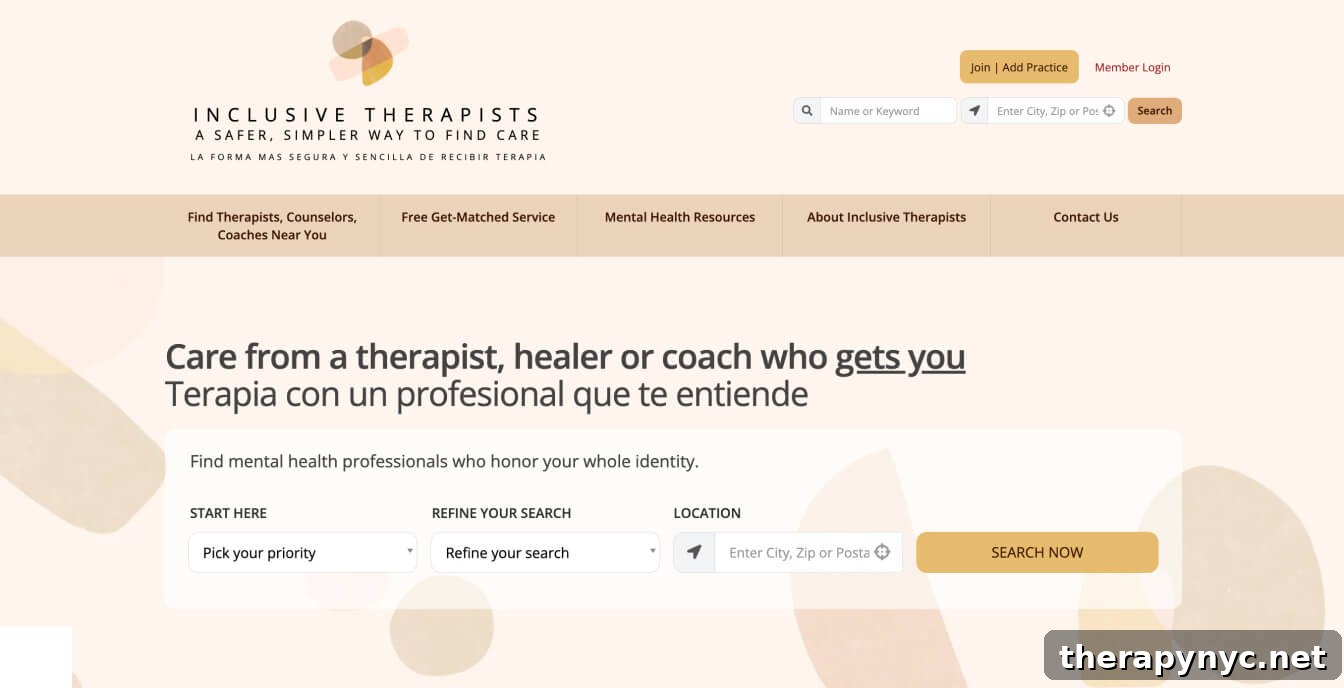
Inclusive Therapists is a searchable directory focused on culturally sensitive and identity-affirming care. It highlights providers committed to racial, 2SLGBTQIA+, neurodivergent, and disability justice, and it categorizes clinicians who treat complex trauma, C-PTSD, spiritual or religious trauma, and who are trained in modalities like EMDR and Internal Family Systems (IFS).
Cost and insurance
- Financial assistance and sliding-scale options are commonly available
- Costs and insurance acceptance vary by listed provider
Features
- Verified provider listings and human-reviewed matching service
- Filters for identity, culture, language, insurance, and sliding scale
- Community offerings like support groups and healing circles
Who it’s best for
Clients for whom cultural or identity fit is essential to feeling safe during trauma work—especially BIPOC, 2SLGBTQIA+, neurodivergent, and disabled people.
| Pros | Cons |
|---|---|
| Free to search with inclusive filters | You manage billing and scheduling with each provider |
| Sliding scales widely available | No centralized medication management |
6. Reclamation Collective

Reclamation Collective is a nonprofit offering virtual support groups and resources for people healing from religious trauma and spiritual abuse. It also maintains a referral directory of clinicians knowledgeable about religious and spiritual harm. The organization focuses on community-led survivor care and does not provide direct clinical billing or psychiatric services.
Cost and insurance
- Scholarships for support groups are available
- Support groups follow a pay-as-you-can model and may average $250–$500 when fees apply
Features
- Virtual support groups facilitated by licensed clinicians
- Directory of religious-trauma-informed clinicians
- Toolkits and educational resources for survivor-led recovery
Who it’s best for
People specifically processing religious or spiritual trauma who want peer community and clinician referrals with relevant expertise.
| Pros | Cons |
|---|---|
| Peer community plus referrals | Support groups run seasonally, not continuously |
| Accessible educational resources | Smaller clinician directory than general platforms |
7. TherapyDen
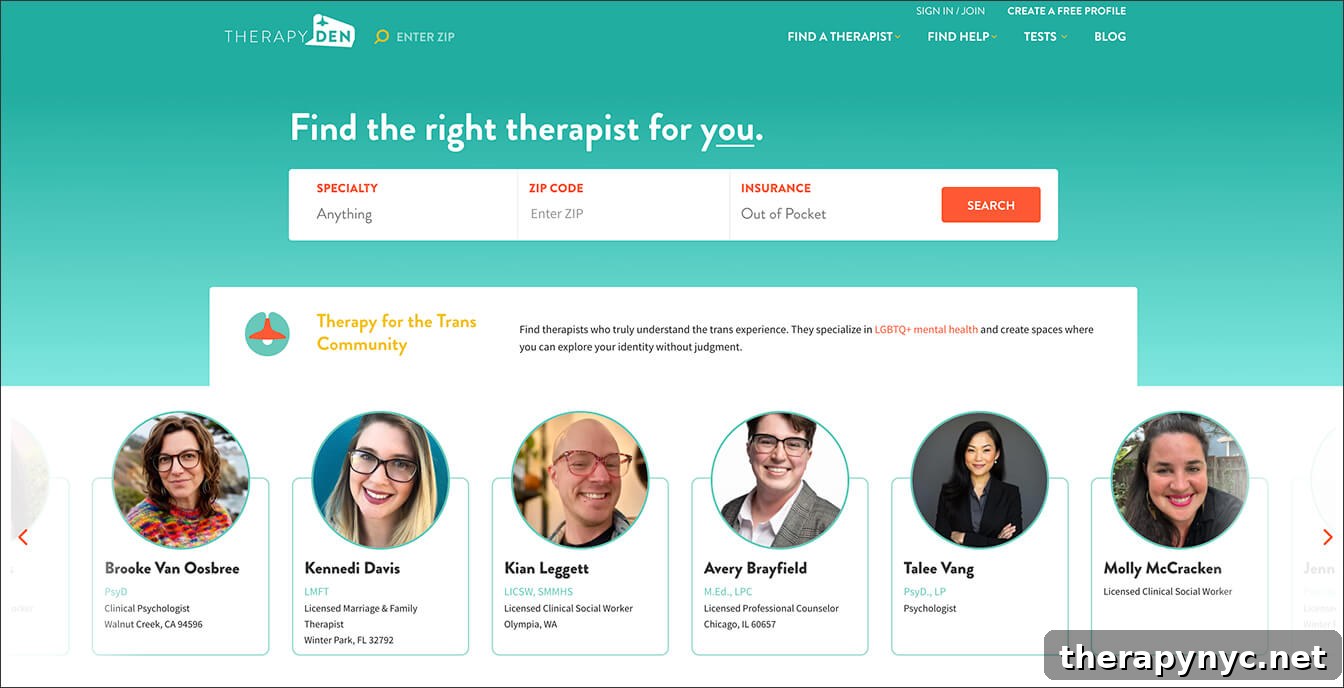
TherapyDen is a free directory with highly granular filters for issues such as cultural and systemic oppression, immigration stress, political climate stress, and trauma specialties. Each provider profile lists fees, accepted insurance, specialties, and licensure so you can vet cost and fit before reaching out.
Cost and insurance
- Free to browse; costs and insurance acceptance vary by provider
Features
- No membership or matching fees
- Map-based search for in-person care
- Best-matches and group therapy listings
Who it’s best for
People who want to independently vet providers and prioritize cultural or systemic contexts in their trauma work.
| Pros | Cons |
|---|---|
| No gated features and visible fees | Not a centralized treatment platform—you handle billing and scheduling |
| Strong filters for identity and cultural fit | Insurance verification is provider-dependent |
8. Thriveworks

Thriveworks operates a national network with 340+ offices and thousands of licensed providers. It lists EMDR, prolonged exposure (PE), CPT, IFS, and trauma-informed therapy among its approaches and supports both long-term and brief treatment models.
Cost and insurance
- Cost with insurance: average copays reported between $0 and $55 per session
- Cost without insurance: initial therapy sessions can range around $200–$240, with follow-ups lower; psychiatry rates are higher
Features
- In-person and virtual options
- Coverage verified before first session
- Provider switching supported by customer service
- Integrated psychiatry and medication management in many states
Who it’s best for
Insured clients seeking evidence-based trauma protocols and the option for in-person care.
| Pros | Cons |
|---|---|
| Offers long-term treatment models and integrated services | Psychiatry availability varies by state |
| Evening and weekend appointments supported | Does not accept Medicaid in many areas |
9. Little Otter

Little Otter focuses on child-specialized care with a whole-family model. It provides PTSD treatment for children and includes caregivers in treatment planning. Little Otter accepts some out-of-network benefits and HSA/FSA funds where applicable.
Cost and insurance
- Insurance: coverage and copays depend on individual plans
- Self-pay: assessments $200–$500; therapy sessions around $200; psychiatry sessions around $250
Features
- Free 30-minute kickoff call
- Care for infants, children, teens, parents, and couples
- Coordinated care with schools and pediatric providers
Who it’s best for
Parents seeking trauma-informed care for a child and families who want caregivers actively involved in treatment.
| Pros | Cons |
|---|---|
| Family-inclusive care, therapy and psychiatry available | Limited in-network insurance list |
| Care leads coordinate across systems | Available in a subset of states |
Tips for choosing an online trauma therapist
A platform comparison is a good start, but choosing a therapist comes down to training, approach, and practical fit. Here are key considerations to guide your search.
Check trauma-specific training and credentials
“Experience with trauma” is vague. Look for formal training or certification in trauma modalities (for example, CPT, prolonged exposure, TF-CBT, EMDR) and confirm licensure such as LCSW, LPC, LMFT, Psy.D., or Ph.D. Ask specifics about where they trained and how they work with trauma symptoms.
- Which trauma treatments are you formally trained in?
- Are you certified in EMDR, or trained without certification?
- How do you decide when a client is ready to process memories?
- What support is available if I become overwhelmed in a session?
- How do you measure progress?
Consider your specific type of trauma
Different trauma histories call for different approaches. Use platform filters to find providers who treat single-incident trauma, childhood or developmental trauma, complex and repeated trauma, relational or betrayal trauma, religious or spiritual harm, birth and perinatal trauma, and generational or systemic trauma.
Think about practical fit, not just clinical fit
Trauma treatment requires consistency. Consider session length (30 minutes may not be enough), availability for evening or weekend appointments, cost and cancellation policies, and whether in-network billing is important to you.
Know that you can switch if it’s not working
Changing therapists is normal and often helpful. Trauma work depends on a safe, trusting relationship; if a provider isn’t the right fit, try a few sessions before deciding. Choose a platform that makes switching easy.
Find trauma care with Grow Therapy
Effective trauma counseling is built on trust, safety, and consistent care. Whether you need support for religious trauma, grief, abuse, or PTSD, take time to review provider credentials, specialties, session times, and costs. Many platforms—including insurance-supported networks—let you schedule an initial intake within days once you find a suitable provider.
In a first online therapy intake for trauma, expect mostly conversation: your clinician will gather history, symptoms, and goals in a 45–60 minute session and begin a treatment plan. Early sessions often focus on stabilization and coping skills before processing traumatic memories.