Therapist Bio Examples and Writing Tips for Clinicians

As the mental health marketplace grows, a clear, compelling therapist profile is essential for practice growth. Your bio is often the first point of contact for prospective clients, and because people searching for care are frequently in vulnerable places, a thoughtfully written bio can determine whether they reach out or move on.
Key takeaways
- Your bio is a potential client’s first impression. Lead with empathy, not credentials.
- The more specifically you write for your ideal client, the more strongly they’ll feel the connection.
- Use plain, accessible language; avoid clinical jargon that may alienate prospective clients.
- Aim for 150 to 250 words when appropriate—personal enough to resonate, concise enough to be read.
- Review and update your bio regularly to keep it current and to test what works.
Why your therapist bio matters
Most people searching for therapy spend only a few minutes, sometimes seconds, scanning profiles. When visitors land on your page they typically see a photo, your name, a list of specialties, and your bio. That bio is where you speak directly to a prospective client and invite them to imagine what working with you would be like.
How clients use your bio to decide on care
Potential clients often read bios like a friend’s recommendation: they want to know you understand what they’re facing, that your approach aligns with their needs, and that you feel approachable. This is especially true on online directories and telehealth platforms where your bio may be the only content someone sees before deciding to contact you.
A person’s first therapy experience can shape their view of mental health care. If the first therapist doesn’t feel like a good fit, they may hesitate to try again. Clear, honest descriptions of your style and approach help people determine whether you might be the right match.
Not every therapist is right for every person. A mismatch doesn’t mean anyone did anything wrong; it usually means the connection or the approach wasn’t the best fit for that individual.
Balancing professionalism, warmth, and safety
You want readers to feel confident in your qualifications while also sensing you are someone they could talk to. Avoid bios that read like a CV, but also keep a professional tone so you don’t undermine credibility. Demonstrate safety and ethical boundaries alongside warmth.
Most important things to include in your bio
At minimum, your bio should cover who you help, how you work, your credentials and licensure, and a clear invitation to connect. These details build initial credibility and help prospective clients decide whether to reach out.
How can I clarify my audience and niche?
A common mistake is trying to appeal to everyone. When a bio tries to be all things to all people, it often resonates with no one. Identifying and focusing on a niche helps you use limited space and attention to attract the right clients.
Identifying your ideal client
Visualize the person you most want to work with. What specifically are they struggling with? What keeps them up at night? Use concrete, relatable details that spark recognition. Writing with that single person in mind makes your bio feel targeted and authentic.
Naming populations you serve
Be clear about who you work with: adults, teens, couples, LGBTQ+ clients, veterans, new parents, and so on. These descriptors help visitors quickly determine whether they’re in the right place and improve matching in directories and search results.
Being inclusive without trying to serve everyone
There’s a difference between using welcoming language and implying you serve every concern. Statements like “I work with a wide variety of concerns” can dilute your message. Instead, list your primary focus areas and use tone to signal openness—mention if you are LGBTQ+-affirming or culturally sensitive to communicate inclusivity while still highlighting your specialties.
How do I define my voice and tone?
Your voice is a major differentiator. Two clinicians with similar training can write very different bios; tone often determines which one resonates. Choose a voice that matches the clients you want to attract.
Choosing formal, conversational, or somewhere in between
Most effective bios strike a balance: professional enough to convey competence, conversational enough to feel human. Read your draft aloud—if it sounds stiff, loosen it. Avoid technical jargon; most clients want to know whether you can help them feel better in everyday terms.
Using first person versus third person
First person (“I specialize in…”) typically feels warmer and more direct. Third person can come across as formal and distant—use it for CVs, but prefer first person for client-facing bios.
Conveying warmth, boundaries, and cultural humility
Small word choices convey warmth: “I’d welcome the chance to connect” feels more inviting than “Contact me to schedule.” Cultural humility appears when you acknowledge how clients’ identities and lived experiences shape the work. State that you approach sessions without judgment and with curiosity.
Learn from other bios without copying
Read other therapist bios to see what works. Note styles and phrases that resonate, but don’t copy—use examples to discover why certain approaches feel effective and adapt lessons to your own voice.
Structuring your therapist bio
A clear structure helps readers feel understood and confident in your qualifications. Use a repeatable framework that works across directories and your website.
Recommended length and format
Many directories perform best with 150–250 words. Longer bios can be skipped by busy readers. Keep paragraphs short, focused, and ensure each sentence serves a purpose.
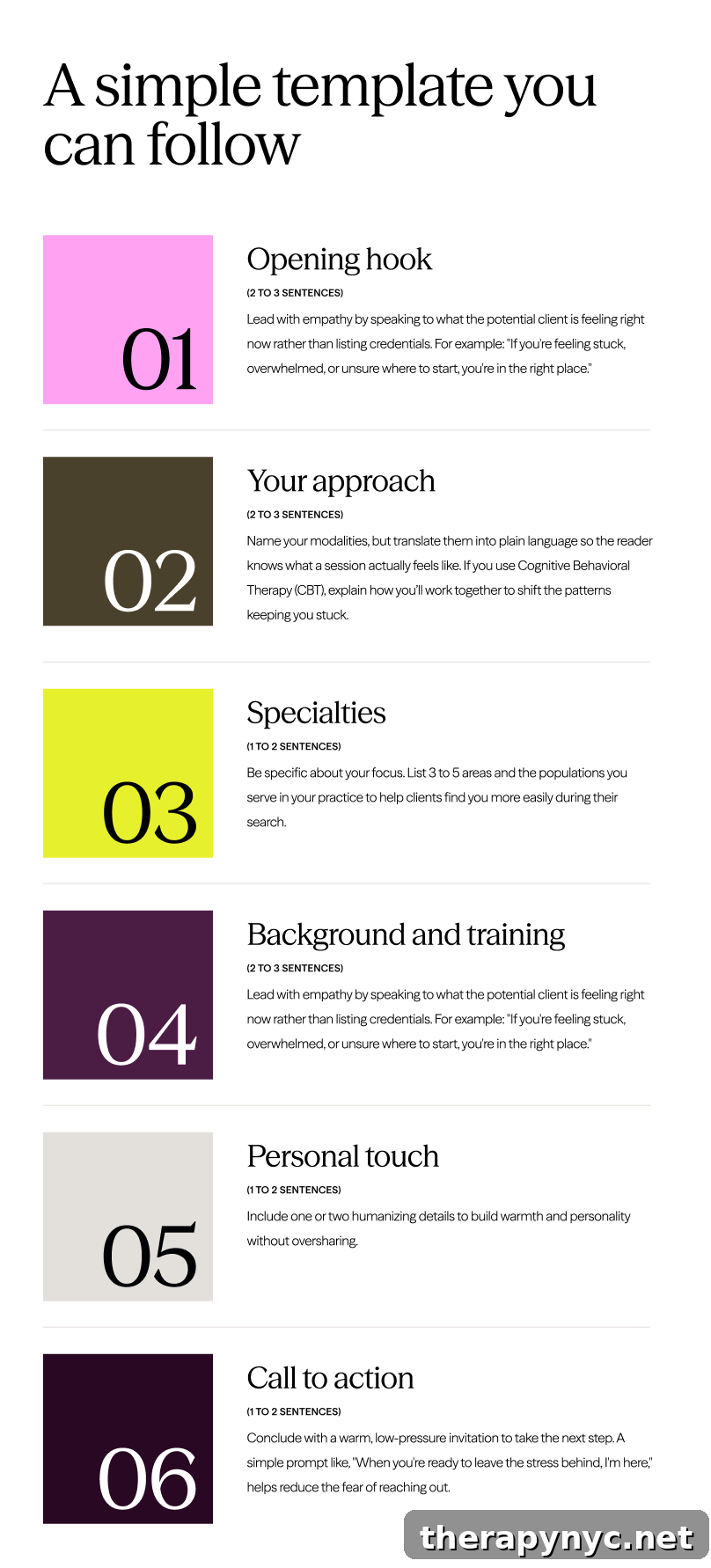
Online directory versus private practice website bios
Match the length and tone to the platform. Directory entries often have character limits and are viewed on mobile, so prioritize the most important information first. On your own website you have more space—still, lead with the client’s needs rather than a long list of qualifications.
How should I start my therapist or provider bio?
The first sentences are critical. Lead with the client’s concerns, not your credentials. A strong opening puts the reader’s experience front and center and encourages them to keep reading.
Start with the client’s concerns
Rather than opening with credentials, try a client-focused lead: “If you’ve been feeling overwhelmed, stuck, or exhausted from trying to cope on your own, you don’t have to carry it alone.” This type of opening immediately connects with someone in distress.
Use plain language instead of clinical jargon
Many clients won’t recognize therapy modalities or acronyms. If you mention specific approaches, briefly explain what they feel like in practice. Use clear language that demystifies the work and reduces intimidation.
Should I include my rates or insurance?
Including rates or insurance information in your bio is optional but can reduce friction for people who consider cost when choosing care. If your rates are competitive or you accept many insurance plans, a brief mention can encourage good-fit clients to get in touch. On some platforms pricing and insurance are displayed separately, so you can keep your bio focused on connection and let the platform handle logistics. If you list rates on a personal site, keep the wording simple and avoid making price the centerpiece of your introduction.
What research says about provider bios
Studies and clinical reports indicate that clear, empathetic profiles increase engagement. The therapeutic relationship is a leading predictor of positive outcomes, and the bio is often where that relationship first begins to form.
What should my therapist/provider bio cover?
After a strong opening, use the body of your bio to build trust and help clients picture themselves in your care. Cover the following areas concisely and accessibly.
Explain how you work in the therapy room
Describe the feel of sessions: structured or exploratory, whether you use practical exercises or reflective conversation, and what a client can expect in the first meeting. Concrete expectations reduce uncertainty and increase the likelihood of contact.
Highlight training, credentials, and experience
List degree, license type and state, years in practice, and any specialized training most relevant to the clients you serve. Keep this section readable and approachable rather than a technical résumé.
Share appropriate personal details
A couple of personal touches—a hobby, a guiding value, or a brief human detail—can make your bio memorable and increase connection without oversharing.
Write for inclusivity and accessibility
Use welcoming language that respects diverse backgrounds and identities. If you provide services in multiple languages, consider offering your bio in those languages or noting language accessibility.
Editing, refining, and getting feedback
A strong draft is just a start. Regular editing, peer feedback, and simple checks for clarity will turn a good bio into a great one.
Common mistakes to avoid
Avoid leading with credentials instead of client concerns, excessive jargon, vague audience descriptions, and skipping a call to action. Also, don’t write your bio once and forget it—keep it updated.
Check for clarity, warmth, and accuracy
Read your bio as if you’ve never met the writer. Does it make you want to reach out? Does it sound human? Ask a trusted colleague to proofread for typos and tone.
Ethical and legal considerations
Ensure your bio follows licensing board guidelines: be accurate about credentials, avoid guaranteeing outcomes, and do not use client testimonials without consent. When unsure, consult your licensing board or professional association.
Get feedback from colleagues and clients
Colleagues can confirm your bio reflects your professional style. Long-term clients can offer insight into what drew them to your profile and what language felt welcoming.
Maintaining and updating your bio over time
Your bio should evolve with your practice. Regularly review it to ensure accuracy and to experiment with small changes that may improve engagement.
When to revise
Update your bio whenever you earn a new certification, shift specialties, change practice settings, or notice that the clients who contact you aren’t the ones you want to serve. Change a few elements at a time so you can track what improves response.
Track what resonates
Monitor inquiry patterns to see whether prospective clients match your intended niche. If not, refine your description and messaging to better target the people you want to help.
Keep your presence aligned with your practice
Maintain a professional, current profile photo and ensure contact information and availability are accurate. Small updates can meaningfully increase the number of good-fit clients who reach out.