UnitedHealthcare Therapy Coverage: Benefits, Copays and Limits

In this article, we’ll explain UnitedHealthcare’s therapy coverage in clear, practical terms. You’ll learn which types of therapy are commonly covered, what may be excluded, how to verify the details of your plan, where to find in-network providers, and what to expect for out-of-pocket costs.
Check your coverage with a provider search tool
Key takeaways
- UnitedHealthcare generally covers mental health services, but specifics vary by plan.
- Commonly covered therapies include psychotherapy, CBT, DBT, family and group therapy, and teletherapy when medically appropriate.
- Some services may be excluded if not considered medically necessary (for example, many plans exclude routine couples counseling or career coaching).
- Costs depend on plan type, in-network vs. out-of-network status, deductibles, copays, and coinsurance. Choosing an in-network therapist typically lowers your expenses.
- To find covered providers, use UnitedHealthcare’s directory, call member services, ask your primary care provider, or use a trusted therapist marketplace that accepts your insurance.
Does UnitedHealthcare cover mental health services?
UnitedHealthcare commonly provides coverage for mental health care, consistent with marketplace plan requirements under federal regulations for individual and small-group plans. Large employers may offer different benefit designs, but many include mental health benefits as part of their health plans.
Because benefit details vary widely across plan types and employer groups, always check your specific policy documents or contact UnitedHealthcare member services to confirm the services covered, any limitations, and whether prior authorization is required.
Therapy UnitedHealthcare covers
Which therapies are covered depends on the plan, but UnitedHealthcare plans often cover these evidence-based services when they are medically necessary:
- Psychotherapy — individual talk therapy with licensed clinicians for diagnosed mental health conditions.
- Cognitive Behavioral Therapy (CBT) — a structured, goal-oriented approach often covered for anxiety, depression, and related conditions.
- Dialectical Behavior Therapy (DBT) — commonly covered for individuals with significant emotion regulation difficulties or borderline personality disorder when medically indicated.
- Family or family systems therapy — covered when needed to treat a diagnosed mental health condition.
- Group therapy — may be covered for specific diagnoses and programs.
- Teletherapy — many plans cover remote therapy via phone or video, especially as telehealth options have expanded.
Therapy UnitedHealthcare doesn’t cover
UnitedHealthcare may not cover services that are considered non-medical or not medically necessary. Typical exclusions include:
- Therapy for normal life stressors that is not tied to a clinical diagnosis (for example, general life coaching).
- Couples or marriage counseling offered solely for relationship maintenance, unless one partner has a diagnosable condition and sessions are billed against that diagnosis.
- Career counseling, vocational coaching, or other non-clinical services.
- Services from providers who are out-of-network (unless you have out-of-network benefits).
Because exclusions depend on your plan, confirm coverage specifics before scheduling services.
Can UnitedHealthcare ever cover couples therapy?
In some circumstances, yes. While standard couples or marriage counseling is often excluded, sessions may be covered if one partner has a documented mental health diagnosis (such as depression, anxiety, or PTSD) and the clinician documents that joint or relational treatment is medically necessary to treat that individual’s condition. In those situations the visit is usually billed under the diagnosed individual’s behavioral health benefit rather than as general couples therapy.
The best approach is to call the member services number on your insurance card and ask about outpatient behavioral health coverage for family or relational therapy under your plan.
How to check your UnitedHealthcare insurance coverage
There are three straightforward ways to verify your benefits:
- Online: Log in to your UnitedHealthcare account on their website or mobile app. View coverage details for mental health benefits, copays, deductible amounts, and whether your plan requires a referral or prior authorization.
- By phone: Call member services using the number on your insurance card. Ask specific questions about outpatient behavioral health, teletherapy, in-network providers, and any limits on sessions.
- By mail or employer HR: Request a printed summary of benefits or ask your employer’s benefits administrator for plan documents that outline mental health coverage.
When you check coverage, confirm these items: plan type (HMO, PPO, EPO, POS), in-network provider requirement, deductible and out-of-pocket maximum, copay or coinsurance for therapy sessions, and any limits on the number of sessions or need for prior authorization.
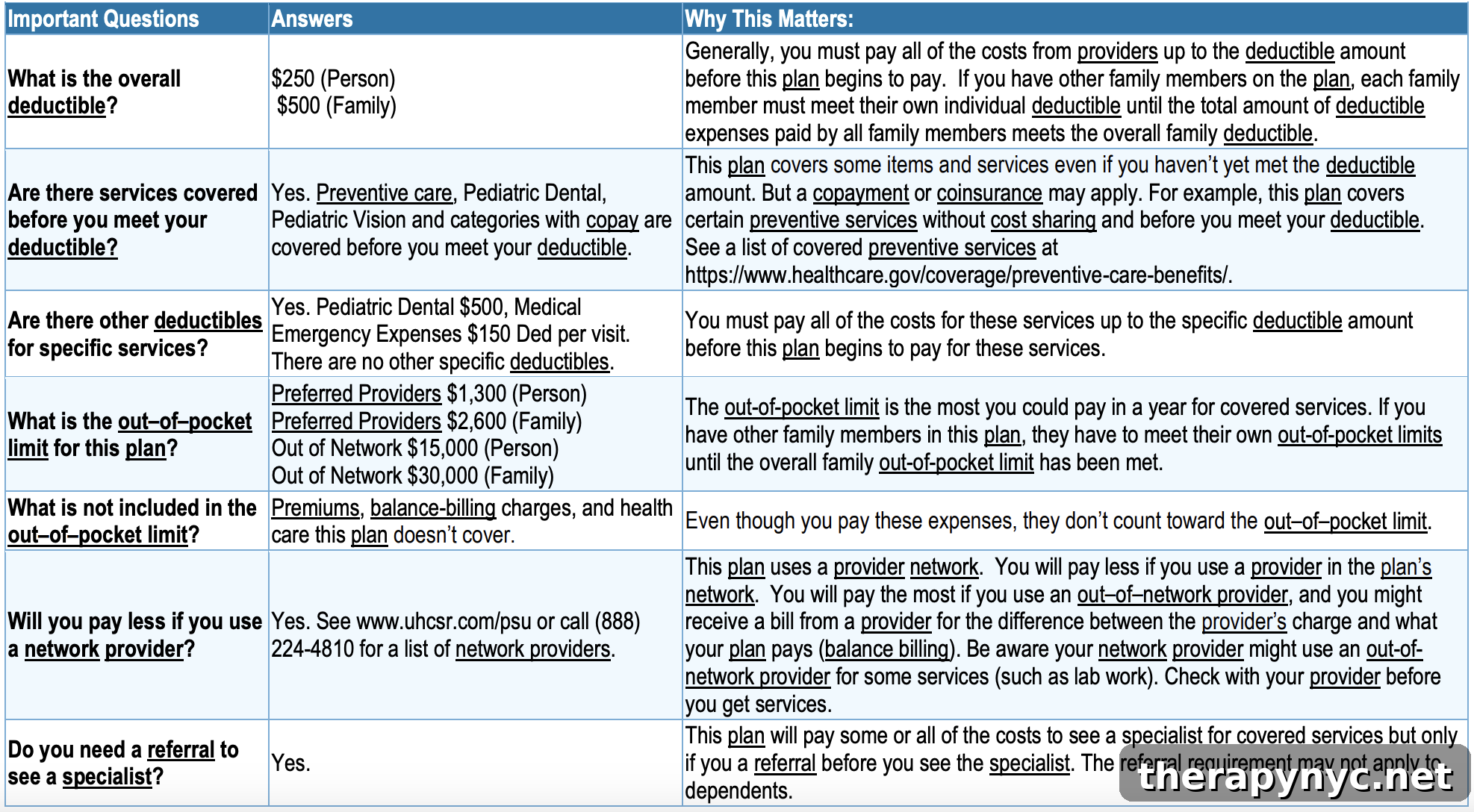
How much does therapy cost with UnitedHealthcare insurance?
Costs vary widely by plan. Key factors that influence session costs include:
- Plan design: Each UnitedHealthcare plan has its own copay, coinsurance, and deductible structure.
- Provider network: In-network therapists have negotiated rates; out-of-network providers usually result in higher patient responsibility.
- Deductibles: You may need to meet a deductible before insurance covers a percentage of costs.
- Copays and coinsurance: Some plans require a fixed copay per visit; others pay a percentage (coinsurance) after the deductible is met.
In-network vs. out-of-network
Using an in-network therapist typically means lower out-of-pocket costs because insurers negotiate discounted rates with those providers. If you choose an out-of-network therapist, you may pay more up front and submit claims for partial reimbursement if your plan allows.
Deductibles
Your deductible is the amount you must pay before your insurance begins to share costs. Therapy visits may count toward the general medical deductible or toward a separate behavioral health deductible depending on your plan.
Copays
Copays are set fees you pay per visit. Many UnitedHealthcare plans list a behavioral health copay for outpatient therapy visits. Check your plan documents for the exact copay amount and whether telehealth visits carry different fees.
Use a provider search and cost estimator
How to find a therapist who takes UnitedHealthcare
Try these methods to locate an in-network therapist:
- UnitedHealthcare’s online directory: Search by location, specialty, and provider type to find in-network clinicians.
- Call member services: Ask for a list of in-network behavioral health providers in your area and confirm any referral or authorization requirements.
- Ask a trusted clinician: Your primary care provider or a clinician you already see can often recommend in-network therapists.
- Use a vetted marketplace: Some therapist marketplaces let you filter for providers who accept UnitedHealthcare and offer teletherapy if you prefer virtual sessions.
Final thoughts
UnitedHealthcare includes behavioral health benefits in many of its plans, but coverage details vary. Before scheduling care, verify your plan’s terms: confirm which therapies are covered, whether the provider is in-network, what copays and deductibles apply, and whether prior authorization is needed.
Understanding your plan helps you access appropriate care while avoiding unexpected expenses. If you have trouble locating an in-network therapist or need help interpreting benefits, contact member services or consult your employer’s benefits team for assistance. Your mental health matters — taking the time to check coverage is a practical first step toward getting the help you deserve.