Workplace Mental Health Statistics 2026: 45+ Key Findings

We’re well past the stage where employers can treat workplace wellness as a checklist item. Rising stress, widespread burnout, and growing mental health challenges are affecting productivity, retention, and overall organizational resilience. Recognizing these trends is essential for leaders who want to build truly supportive workplaces.
Below are the most authoritative workplace mental health statistics from a range of industries and company sizes. Together they highlight the urgent issues employers must prioritize in 2026.
Although every organization has unique needs, the overall picture points to a clear requirement: accessible, high-quality mental health support for all employees.
Key statistics for 2026
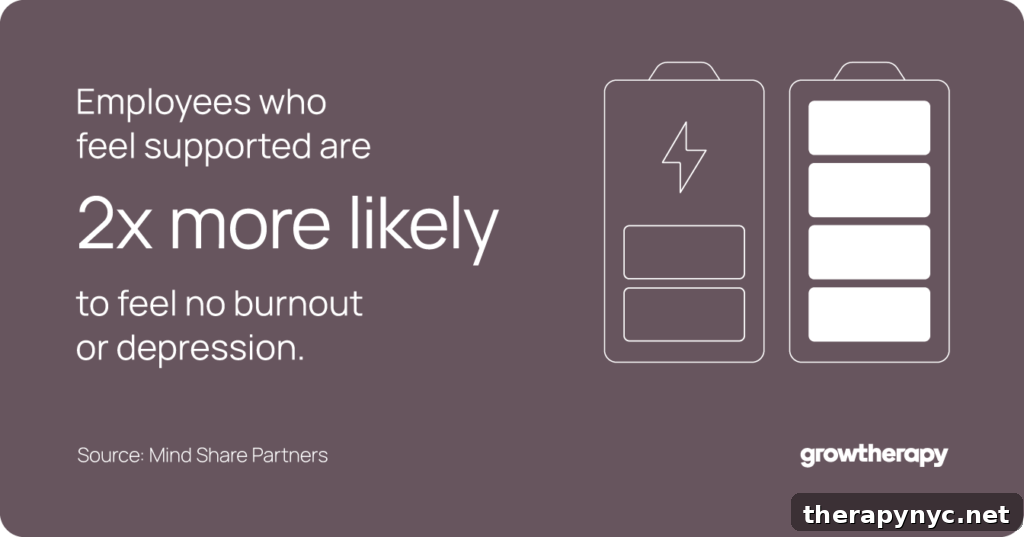
- Employer support matters: Employees who feel their mental health is supported are twice as likely to report no burnout or depression (Mind Share Partners, 2025).
- Burnout remains widespread: Two-thirds (66%) of employees reported feeling burned out in some form over the past year (Moodle, 2025).
- Stigma persists: Even though many are comfortable supporting others, 42% still avoid discussing their own mental health (NAMI, 2025).
- Financial impact is large: Reduced employee well-being contributed to $438 billion in lost productivity globally in 2024 (Gallup, 2025).
- Job insecurity is a major stressor: A majority of U.S. workers (54%) say job insecurity significantly increases their stress (APA, 2025).
- Benefits are underused: Only 53% of employees know how to access mental health care through their employer (NAMI, 2025).
How common are mental health issues in the workplace?
Mental health challenges are common across the U.S. workforce, especially in high-pressure environments. Factors such as heavy workloads, poor management, and economic uncertainty can aggravate existing conditions or create new ones. For employers, mental health is a foundational element of workforce well-being and organizational health.
- In 2024, more than 60 million people—about 23% of U.S. adults—experienced any mental illness (AMI) (Mental Health America, 2025).
- Among adults with AMI, 25% reported an unmet need for treatment during 2022–2023 (Mental Health America, 2025).
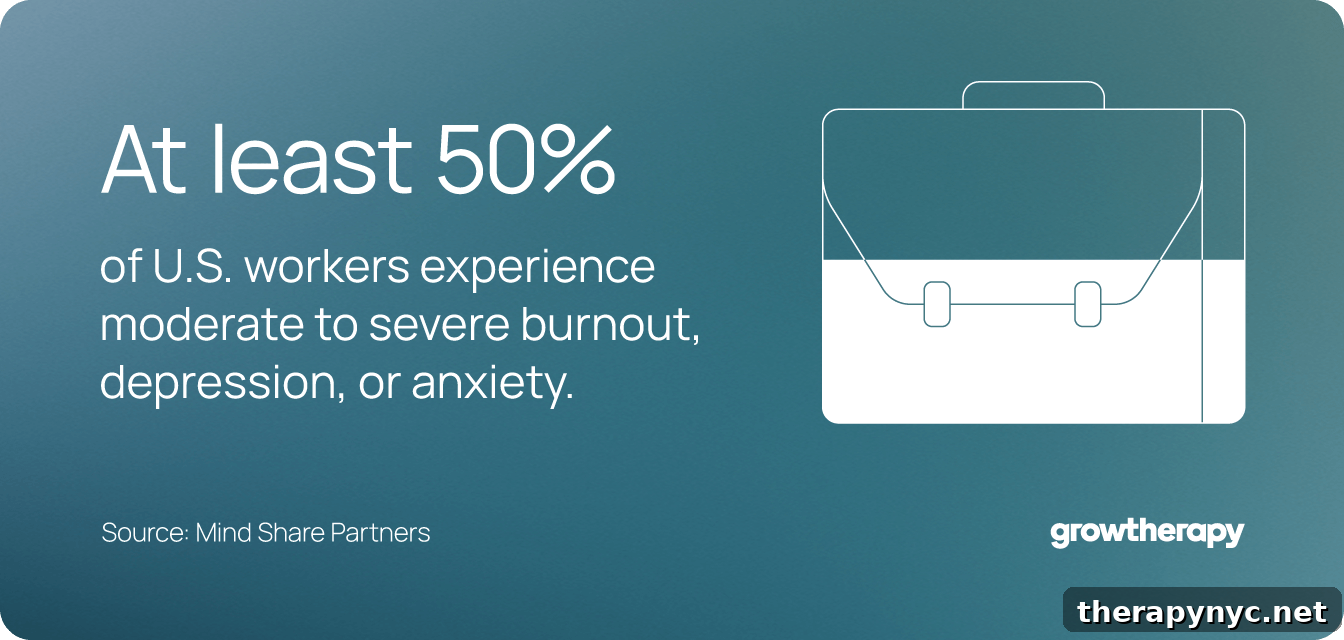
- Moderate to severe burnout, depression, or anxiety affects roughly half of U.S. workers (Mind Share Partners, 2025).
- Over three-quarters (76%) of U.S. workers experienced some level of burnout, with 53% reporting moderate to severe symptoms (Mind Share Partners, 2025).
- Women were 8 percentage points more likely than men to report feeling they are struggling or in crisis (Lyra, 2025).
How does work affect mental health in the U.S.?
Work is a leading source of stress for many Americans. The blending of personal and professional life, plus ongoing economic uncertainty, connects workplace conditions directly to mental health outcomes. Problems frequently include burnout, anxiety, and disrupted sleep.
To reduce these harms, employers must address structural workplace factors: manageable workloads, meaningful autonomy, fair recognition and rewards, and predictable expectations.
- For 25% of employees, work has a negative or very negative impact on mental health (CIPD, 2025).
- Nearly two-thirds (63%) of U.S. workers say work positively affects their mental health, showing that workplace design can be protective (Mind Share Partners, 2025).
- The top reported stressors are U.S. politics (43%), global events (42%), and personal finances (37%) (Mind Share Partners, 2025).
- Fewer than half (49%) of U.S. workers feel comfortable disconnecting after work or while on vacation (Mind Share Partners, 2025).
Burnout and employee well-being statistics
The World Health Organization defines burnout as an occupational phenomenon resulting from chronic workplace stress. It typically includes exhaustion, cynicism or mental distance from work, and reduced professional efficiency.
Burnout remains one of the greatest threats to workforce stability and effectiveness in 2026.
- 66% of U.S. employees report experiencing burnout in some form (Moodle, 2025).
- 19% say they take on too much work because of labor shortages in their industry (Moodle, 2025).
- 13% attribute burnout to worries about how AI will affect their role (Moodle, 2025).
- Employees who feel supported in their mental health are twice as likely to report no burnout or depression (Mind Share Partners, 2025).
- One in four U.S. employees often works outside scheduled hours, and 63% do so sometimes—raising the risk of chronic stress (Mind Share Partners, 2025).
- 27% of workers whose companies faced major government policy impacts reported emotional exhaustion (APA, 2025).
How does mental health impact workplace productivity?
Mental health difficulties reduce focus, motivation, and output. Investing in employee mental health yields measurable returns: better engagement, fewer mistakes, and higher productivity.
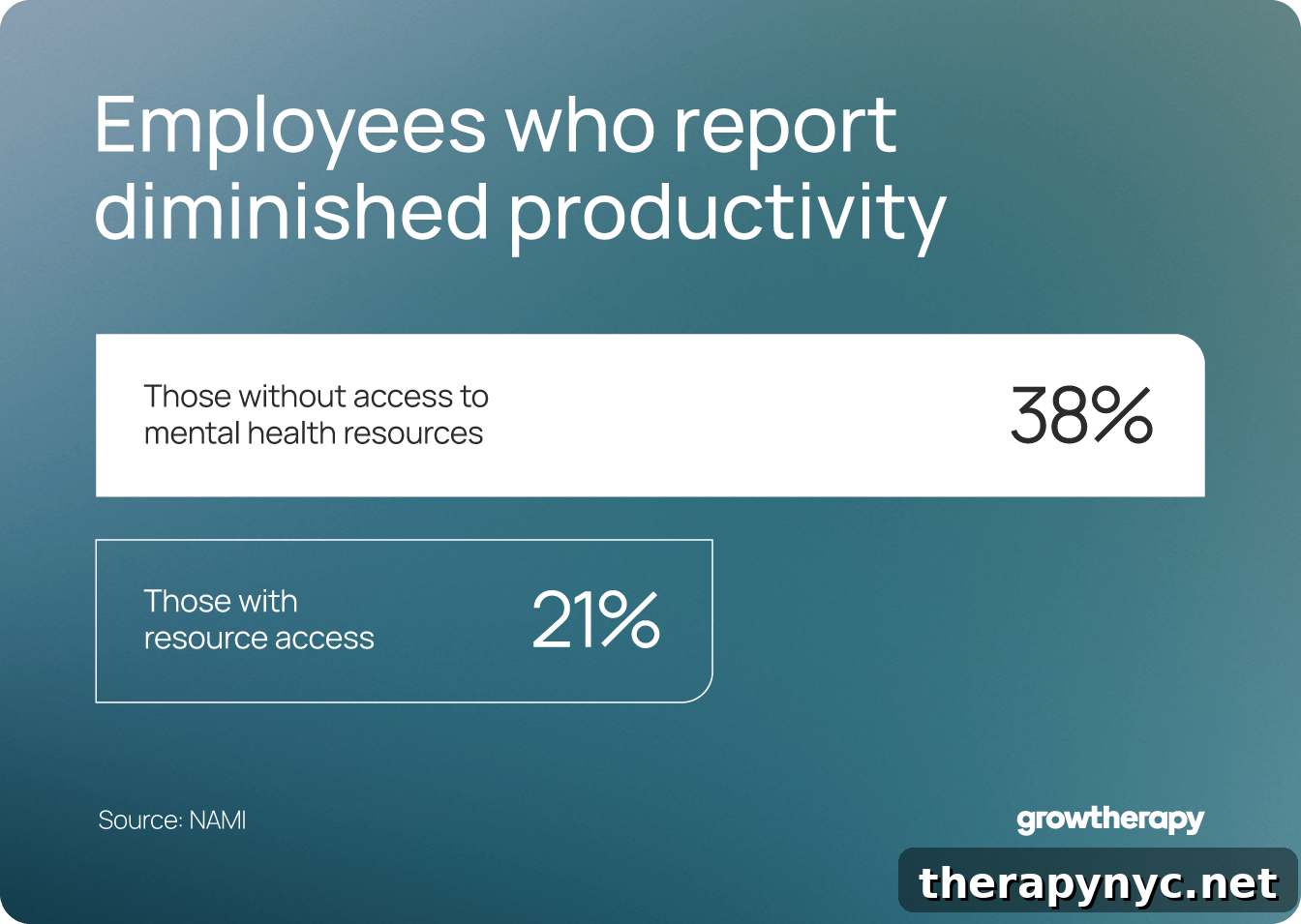
- Where mental health resources are available, fewer employees report productivity loss (21% with access vs. 38% without) (NAMI, 2025).
- In 2024, 34% of employees felt their productivity suffered because of mental health (NAMI, 2025).
- Global employee engagement fell to 21% in 2024, and the cost of lost productivity was estimated at $438 billion (Gallup, 2025).
- 48% of U.S. employees have left a job for reasons related to their mental health; two-thirds of those departures were voluntary (Mind Share Partners, 2025).
Workplace culture and support statistics
Psychological safety—where employees feel respected, included, and able to set boundaries—is the foundation of any effective mental health strategy. When safety is lacking, organizations risk reduced innovation, more errors, and lower engagement.
Simple changes—like flexible schedules, supportive managers, and stronger peer relationships—often matter more than complex benefits packages that go unused.
- Top supports workers say improve mental well-being: work-life balance and flexibility (69%), safety and openness to discuss mental health (64%), mental health benefits (59%), and self-care resources (59%) (Mind Share Partners, 2025).
- Seventy-four percent of workers rate coworkers as a positive influence on their mental health (Mind Share Partners, 2025).
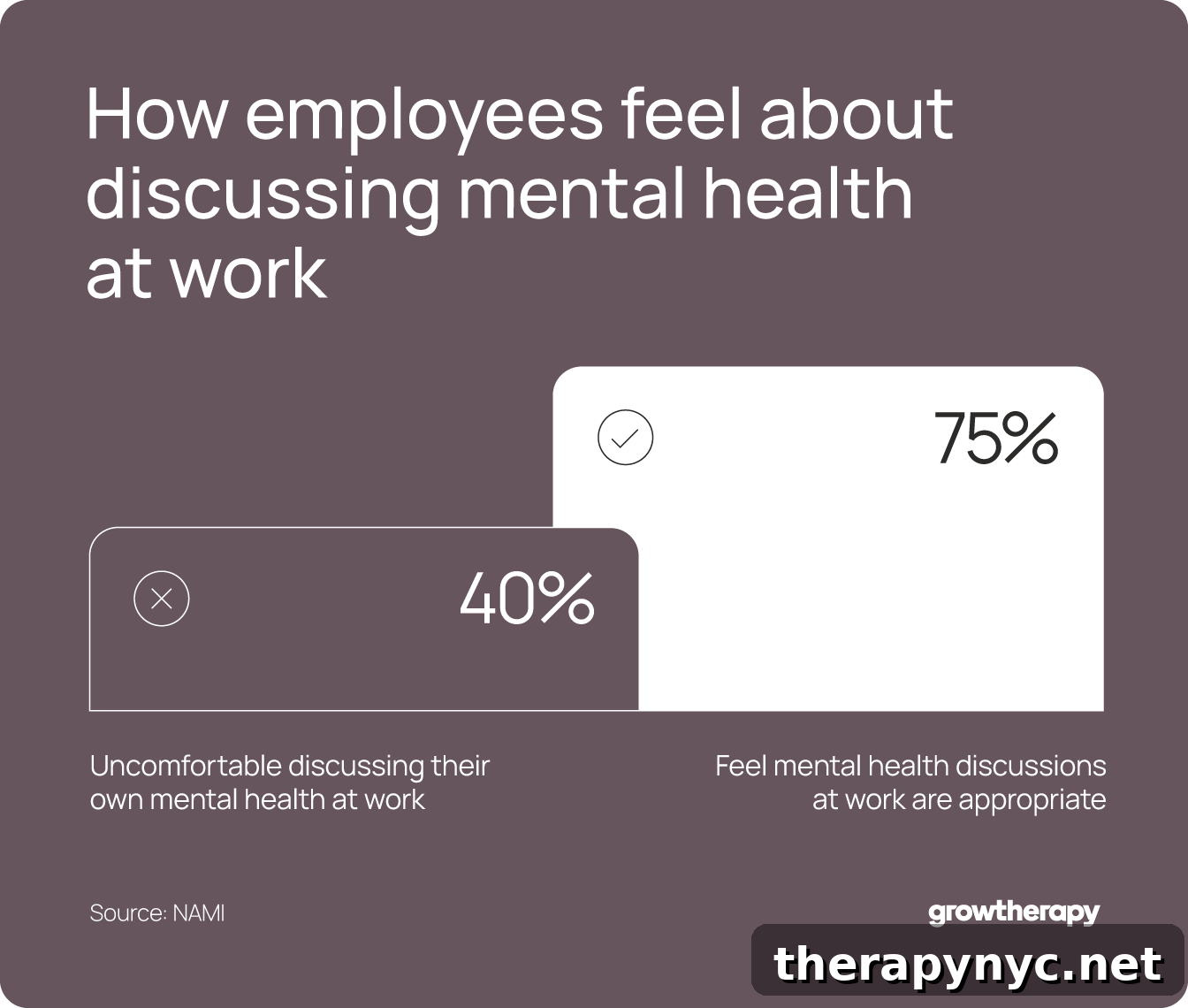
- While 75% think it’s appropriate to discuss mental health at work, 40% feel uncomfortable sharing about their own challenges (NAMI, 2025).
- Seventy-two percent of employees feel comfortable supporting a coworker in crisis (NAMI, 2025).
The ripple effect: Mental health and layoffs
Recent waves of corporate layoffs have added another layer of stress. Survivors—employees who remain—often face increased workloads, uncertainty, and anxiety, which can erode morale and engagement.
- Fifty-four percent of U.S. workers say job insecurity significantly increases their stress at work (APA, 2025).
- Among employees worried about job loss, 42% report sleep problems and 36% say personal relationships have suffered (APA, 2025).
- Middle managers (43%) and frontline workers (40%) most often fear AI could make parts of their roles obsolete (APA, 2025).
- Sixty-four percent of workers said their employer communicates transparently about how technology will affect jobs (APA, 2025).
- At companies that recently laid off employees, 65% of remaining staff worry about job security, compared to 24% at companies without recent layoffs (Nectar, 2025).
- Sixty-three percent of workers at organizations with recent layoffs plan to look for a new job within three months (Nectar, 2025).
- More than half of employees say they do not understand why layoffs occurred at their organization (Perceptyx, 2025).
- Forty-nine percent of layoff survivors report declines in morale and engagement after reductions (Kahoot!, 2025).
Employees need greater access to mental health resources
Awareness is often the biggest barrier to effective mental health support. Many organizations now offer benefits, but employees can’t use what they don’t know about or can’t access easily.
Simply providing an Employee Assistance Program (EAP) isn’t enough—programs must be visible, trusted, and easy to navigate.
- Sixty-five percent of HR professionals feel confident supporting employee mental health, down from 70% in 2024 (SHRM, 2025).
- Twenty-five percent of workplaces emphasize prevention over reaction; 38% focus more on reacting than preventing (SHRM, 2025).
- Fifty-eight percent of employees say leadership advocates for mental health, and 57% report managers check in regularly about well-being (Mind Share Partners, 2025).
- Sixty-four percent of employees feel supported by their manager if they face a mental health challenge (Mind Share Partners, 2025).
- Only 11% of workplaces require mental health training, though many report it increases comfort discussing mental health (NAMI, 2025).
Mental health benefits: Bridging the gap between offer and use
Employers are investing more in mental health benefits, but utilization lags. Common barriers include low awareness, cost uncertainty, and plan design that creates upfront expenses for care.
Tracking utilization and employee experience is essential to measure effectiveness and improve access.
- Employment-based insurance covered 54% of Americans in 2024 (U.S. Census Bureau, 2025).
- Twenty-nine percent of workers have high-deductible health plans, which can deter people from seeking treatment (Grow Therapy, 2025).
- Most employee insurance plans include mental health services, but coverage varies: telehealth (73%), counseling and therapy (62%), and ongoing treatment for chronic conditions (33%) (EBRI, 2025).
- Only 22% of employers track utilization data for mental health benefits, leaving many blind to how programs are used (EBRI, 2025).
- Fewer than half of HR respondents reported mental health programs such as training (37%) or explicit mental health policies (26%) (Mind Share Partners, 2025).
- Twenty percent of employees used employer-sourced mental health benefits in the past month; uptake is higher among caregivers, LGBTQ+ employees, and younger workers (NAMI, 2025).
- Seventy-seven percent of employees are satisfied with overall health coverage, but only 68% are satisfied with mental health coverage (NAMI, 2025).
- Just 53% of employees know how to access mental health care through their employer (NAMI, 2025).
- About a quarter of employees and 22% of managers are unsure whether their workplace offers benefits like EAPs or mental health days (NAMI, 2025).
- Organizations with comprehensive benefits are more likely to see positive ROI and improved employee engagement (Lyra, 2025).
Find the mental health support you need
These statistics show a clear and ongoing challenge for American workers: mental health is affecting productivity, retention, and quality of life. Whether you’re coping with burnout, anxiety about job security, or stress from workload and management, accessing care can make a measurable difference.
Finding timely, affordable, and qualified support is a critical step. Verified, licensed professionals who specialize in work-related stress, anxiety, and depression can help you develop strategies to manage symptoms and regain balance.
Take charge of your mental health by seeking the support that fits your needs and schedule—your well-being and professional performance will benefit.