2025 Report: How Mental Health Benefits Improve Confidence

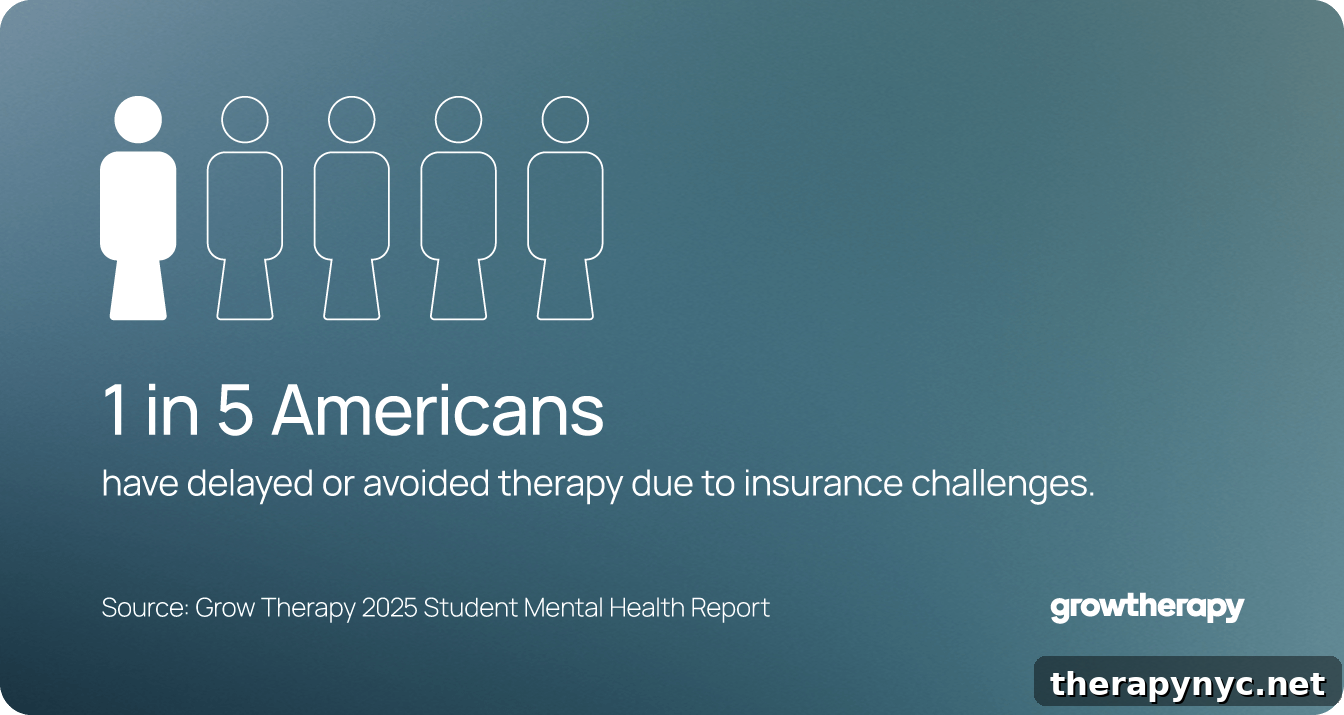
If you have ever put off therapy because health insurance felt confusing, you are far from alone. One in five U.S. adults (20%) report delaying or avoiding mental health care because they found it hard to navigate insurance or make open enrollment decisions, according to a recent survey.
For many Americans, employer-sponsored plans are the default option. But understanding whether those plans will actually cover mental health care — and at what cost — is often unclear. Even as employers expand counseling benefits and shoulder much of rising premium costs, employees frequently face complicated plan terms and unclear price signals that make it hard to choose confidently.
Unclear language, complex cost-sharing, and opaque provider networks leave many unsure whether their insurance will meet their needs. Only 64% report feeling at least somewhat confident in their ability to choose a health insurance plan that covers their mental health needs. This report highlights how clearer guidance and practical tools can help people pick the right plan and access timely therapy.
Key takeaways
- Nearly one-third (32%) say copays, deductibles, and out-of-pocket costs are the most confusing parts of choosing mental health coverage.
- One in five (20%) report delaying or avoiding therapy because of insurance or enrollment challenges.
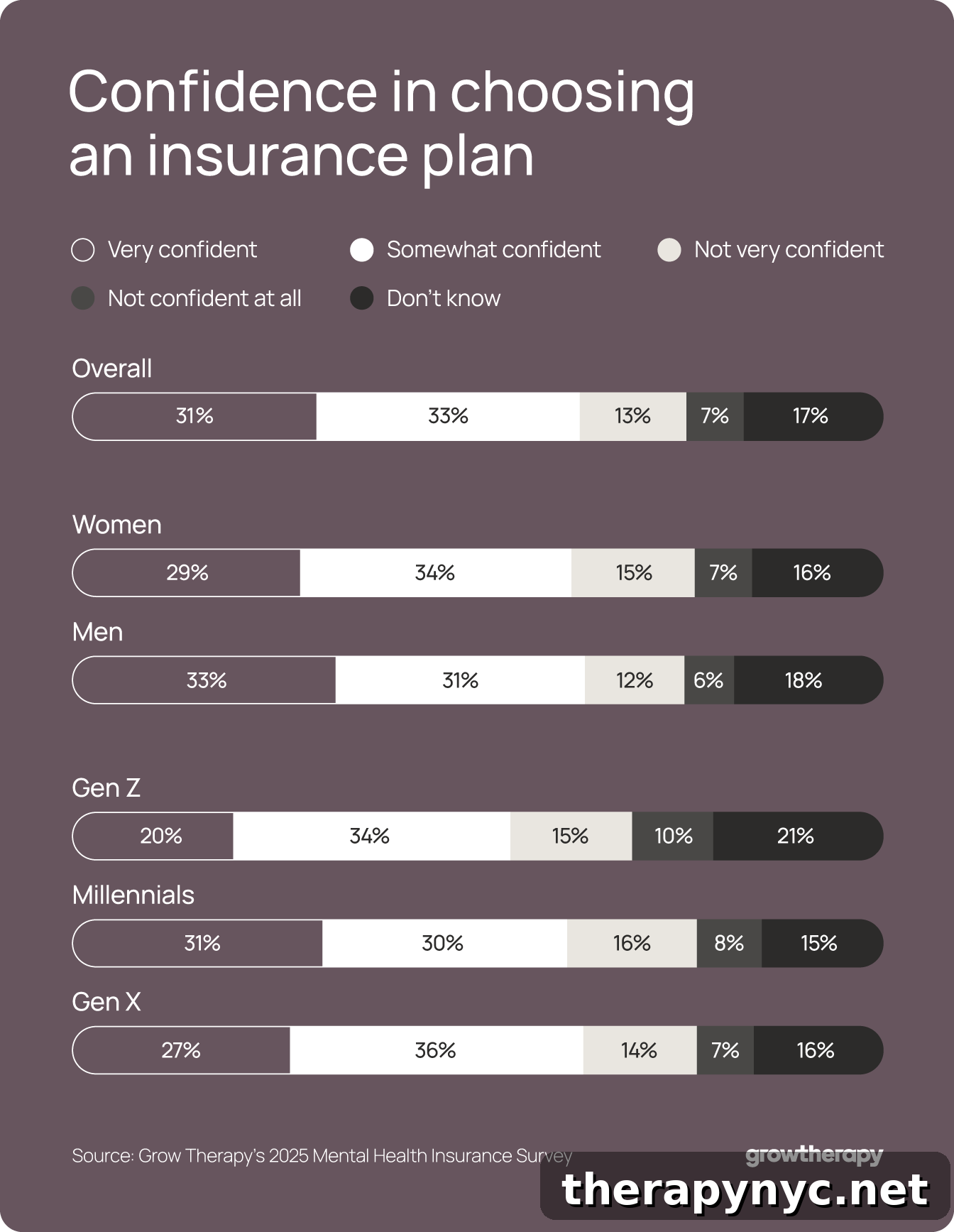
- Only 31% express strong confidence in their ability to select a health plan that meets their mental health needs.
- 64% say they are at least somewhat confident about choosing health insurance that covers mental health care.
Confidence gaps in selecting mental health benefits leave many behind
Even when people have coverage, figuring out what is actually covered remains a major challenge. Fewer than one in three Americans (31%) say they feel very confident selecting a health insurance plan that supports their mental health needs. Confidence also varies by generation: younger adults report lower confidence than older groups.
Gen Z adults report the lowest level of strong confidence (around 20%), while Gen X and millennials report somewhat higher confidence (approximately 27% and 31%, respectively). This suggests coverage literacy tends to increase with age, but significant confusion exists across all cohorts.
These gaps have real consequences. Nearly one in four U.S. adults experienced a mental illness in 2024, yet many employees still struggle to understand their options. When people aren’t sure what their plan covers or don’t feel confident navigating benefits, they may delay care or fail to find a provider who is a good fit. More accessible plan explanations and digital tools can improve navigation and boost confidence in choosing coverage.
Cost confusion: The main barrier to selecting coverage
Cost questions are the largest obstacle to confident decision-making. About 32% of respondents say that copays, deductibles, and out-of-pocket expenses are the most confusing aspects of coverage during open enrollment. Those unknowns make it hard for people to forecast the true cost of therapy.
Many consumers don’t realize that coverage alone doesn’t guarantee affordable care. High out-of-pocket costs can still make therapy unaffordable even when sessions are technically covered. Over the past decade, average deductibles for single coverage have risen substantially, and high-deductible health plans can demand thousands of dollars in upfront costs. Nearly 29% of workers are enrolled in such plans. While some people can use Health Savings Accounts to offset expenses, not everyone can save enough to meet growing out-of-pocket obligations.
When pricing and reimbursement details are not transparent, people often do not know what they will owe until after care is billed. That uncertainty discourages many from seeking therapy and underscores the need for clear, consumer-friendly summaries of costs to help ensure equitable and timely access to mental health services.
The impact of therapy delays on parents
Insurance confusion can cause delays in care. About one in five Americans report having avoided or postponed therapy because of insurance or enrollment challenges. Parents are particularly affected: 26% of parents with children under 18 say they’ve struggled to find affordable therapy for their kids.
Recent data show that many families face high costs, coverage limits, or long waitlists that impede access to children’s mental health services — even when insurance is available. Part of the problem is limited awareness of lesser-known benefit options that could reduce costs or expand access.
Licensed therapist Monica Randle explains one such option:
“If an individual would like to see a provider who is outside of their insurance network, there is an option to use Out-Of-Network benefits. The individual may receive partial reimbursement for treatment rendered in this case. In situations where a relationship has already been established, providers may seek a Single Case Agreement from the insurance carrier. This option can be beneficial when a client experiences a change in healthcare coverage.”
— Monica Randle, LPCC, LPC
Awareness of these options can make a meaningful difference for families trying to navigate complex benefits. Clearer plan materials and access to the right resources can simplify the process and help people secure care sooner.
Clear comparison charts and expert guidance would make choosing easier
Many people say practical, visual tools would help. Nearly 40% of Americans say clear, visual comparison charts would make it easier to choose a plan, and about 53% want expert help or step-by-step guides to walk them through options and costs.
Resources such as cost estimators, transparent in-network provider directories, and plain-language guides can reduce confusion — especially for younger adults and working parents who prefer digital support when selecting mental health coverage and finding therapists who accept their insurance.
What this means for you
Mental health benefits have improved, but complexity still blocks access for many. Cost structures, unclear provider networks, and uneven confidence in selecting plans leave too many people unsure where to begin.
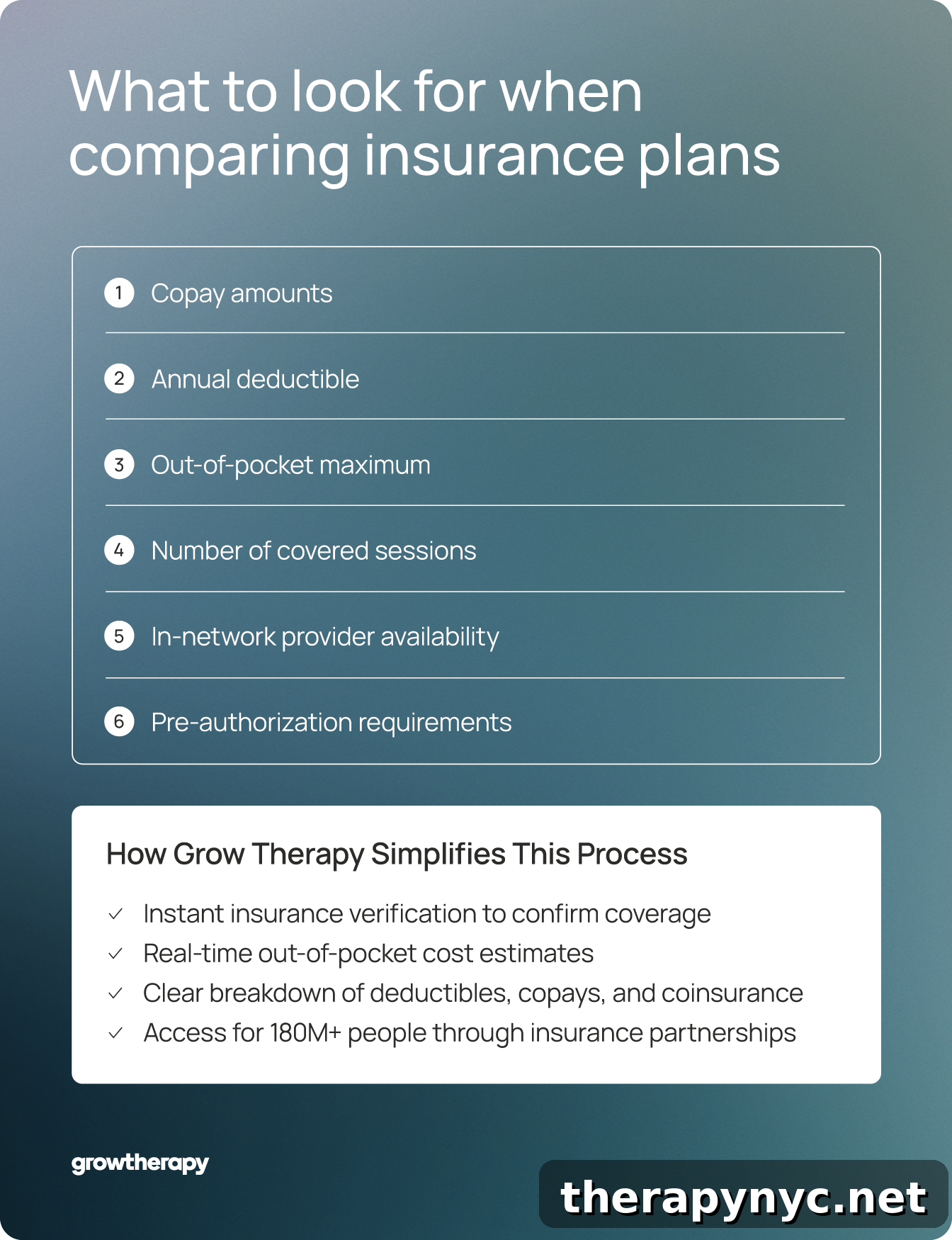
The good news is that tools and resources to clarify coverage and estimate out-of-pocket costs are increasingly available. When comparing plans during open enrollment, set aside time to review mental health benefits, network rules, and expected session costs. Use cost estimators and provider listings to see whether a plan accepts your preferred therapists and to get a realistic picture of what you might pay per visit.
Taking these steps can reduce surprises and help you access timely care. If you need assistance, look for step-by-step guides, comparison charts, or expert support that explain benefits in plain language and show likely costs up front.
Methodology
The survey was conducted by YouGov for Grow Therapy between October 24–28, 2025, with 2,424 completed responses. Data are weighted; the margin of error for the overall sample is approximately +/-3% at a 95% confidence level.