Desire to Hasten Death vs Suicide: Key Differences

When working with people who have life-limiting illnesses, clinicians and caregivers commonly hear variations of the same painful truths:
- “I don’t want to live like this anymore.”
- “If Medical Aid in Dying isn’t available, I’ll find another way.”
- “I want help dying, but I don’t want people to think I killed myself.”
- “I want to go quickly before the dementia gets worse.”
- “Some days I’m ready to die, but when the pain eases, I’m not so sure.”
As mental health professionals, social workers, palliative care clinicians, and other caregivers, we sit with competing realities: the patient’s autonomous wish to control a dying process and our duties to protect life and treat psychiatric crises when present. This article offers a practical framework to help you distinguish a desire to hasten death (DHD) from suicidality, so you can remain present, compassionate, and clinically clear when these conversations arise.
What is “desire to hasten death” (DHD)?
Desire to hasten death describes a range of thoughts, feelings, and intentions among people with advanced, life-limiting illness. It spans from occasional, fleeting wishes that the suffering would end to sustained, autonomy-driven requests to shape the timing or circumstances of one’s death—sometimes expressed as interest in Medical Aid in Dying (MAiD) or Death with Dignity (DWD).
Key points:
- DHD is most commonly associated with terminal illness, unrelieved physical symptoms, perceived loss of dignity or autonomy, spiritual or existential distress, and worries about being a burden.
- The intensity of DHD often fluctuates with symptom control, mood, meaning-making, and social or family support.
- DHD is distinct from suicidality, though both may co-occur—especially when depression, traumatic stress, or unmet psychosocial needs are present.
How common is DHD?
Research among people with advanced cancer and other terminal conditions shows this is a frequent concern. In one study of patients with terminal cancer:
- About 44.5% reported at least fleeting desires for death during illness.
- Approximately 17% reported a more persistent wish to die.
- About 12% discussed Medical Aid in Dying with their physician.
Prevalence varies by diagnosis, symptom burden, culture, access to palliative care, and mental-health comorbidity. Clinically, expect these conversations and treat them as an opportunity to reduce suffering and explore values—not as a reason to withdraw.
What DHD is not
Precise language matters. DHD differs from suicide in intent and context:
- DHD seeks to shape an already-approaching death to preserve dignity and limit suffering; suicide seeks to end an otherwise ongoing life to escape intolerable psychological pain.
- DHD discussions may include lawful, medical pathways such as MAiD or Death with Dignity where permitted; these processes emphasize decision-making capacity, legal safeguards, and multidisciplinary review.
- Many professional organizations discourage the term “physician-assisted suicide” because it conflates distinct clinical and ethical phenomena and can add stigma for patients and clinicians.
How to differentiate DHD from suicidality
1) Context and trajectory
- DHD: Rooted in a terminal prognosis with a relatively predictable decline and often arises alongside hospice, palliative care, or legacy work.
- Suicide: Not tied to a terminal timeline and commonly linked to treatable psychiatric disorders, acute losses, trauma, or isolation.
2) Primary intention
- DHD: Aimed at reducing suffering and maintaining dignity during an imminent dying process.
- Suicide: Aimed at escaping intolerable psychological pain in a life that could otherwise continue.
3) Affect and stability
- DHD: Often expressed calmly, coherently, and in alignment with the person’s values; it may vary with symptom control and support.
- Suicide: Frequently accompanied by hopelessness, anhedonia, agitation, constricted thinking, and symptoms that respond to mental-health intervention.
4) Means and planning
- DHD: May involve open, documented discussions with clinicians, ethical review, and legal safeguards where applicable.
- Suicide: May involve impulsive, secretive planning, access to lethal means, or preparatory behaviors such as giving away possessions.
5) Treatability
- DHD: Care focuses on palliative symptom control, meaning-centered therapies, spiritual care, family meetings, and collaborative planning.
- Suicide: Requires immediate safety assessment, removal of means, urgent mental-health treatment, and collaborative safety planning.
The hard truth: holding multiple truths
End-of-life care asks us to hold “both/and” realities:
- Both autonomy and protection.
- Both suffering that is biopsychosocial-spiritual and suffering that is amenable to treatment.
- Both a person’s right to define a dignified death and our duty to ensure untreated depression, delirium, trauma, or coercion are not driving decisions.
When the right path isn’t clear, consult colleagues, ethics committees, palliative specialists, spiritual care providers, and the person’s support network.
Questions mental health providers should ask
Openers
- “Many people with serious illness have thoughts about death. What thoughts have been coming up for you?”
- “When these thoughts appear, what do they seem to be trying to address?”
Clarifying DHD vs. suicidality
- “Do these thoughts feel connected to your illness and its effects, or do they feel similar to past depression?”
- “Are you wishing this would be over in general, or do you want to die right now?”
- “Have you considered acting on these thoughts? Do you have a plan? What has kept you safe so far?”
Assessing frequency, intent, and drivers
- “How often do these thoughts arise—rarely, sometimes, daily?”
- “What makes them stronger—pain, loss of independence, feeling like a burden, financial worries?”
- “What soothes them—medication, meaningful time with loved ones, prayer, music, or nature?”
Capacity and coherence
- “If your physical suffering were relieved, how might your wish change?”
- “What would a ‘good enough’ final chapter look like for you? What matters most now?”
Relational and team alignment:
- “Who knows about these thoughts and how have loved ones responded?”
- “Would you like assistance talking with your medical team about hospice, palliative options, or legally available pathways?”
How should past depression or suicide attempts influence assessment?
Short answer: it depends. Past depression and suicide attempts are essential clinical information because they increase the likelihood that current death-related statements reflect treatable suicidality. At the same time, many people with well-treated mood disorders retain decision-making capacity and articulate values-consistent DHD within a terminal context.
Use a structured, trauma-informed approach:
1. Nuanced history
- Gather diagnoses, number and severity of past attempts, triggers, lethality, rescue factors, and recovery trajectory.
- Document which treatments helped (medications, psychotherapy, ECT/TMS, spiritual supports) and what has specifically helped this person in the past.
2. What’s the same and what’s different now
- Determine whether current thoughts resemble past suicidal crises (impulsive, shame-driven, isolating) or are values-consistent and tied to the terminal course.
3. Capacity and cognition
- Screen for delirium, medication effects, hypoxia, and other reversible causes of impaired decision-making. When unclear, request a formal capacity evaluation.
4. Treat before deciding
- Treat clinical depression, anxiety, pain, insomnia, delirium, PTSD, substance use, and demoralization and then reassess the wish.
- Consider interventions such as Dignity Therapy and Meaning-Centered Psychotherapy to reduce distress for both patients and families.
5. Document
- Clearly record what changed after symptom treatment and how the person’s values inform their goals of care.
When depression is moderate–severe, or thoughts are impulsive or ambivalent, prioritize suicide prevention—even in hospice. When depression is well treated, capacity intact, and the wish remains consistent and values-congruent, center autonomy and palliative options while following applicable laws and professional ethics.
Red flags requiring urgent action
- Persistent, severe hopelessness or intense anxiety and agitation
- Untreated or worsening major depression
- Concrete plans to die by suicide or to hasten death in secret outside legal and medical pathways
- Recent suicide attempt, escalating substance use, or access to lethal means
- Cognitive impairment, delirium, or possible coercion
- Sudden calm after severe distress, goodbye behaviors, or giving away possessions
With these red flags, activate your suicide-prevention protocol, involve the care team and family (with consent), limit access to lethal means, and increase monitoring until the person is stabilized. You can and should attend to dignity and safety together.
Ethical considerations in the gray zone
- Autonomy and authenticity: Does the expressed wish align with the person’s longstanding values, culture, and identity? Is it stable over time?
- Beneficence and non-maleficence: Have pain, dyspnea, nausea, constipation, anxiety, insomnia, depression, and spiritual distress been adequately treated?
- Justice and access: Does the person have access to hospice, palliative care, culturally responsive services, and social supports?
- Fidelity: Are clinicians transparent about their competence, values, the law where they practice, and their limits? If they cannot participate, do they avoid abandonment and offer appropriate referrals?
Talking points for families and teams
- “Our first priority is to relieve suffering—physical, emotional, and spiritual.”
- “It’s common for thoughts about death to rise and fall. We’ll keep checking in.”
- “Can we begin by addressing depression and anxiety and then re-evaluate this wish after symptoms improve?”
- “If someone continues to express a clear, consistent wish and meets legal and ethical criteria, our role is to ensure the process is safe, ethical, and compassionate.”
- “Language matters; we avoid terms that increase stigma and confusion.”
Policy and practice note
Public support and language around medically supported death have evolved over recent decades, and clinical practice reflects growing nuance. The essential clinical reminders: know the laws in your state, understand your institution’s policies, and consult legal counsel, ethics committees, and trusted colleagues with expertise when needed.
Continuing education and resources
If you work in psychotherapy, palliative care, geriatrics, or aging services, consider specialized ethics and end-of-life coursework to build confidence in these conversations. Training can provide practical frameworks, scripts, and tools to navigate difficult discussions with clarity and compassion.
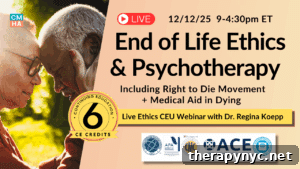
Register for our Death with Dignity Ethics and End of Life Psychotherapy 6-Hour Ethics CE Course
Article updated on 11/11/25
Resources
- States with Death With Dignity: overview of state laws and legal requirements
- Role of Mental Health Professionals in Death With Dignity: guidance for clinicians
- Compassion & Choices: advocacy and information on medical aid in dying
- Death with Dignity: organizational information and policy resources