Separation Anxiety in Older Adults: A Clinician’s Guide
I was settling in for a long travel day on a plane when an unexpectedly meaningful conversation reminded me why I do this work.
The man beside me, in his early 60s, and his husband were heading to Burlington to explore retirement options. He seemed relaxed and friendly, but when he learned I am a geropsychologist his tone shifted and he began to tell me about his 93-year-old mother.
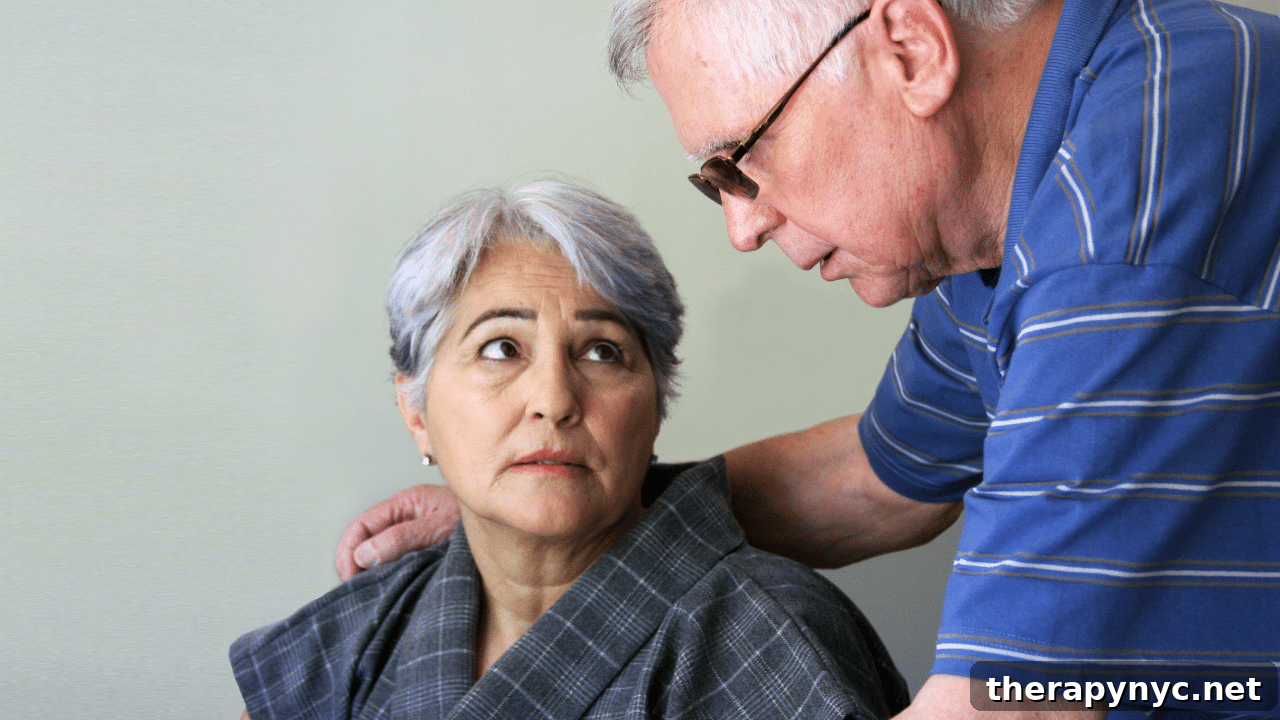
She lives in a personal care home and calls him multiple times a day, even though he visits every day. Each call asks the same question: When are you coming to visit?
He described a relationship full of love: he shows up, he cares, and he is present. Yet he said he constantly feels he’s not doing enough. No matter how much he gives, an ache of helplessness persists. On that flight, he worried whether she would be alright while he was away for the weekend.
I reflected back what I heard — that loving someone deeply and still feeling powerless is profoundly painful.
He began to cry. Being seen and understood offered him relief.
That brief exchange stayed with me and brought attention to a topic that is common but often under-discussed in work with older families: separation anxiety.
What Is Separation Anxiety?
Most people associate “separation anxiety” with toddlers clinging at daycare drop-off. While it is an established part of early childhood development, separation anxiety is not limited to children. It appears across the lifespan, and in older adulthood it takes on a different shape—shaped by loss, dependency, attachment history, and concerns about mortality. Separations later in life often don’t resolve the way they might for a child.
Clinically, separation anxiety involves excessive fear or distress when separated from—or anticipating separation from—an attachment figure, paired with worry about harm coming to that person or to oneself.
In adults, separation anxiety can look like intense distress when alone, persistent worry that something bad will happen to a loved one, reluctance to leave home, disrupted sleep during separations, and physical symptoms such as headaches or stomachaches.
The DSM-5 recognizes separation anxiety disorder across the lifespan. In adults, symptoms must be excessive, persist for six months or more, and cause significant impairment in daily functioning.
From an attachment perspective, separation anxiety is an amplified protest and fear response when proximity to the attachment figure—and our sense of security—is threatened.
In later life, separation anxiety is best understood as an attachment-based fear of being apart from a key person or place that provides safety, survival, and emotional regulation, intensified by vulnerabilities that come with aging.
DSM-5 Criteria for Separation Anxiety Disorder
American Psychiatric Association. Diagnostic and Statistical Manual of Mental Disorders, 5th edition (DSM-5). American Psychiatric Publishing.
Criterion A – Core feature:
Developmentally inappropriate and excessive fear or anxiety concerning separation from those to whom the individual is attached, as shown by at least three of the following:
- Recurrent excessive distress when anticipating or experiencing separation from home or major attachment figures.
- Persistent and excessive worry about losing major attachment figures or about possible harm to them, including illness, injury, or death.
- Persistent and excessive worry about experiencing an event—getting lost, having an accident, becoming ill—that would cause separation from a major attachment figure.
- Persistent reluctance or refusal to go out, leave home, or engage in activities because of fear of separation.
- Persistent and excessive fear of being alone or without major attachment figures in various settings.
- Persistent reluctance or refusal to sleep away from home or to sleep without being near a major attachment figure.
- Repeated nightmares involving separation themes.
- Repeated physical complaints—headaches, stomachaches, nausea—when separation from major attachment figures occurs or is anticipated.
Criterion B – Duration:
Symptoms persist for at least 4 weeks in children and adolescents and 6 months or more in adults.
Criterion C – Distress/Impairment:
The disturbance causes clinically significant distress or impairment in social, occupational, or other important areas of functioning.
Criterion D – Differential Diagnosis:
The symptoms are not better explained by another mental disorder, such as autism spectrum disorder, psychotic disorders, agoraphobia, generalized anxiety disorder, or illness anxiety disorder.
Separation Anxiety in Late Life Is Not a Disorder of Aging
Separation anxiety in older adults is not simply a sign of increasing dependence, fragility, or being “difficult.” It is not a pathology of aging but an attachment response to accumulated threat.
Attachment theory, developed by John Bowlby and extended by decades of research, shows that seeking proximity to a trusted person in the face of danger is a fundamental, adaptive human response. That instinct does not vanish with age; when the consequences of separation rise, attachment activation becomes even more relevant.
In late life, the stakes are higher: losses, health vulnerabilities, and shrinking social networks through death or relocation are real. When older adults or their caregivers respond to these threats with heightened proximity seeking and fear of separation, they are operating exactly as an attachment system under sustained pressure would.
Rather than asking, “Why are they so anxious?” the clinical question becomes, “What has this attachment system endured, and what does it need now?”
How Separation Anxiety in Older Adults Differs from Childhood
Separation anxiety in older adulthood presents differently because it emerges amid real losses, realistic fears, and legitimate dependencies. Key distinguishing features include:
Fears are often grounded in reality
While a young child may imagine a parent won’t return, an older adult’s worry that a caregiver might not be available can be grounded in real, concrete risk: managing medications, preventing falls, and helping with orientation and daily routines.
It’s bi-directional
Separation anxiety affects both care recipients and caregivers. Adult children and spouses can experience anticipatory grief, role strain, and overwhelming responsibility—the same kind of distress their loved ones feel. The man on the plane felt the same ache his mother expressed in repeated phone calls.
Cognitive changes intensify anxiety
When dementia or cognitive decline is present, separation anxiety can become severe. Caregivers provide essential cognitive scaffolding; without them, the environment can feel disorienting and unsafe. Shadowing a caregiver or panicking when they leave are attachment behaviors, not merely “problem behaviors.”
Separations are often abrupt and open-ended
Transitions in later life—hospitalization, rehab, or long-term care—can be sudden and indefinite, leaving loved ones feeling abandoned and despairing, especially when visitation is limited.
Lifelong attachment patterns resurface
Decades of relational history shape caregiving relationships. Under stress, anxious attachment patterns can intensify: adult children who have long feared abandonment may find it nearly impossible to leave, and older adults with a history of fear may interpret each goodbye as confirmation of their worst fears.
Implications for Clinical Work
When an older adult calls their child repeatedly, it can be tempting to label the behavior as “difficult” or to focus only on caregiver boundaries and self-care. Viewing the situation through an attachment lens reveals a more compassionate and clinically useful approach: both the older adult and the caregiver are responding to threat in ways their attachment systems know how to respond.
Our role is not to pathologize either person but to name the dynamics, validate the experience, and work with the family system to address both emotional needs and practical supports.
In my trainings on caregiver family therapy, I discuss how preexisting relationship quality is amplified in caregiving and how clinicians can help families navigate the stages of caregiving while honoring attachment dynamics.
Related Articles
- Aging Parent Calling Too Many Times a Day? 5 Next Steps
- Do Caregivers Really Die Before Their Loved Ones? What The Science Actually Says
- Grieving Someone Who’s Still Alive: Understanding Ambiguous Loss