Caregiver Family Therapy: Why It Matters for Dementia Families
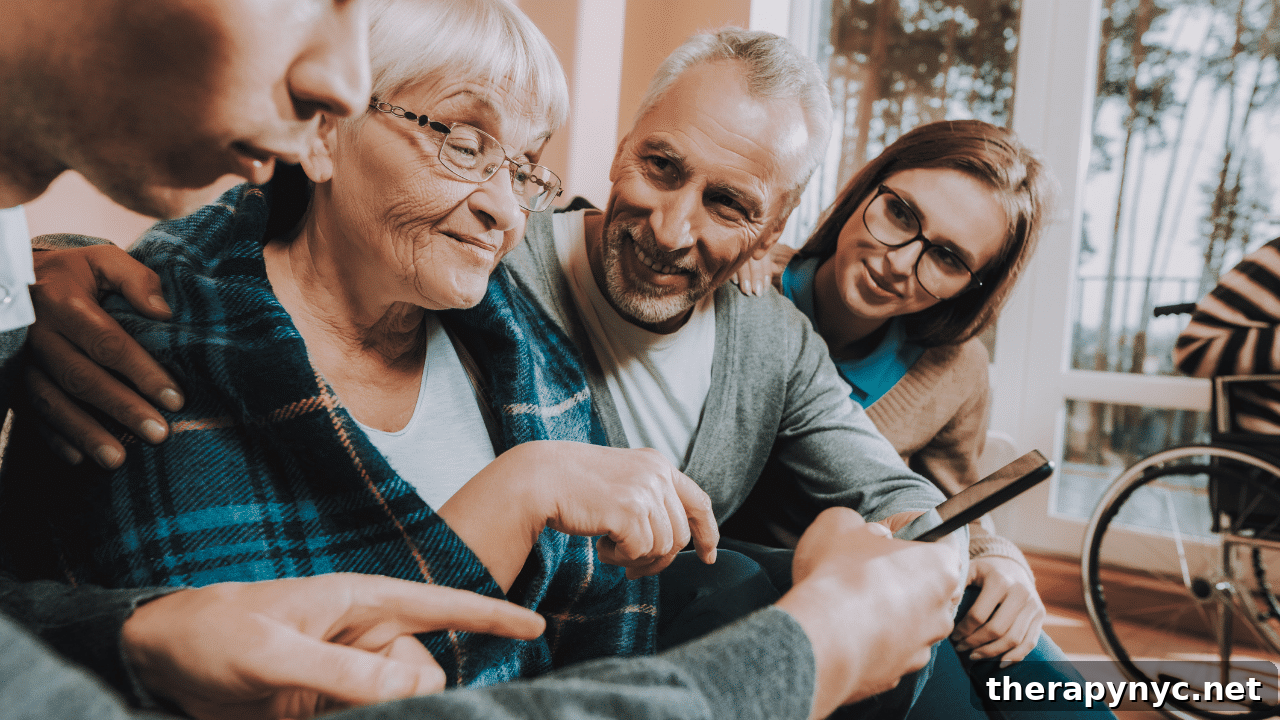
A family member calls asking you to see an older loved one who is living with dementia.
In psychotherapy with adults, that call raises immediate questions: Who is the client? Who has decision-making authority? Where do boundaries fall?
With older adults facing life-altering conditions like dementia, however, a family-systems approach is often not an exception but the recommended standard of care.
The problem is most clinicians were not trained for this. Graduate programs in psychology, social work, and counseling rarely include dedicated coursework in geropsychology or in clinical work with families affected by dementia. When that call comes — and it will — many clinicians feel unprepared. They are uncertain how to conceptualize the clinical picture, who to include in sessions, or how to structure the work.
This gap is precisely where Caregiver Family Therapy (CFT) is most useful.
What Is Caregiver Family Therapy?
Caregiver Family Therapy (CFT) is a structured, systems-based approach to working with families who are navigating chronic illness, disability, and dementia. Developed by Sara Qualls, PhD, one of the leaders in geropsychology, CFT is described in the foundational text:
Qualls, S. H., & Williams, A. A. (2013). Caregiver Family Therapy: Empowering Families to Meet the Challenges of Aging. American Psychological Association.
If you do clinical work with older adults and their families, this book is essential. Qualls and Williams provide a comprehensive, clinically grounded framework for this work.
At its core, CFT treats the family as the unit of care rather than focusing solely on the individual patient. It draws on four complementary theoretical foundations:
- Family Systems Theory — what happens between people usually matters more than what happens inside one person. Relationships drive behavior, and change in one part of the system ripples through the rest.
- Family Development Theory — families pass through predictable stages over time. The timing of life events shapes the emotional complexity of transitions.
- Medical Family Therapy — illness carries meaning that is shaped by family history, culture, and relational patterns. The family’s experience of illness is relational as well as medical.
- Multicultural and biopsychosocial models — every family brings cultural values, caregiving expectations, and social context that therapy must account for.
Think of a family as dancers in a choreographed ballet. When one dancer changes their steps, everyone else has to adjust.
Who Is Caregiver Family Therapy Best Suited For?
CFT is most useful for families who are stuck: unable to make decisions, grappling with unclear or shifting roles, facing rising conflict, or watching a primary caregiver burn out. It is particularly valuable for:
- Spousal or partnered caregivers whose roles shift from partner to caregiver and who are mourning that change.
- Adult children balancing care for an aging parent alongside jobs and their own families — the “sandwich generation.”
- Families with complex histories (estrangement, past abuse, secrecy) where caregiving reactivates old wounds.
- LGBTQ+ older adults and their families of choice, where chosen-family networks are central to caregiving.
- Families navigating the final stages of life, when caregiving shifts toward stewarding the relationship and advocating for someone who can no longer speak for themselves.
Although CFT applies across chronic illness and disability, this article focuses on its application with families living with dementia.
What Does Caregiver Family Therapy Address?
CFT is organized around six clinical tasks that form the backbone of the work and map directly onto the challenges families with dementia face.
-
Naming and framing the problem
Families are often unclear about what dementia is, what it means, and what to expect. Accurate understanding is essential for effective problem solving. Without it, family members may default to fear, denial, blame, or helplessness.
For example, a family convinced a parent is “being difficult” because of repetitive questioning can shift from frustration to presence once they understand the behavior as a symptom of memory loss rather than intentional misbehavior.
-
Structuring care
Therapy helps families identify needs, balance autonomy with safety, and connect to formal resources. Clinicians help families navigate difficult decisions: when to restrict driving, when to involve home health, and when to consider memory care options.
In practice, that might mean supporting an adult child who fears taking away a parent’s keys and alienating them, by exploring risks, alternatives, and ways to have the conversation that preserve dignity.
-
Role structuring
Tools such as genograms map the family system: who is connected, who is estranged, who historically cared, and which patterns of behavior repeat across generations. Naming these patterns opens the possibility for change.
-
Role reverberations
Caregiving often creates overload (too many roles for one person), trapped feelings (no apparent choice), and relational strain. Therapy helps people identify and move through these dynamics so they can negotiate change more realistically.
-
Caregiver self-care
Supporting caregivers is a negotiation between their needs and the care recipient’s needs across physical, psychological, social, and spiritual domains. Self-care in this context is about sustainability and realistic support plans, not superficial fixes.
For example, helping a spouse who has stopped leaving the house to reconnect with outside support reduces clinical risk for both partners and preserves the caregiver’s capacity over time.
-
Widening the lens
Therapy anticipates future transitions and creates plans before crises occur. CFT helps families ask: what will come next in the illness trajectory, and are we prepared for it?
Preparing for likely changes — such as loss of recognition, moving to higher levels of care, or new safety concerns — helps families respond more effectively when those transitions arrive.
Caregiver Family Therapy and Dementia: A Natural Fit
Dementia is not a condition that affects only one person; it affects the whole family. Families commonly describe ambiguous loss — the sense that a loved one is physically present but psychologically or relationally elsewhere. This form of grief does not have a clear ending, a funeral, or social rituals that bring closure.
Dementia is not just a disease that happens to one person. It happens to a family.
CFT gives clinicians a structured way to normalize ambiguity, validate grief, and help families remain connected even as the illness progresses. Role shifts in dementia caregiving — partner to helper, child to parent, spouse to advocate — are identity-level changes that often bring loss, resentment, tenderness, and ambivalence simultaneously. Naming these dynamics as systems-level issues rather than personal failures can be deeply freeing.
The Six Stages of Caregiving: A Dementia Perspective
Understanding where a family sits in the caregiving journey helps tailor interventions. The six stages, each shaped differently by dementia, are:
Stage 1: The Pre-Caregiver
Two autonomous adults live side by side with little concern about health or need for assistance. Subtle signs may be emerging, but families often remain in a wait-and-see mode when early intervention could help.
Stage 2: The Ambiguous Caregiver
Support needs are inconsistent or unclear, and the autonomy-versus-safety dilemma becomes central. Ambiguity is exhausting and often creates conflict about when to step in.
Stage 3: The Caregiver
Caregivers are actively involved in daily intimate tasks — dressing, bathing, medication management, and attending appointments. Grief and exhaustion are common, especially when caregiving falls largely on one person.
Stage 4: The Steward
The care recipient nears end of life and the caregiver becomes the keeper of the relationship and advocate for the person’s wishes and comfort.
Stage 5: The Bereaved
After death, grief may include loss of role, purpose, and identity. The bereaved often experience layered grief from years of anticipatory losses followed by the final death.
Stage 6: The Re-Builder
Life is rebuilt with more space but often a profound void. The task is re-engagement with relationships and activities that feel meaningful and to redefine a sense of self beyond caregiving.
A Note on Caregiver Resilience
Most caregivers demonstrate remarkable resilience. Research consistently shows that while many caregivers experience stress and depression, a majority also find meaning and positive aspects in their role. They describe caregiving as one of the hardest things they have done and, paradoxically, something they would do again.
That duality is not a contradiction; it captures the full complexity of caregiving. Clinicians’ role is not to remove caregiving from families but to help them provide care with more support, skill, and mutual connection, so they can look back knowing they did the best they could.
For Professionals Building Skills in Dementia Care
If you want to deepen your clinical skills in this area, a strong starting point is the foundational literature and training in CFT. Training opportunities exist that focus on applying a family systems lens across the full arc of dementia — from early diagnosis through end of life — and provide practical tools and clinical language for working with families.
Recommended Reading
Qualls, S. H., & Williams, A. A. (2013). Caregiver Family Therapy: Empowering Families to Meet the Challenges of Aging. American Psychological Association. This is a clinically grounded and comprehensive framework that respects both the science and the messiness of real family life.
Related Topics
- Therapy for families and individuals after a difficult move to memory care
- Deception, relocation, and dementia care: ethical dilemmas around moving to memory care
- Transfer trauma in older adults: relocation stress, identity loss, and therapeutic approaches
- Grieving someone who is still alive: understanding ambiguous loss
- Separation anxiety in older adults: clinical considerations
- Caregiver mortality and the research on caregiver health outcomes