How to Find a Therapist: 9 Steps and Questions to Ask Yourself

Whether you’re coping with personal challenges, working through past trauma, or pursuing personal growth, a therapist can be a vital source of support and guidance. Finding the right therapist, however, can feel overwhelming given the many options and factors to weigh.
Demand for mental health care often rises during stressful periods. A recent Grow Therapy holiday stress surveyfound that younger adults (Gen Z and millennials) and women reported higher levels of emotional strain and frequently put therapy on hold amid year-end responsibilities.
This underscores the importance of removing barriers to care when time and emotional energy are limited. Clear, practical steps for finding a therapist who understands youcan help you access support sooner rather than delaying it.
Below are practical steps and considerations to guide your search and help you make the most of therapy when you decide to seek help.
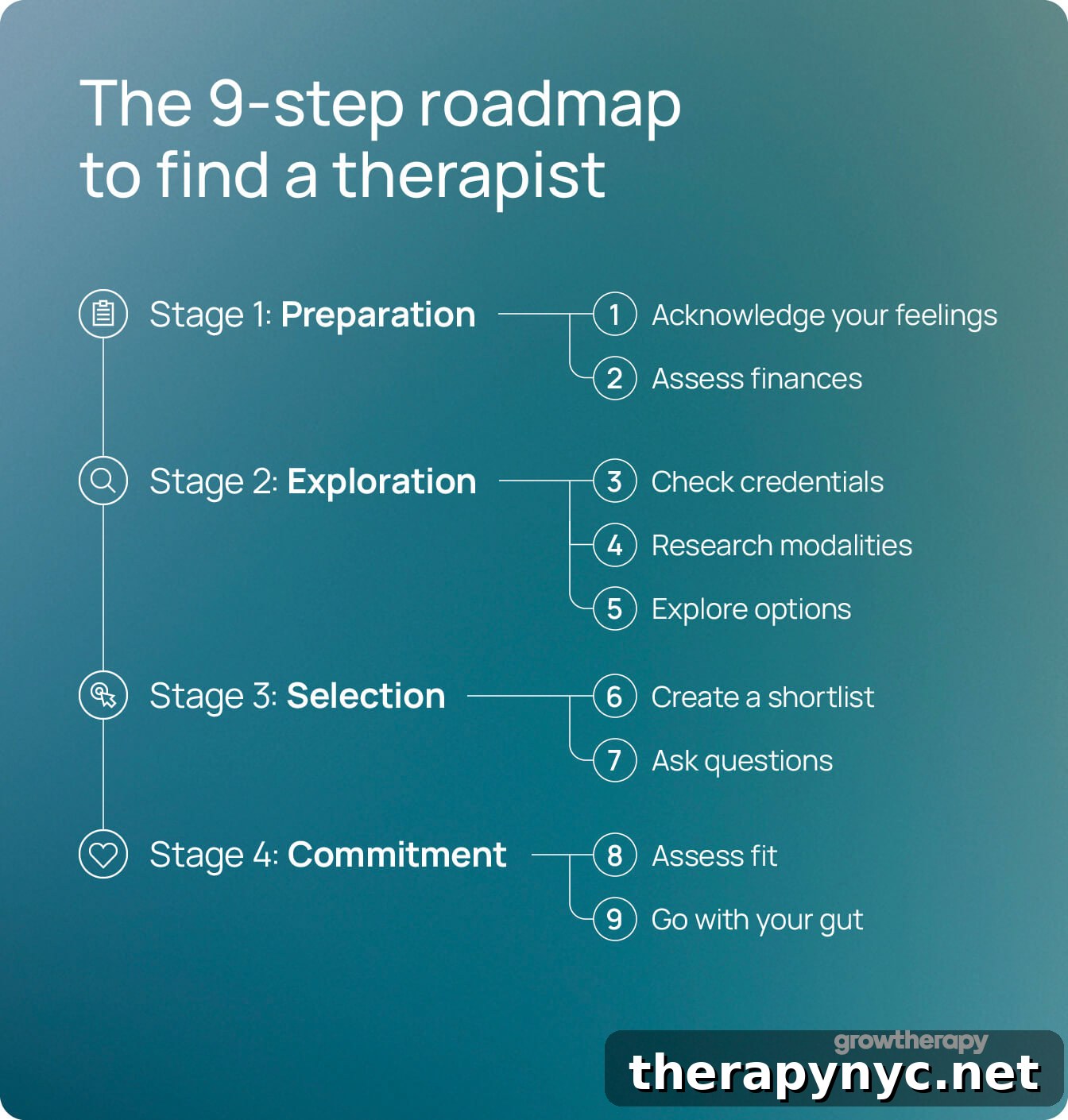
Step 1: Acknowledge your feelings
Before browsing therapist profiles, take time to check in with yourself. Notice what emotions or symptoms feel most pressing and consider what you hope to achieve in therapy. Clarifying your goals—whether short-term relief or deeper exploration—will help you narrow down therapists by training and specialty.
You don’t need a precise diagnosis to start; even a general sense of what’s most disruptive can point you toward suitable clinicians. Common signs that therapy might help include:
- Trouble sleeping
- Racing or intrusive thoughts
- Difficulty concentrating, low motivation
- Feeling emotionally disconnected
Consider whether your experience feels situational or long-standing, since that can influence the kind of treatment that’s most appropriate. Think about identity and lived experience too—many people prefer therapists who share or deeply understand their cultural, spiritual, or community background.
Also decide on practical preferences: in-person, online, or hybrid sessions; session length; and any special therapeutic approaches that appeal to you. Clear preferences make it easier to find a therapist who matches both your emotional and logistical needs.
Step 2: Assess your financial situation
Therapy can seem costly, but it is more accessible than many expect. Whether you have health insurance or not, there are options across different budgets.
If you have insurance, review your plan’s mental health benefits online or call your insurer to learn about coverage. Policies differ: some HMOs require referrals or limit you to in-network providers, while PPOs and EPOs may offer greater flexibility. Checking your plan details helps clarify your choices.
If you’re uninsured or can’t find an in-network clinician, look for sliding-scale fees, community clinics, or university training centers that provide low-cost care. Many private practitioners also offer reduced rates based on income. When planning for therapy, include session fees plus any transportation or childcare costs.
Early in therapy, sessions are often weekly. As progress is made, you and your therapist may agree to space them out. For many issues, consistent work over several sessions—often a few months—produces measurable improvement.
Get a cost estimate
Step 3: Check therapist credentials
Understanding the credentials after a therapist’s name helps clarify their education, licensure, and scope of practice. While credentials aren’t everything, they do indicate training and professional focus.
Common credentials you may encounter include:
- LCSW/LMSW (Licensed Clinical/Master Social Worker): Clinicians with a master’s in social work and clinical training, often viewing individual concerns within broader social and cultural contexts.
- LMFT (Licensed Marriage and Family Therapist): Trained to address issues from a systemic, relational perspective and to work with individuals, couples, and families.
- LCPC/LPC/LPCC (Licensed Counselor): Clinicians with a master’s degree focused on counseling and psychotherapy; exact acronyms vary by state.
- PsyD/PhD: Doctoral-level providers who may emphasize clinical practice (PsyD) or research (PhD) but frequently provide psychotherapy and assessment.
- Psychiatrist (MD or DO): Medical doctors who diagnose mental health conditions and can prescribe medication, often collaborating with therapists for combined care.
- PMHNP (Psychiatric Nurse Practitioner): Advanced practice nurses trained in mental health assessment and treatment who can prescribe medication and provide therapy in many settings.
Knowing these distinctions helps you understand a provider’s likely training and the services they can offer.
Step 4: Brush up on therapy modalities
Therapists apply different approaches and techniques depending on the client’s needs. Many use evidence-based treatments—methods supported by research—that are effective for specific concerns, while adapting them to each person.
Some common evidence-based approaches include:
- Cognitive Behavioral Therapy (CBT): Focuses on identifying and changing unhelpful thoughts and behaviors; commonly used for anxiety and depression.
- EMDR (Eye Movement Desensitization and Reprocessing): A structured method to help process and heal from trauma and PTSD.
- Psychodynamic Therapy: Explores how unconscious patterns and past experiences influence present behavior, aiming to change recurring, self-defeating patterns.
- Interpersonal Therapy (IPT): A time-limited approach that focuses on improving relationships and social functioning and is often effective for depression related to role transitions or grief.
Familiarity with these modalities helps you match your concerns with a therapist’s expertise—but you don’t need to be an expert before you reach out. Evidence-based approaches can also shorten the duration of care, which may reduce overall cost.
Step 5: Explore different ways to get help
With a clear budget and preferences, begin your search. There are many routes to care today:
- Online therapy platforms: Platforms like Grow Therapy streamline the search by listing many qualified therapists and letting you filter by specialty, insurance, and more.
- Recommendations: Ask trusted friends, family, or colleagues for referrals if they’ve had positive experiences.
- Therapist directories: Searchable databases let you filter by location, specialty, or license.
- Employee Assistance Programs (EAPs): Many employers offer a small number of free confidential sessions, useful for short-term issues or getting a feel for therapy.
- Local resources: Colleges, religious organizations, and community clinics may offer low-cost counseling.
- Specialist organizations: For specific conditions, look to organizations that maintain clinician directories and resources.
Compare these options to choose the setting that best fits your schedule, budget, and therapeutic goals.
Step 6: Create a shortlist and read reviews
After clarifying your needs—including identity preferences, session format, and budget—use filters on platforms like Grow Therapy to generate a shortlist of five to ten potential therapists. Review profiles carefully to assess fit.
| What to do | Questions to ask yourself |
|---|---|
| Read their bio. Look beyond credentials to get a sense of their personality and clinical focus. | • Does their language resonate with you? • Do they mention experience with your specific concern? |
| Look for clues about fit from their specialties and any patient feedback. Reviews can highlight recurring strengths or concerns. | • Is their style described as warm, direct, or more exploratory? • Do reviews note reliability, responsiveness, and professional boundaries? |
A thoughtful review of profiles and feedback helps you prioritize who to contact for a consultation.
Step 7: Reach out and ask questions
Contact your top choices to arrange a brief 10–15 minute consultation. These initial conversations let you gauge rapport, tone, and whether the therapist’s approach feels right.
Prepare practical and clinical questions to evaluate fit beyond specialty and availability.
| Practical questions | Clinical and style questions |
|---|---|
| “What is your cancellation policy and are there fees for late cancellations?” | “If I came to you for [specific concern], what might the first few sessions look like?” |
| “How often do you usually recommend meeting at the start?” | “How do you measure progress in therapy?” |
| “Are you in-network with my insurance?” | “Have you worked with clients who have my issue before?” |
Clear, professional, and timely responses to these questions are a positive indicator of how the therapist communicates and manages logistics.
Step 8: Assess whether the therapist is a good fit
Treat the first session as an assessment as well as an introduction. A strong therapeutic alliance—based on trust, collaboration, and clear communication—is one of the best predictors of effective therapy.
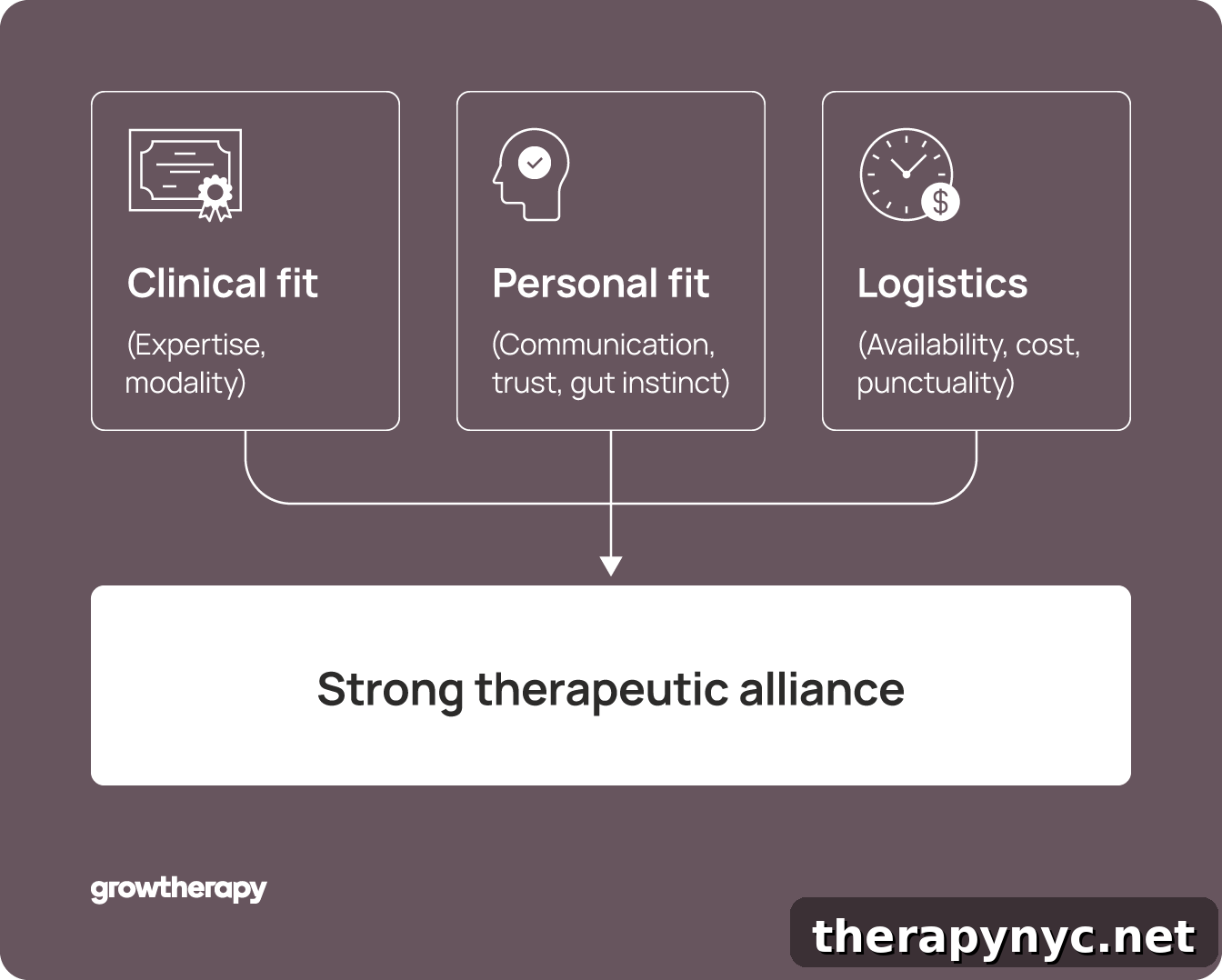
Consider three main areas: the clinician’s approach, how you feel around them, and practical logistics. Over the first few sessions, these factors will clarify whether the relationship supports your goals.
| What to do | Questions to ask yourself |
|---|---|
| Evaluate their communication style. Feeling heard and understood is essential. | • Did they listen without interrupting? • Did their tone feel empathetic and nonjudgmental? • Did they explain their approach clearly? |
| Compare session impressions with their profile and responses. Consistency signals professionalism and clarity. | • Were their descriptions of treatment consistent with their profile? • Did they offer practical next steps or strategies? |
| Review logistics. Practical details affect whether you can maintain the work. | • Was the session length and pace manageable? • Were scheduling, confidentiality, and communication explained clearly? • Did the environment or technology support your ability to focus? |
These reflections can guide your decision about whether to continue, switch therapists, or adjust expectations.
Step 9: Go with your gut instinct
While practical considerations and credentials matter, your own experience is the best guide. Notice how you feel during and after conversations with a potential therapist:
- Do you feel heard?
- Are they empathetic and nonjudgmental?
- Do you feel comfortable rather than judged?
- Does their style fit your personality?
A supportive, trustworthy relationship increases the chances of meaningful progress. If you observe clear red flags—especially those that undermine safety or trust—consider ending the relationship and finding another provider.
Find the right therapist with Grow Therapy
Searching for a therapist can feel daunting, but a clear roadmap makes it manageable. The right therapist helps you feel understood, supported, and engaged in the process, increasing the likelihood of lasting change.
Grow Therapy simplifies the search by connecting you with verified providers who accept insurance and offering filters for specialty, modality, and schedule. This helps you find a clinician who fits your needs more efficiently. Many clients pay affordable co-pays with insurance, and some pay little or nothing depending on their plan.