Reach Your Goals with Measurement-Informed Care (MIC)

Curious how to get the most from your therapy and measure real progress in your mental health? Tracking change can feel overwhelming at first, but with a clear approach it becomes manageable and empowering. This article explains measurement-informed care (MIC), how it works in therapy, and practical ways to use it to guide treatment so you and your clinician can make data-informed decisions together.
What is Measurement-Informed Care (MIC)?
Measurement-informed care — sometimes called measurement-based care (MBC) — is a structured way to monitor your symptoms, functioning, and treatment response over time. Rather than relying only on conversation, MIC uses brief, consistent check-ins and validated questionnaires to create an ongoing record of how you are doing. Those regular data points help your therapist see patterns, spot improvements or setbacks early, and tailor interventions to your specific goals.
Why Measurement-Informed Care Matters
MIC strengthens therapy by turning subjective impressions into objective information. When symptoms are tracked systematically, therapists can make evidence-based adjustments that improve outcomes. Regular measurement supports clearer communication between you and your clinician, increases clinical accountability, and helps both of you assess whether current strategies are working.
Another important benefit is that MIC can be adapted to respect individual and cultural differences. Measures and clinical conversations can be selected or adjusted to fit diverse backgrounds, making care more inclusive and relevant to each person’s values and needs.
How to Use Measurement-Informed Care in Your Therapy Journey
Integrating MIC into therapy can be straightforward. Below is a practical five-step approach to help you and your therapist use measurement to guide treatment decisions and track meaningful progress.
Step 1: Start with clear goals
Begin therapy by identifying specific, realistic goals. Goals might include reducing anxiety, improving sleep, strengthening relationships, increasing daily functioning, or building coping skills. When goals are clearly defined, measures can be chosen to directly reflect the changes you want to see. Discussing goals openly with your therapist ensures your treatment plan focuses on outcomes that matter to you.
Step 2: Complete regular check-ins
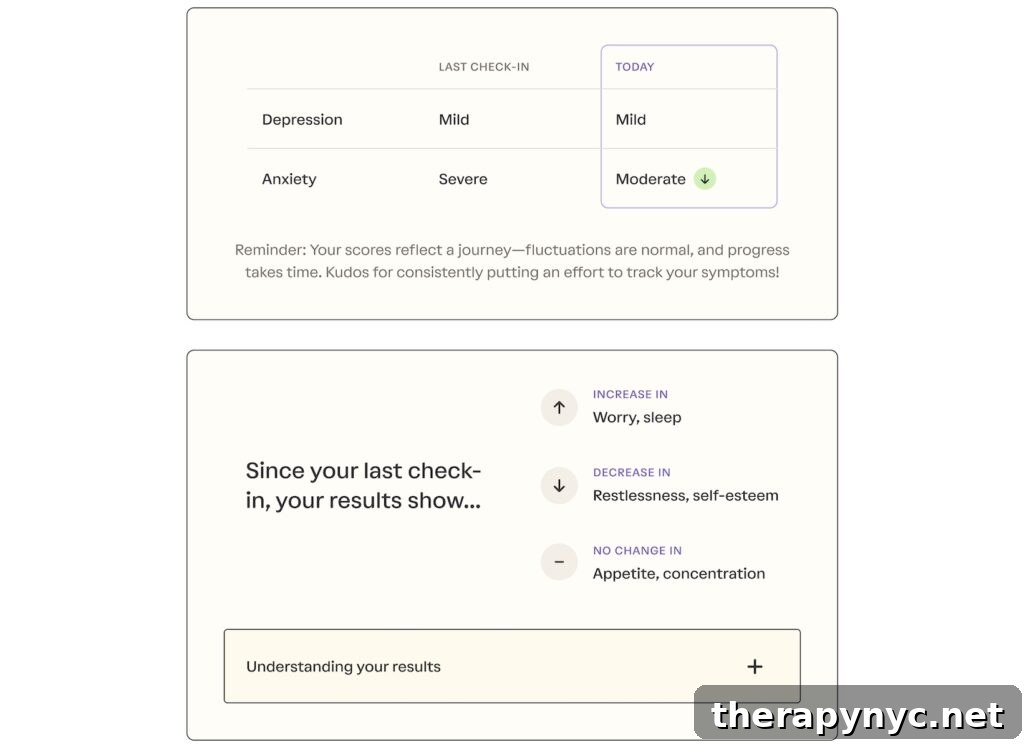
Consistency matters. Brief assessments completed before or during sessions—often a few questions or a short questionnaire—provide the data that make progress visible. Regular check-ins give your therapist current information and empower you to notice subtle shifts. Over time these data points create a trend line that shows whether symptoms are improving, staying stable, or worsening.
Step 3: Review results collaboratively
Treatment works best when it’s a collaborative process. Use your session time to review your check-in results with your therapist. Ask questions about what the numbers mean, how they relate to your day-to-day life, and what they suggest for next steps. This partnership keeps therapy transparent and goal-focused.
Step 4: Track progress and reflect
Tracking progress over weeks and months helps you see patterns that single sessions cannot reveal. Reflect on changes—big or small—and celebrate milestones. If progress is slower than expected, the data help you and your clinician pinpoint which areas need more attention or a different strategy.
Step 5: Adjust treatment when necessary
Therapy is dynamic. If your measurements show limited improvement or new challenges emerge, your therapist can adjust the approach—changing techniques, increasing session frequency, introducing new goals, or coordinating with other providers when appropriate. Regular measurement ensures adjustments are timely and based on observable trends rather than guesswork.
Conditions and Settings Where MIC Is Helpful
Measurement-informed care is effective across many mental health conditions, including depression, anxiety disorders, bipolar disorder, and post-traumatic stress disorder (PTSD), among others. It supports targeted treatment planning, timely intervention, and personalized care for a wide range of clinical needs.
MIC is also adaptable to different care settings. It works well in traditional in-person therapy and teletherapy alike. When used thoughtfully, measurement tools can be selected to be culturally responsive and appropriate for individual clients, enhancing engagement and treatment relevance.
Getting Started and Next Steps
If you are already in therapy, ask your provider about measurement-informed care and make completing brief check-ins a routine part of your sessions. These small, regular efforts can provide powerful insight into your progress and help fine-tune treatment.
If you are not currently receiving care, consider finding a therapist who uses routine outcome measurement so your treatment can be guided by both clinical expertise and consistent data. When measurement is combined with collaborative therapy, it increases the likelihood of meaningful, lasting improvement.