Gen Z Mental Health Statistics 2026: 40+ Revealing Insights

It’s impossible to discuss Gen Z without addressing mental health. For people born roughly between 1997 and 2012, the years after the COVID-19 pandemic have seen rising rates of anxiety, depression and suicidal thoughts. These increases have hit some groups harder than others—youth of color, LGBTQ+ young people and girls are disproportionately affected. While the statistics are sobering, they also reflect a generation that is more willing to talk about mental health and ask for help.
If you are a parent, teacher, clinician or advocate, these Gen Z mental health statistics are more than numbers: they’re a roadmap for where support is most needed. Understanding the drivers behind these trends—social isolation, economic uncertainty, social media pressures and barriers to care—helps us build better systems of support for young adults.
Below is an updated overview of key Gen Z mental health data for 2026, exploring how digital life, stigma and access to care shape the generation’s wellbeing.
Key statistics for 2026
- Grief therapy is increasingly accepted: Nearly a third of Gen Z (32%) report seeking professional help for loss and grief, compared with 23% of Baby Boomers (Grow Therapy, 2026).
- Loneliness is widespread: Gen Z reports regular loneliness at almost twice the rate of older generations such as Baby Boomers (GWI, 2024).
- Social media is mixed for mental health: While it provides community for many, 32% of Gen Z women and 16% of Gen Z men say social platforms harm their body image (McKinsey, 2023).
- Many LGBTQ+ youth can’t access care: Half of LGBTQ+ young people who sought mental health services in the past year were unable to receive the care they needed (The Trevor Project, 2024).
- Seasonal disruptions to care: Gen Z is twice as likely as Baby Boomers to delay or pause therapy during the end-of-year holidays (Grow Therapy, 2025).
Gen Z’s mental health in 2026
For many in Gen Z, mental health challenges are an everyday reality rather than an occasional hurdle. A large share of young adults report frequent emotional struggles, yet many still feel unsure about how or where to get professional help.
- In California, 94% of Gen Z reported experiencing regular emotional or mental health challenges, with many describing monthly or even weekly distress (Blue Shield of California, 2025).
- Globally, 60% of Gen Z say world events make them feel overwhelmed and uncertain about the future (UNICEF, 2025).
- Financial concerns are a major stressor: among Gen Z who feel anxious regularly, 48% point to long-term financial uncertainty as a key cause (Deloitte, 2025).
- California youth ages 14–25 identified broad social concerns as major stressors: housing affordability (87%), gun violence (85%) and immigrant discrimination (81%) (Blue Shield of California, 2025).
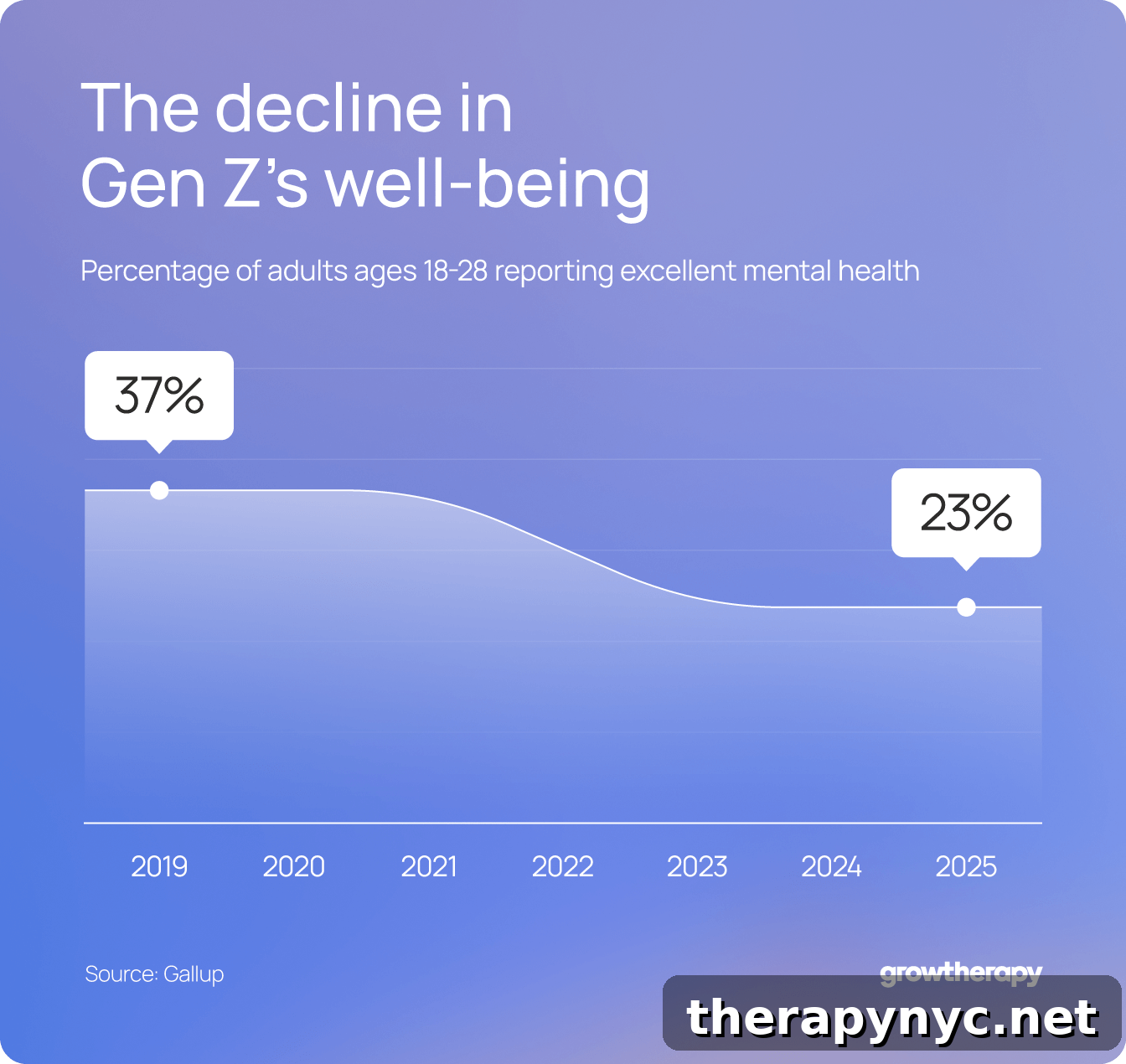
- The share of Gen Z adults rating their mental health as “excellent” declined by 14 points between 2019 and 2025, reflecting broader downward trends in self-rated wellbeing (Gallup, 2025).
- Wellness is a priority: 58% of young adults set a specific mental health resolution in 2026, indicating active efforts to improve wellbeing (American Psychiatric Association, 2026).
- Approximately 60% of young adults of color report that political media content has hurt their mental health in recent months (The Aakoma Project, 2025).
- Overall life satisfaction is lower than previous generations: only 45% of Gen Z say they are “thriving” (Gallup, 2025).
- About 55% of Gen Z worldwide feel they have the coping skills they need to manage their mental health (UNICEF, 2025).
- Despite stresses, many California youth remain optimistic: 63% feel hopeful about their personal futures (Blue Shield of California, 2025).
Anxiety and depression trends among Gen Z
Many young adults face severe anxiety and depression, often compounded by global instability and the pressures of early adulthood. The following trends show both cause for concern and areas where progress is happening.
- About 27% of adults under 30 say they have received a diagnosis of depression at some point—more than double the rate reported in 2017 (Gallup, 2025).
- Three in five young adults of color report moderate to severe anxiety (61%) or depression (60%) (The Aakoma Project, 2025).
- Among Gen Z workers, 40% feel anxious or depressed several times a week, showing significant workplace mental health needs (The Hartford, 2025).
- Serious distress is especially high among LGBTQ+ youth: 39% reported seriously considering suicide in the past year; that rises to 46% for transgender and nonbinary youth (The Trevor Project, 2024).
- Suicide remains a leading cause of death for teens and young adults ages 10–34, underscoring the urgency of prevention and early care (CDC, 2024).
- Some positive shifts exist: suicidal ideation among teen girls and attempts among Black students have shown modest declines in recent years (CDC, 2024).
Gen Z and social media
Digital platforms are a major source of both connection and stress. For many Gen Zers, social media offers community and information, including mental health resources—but it also encourages comparison and can undermine body image and self-esteem.
- Sixty percent of Gen Z adults spend at least four hours per day on social media; 22% report seven or more hours daily (The Harris Poll, 2024).
- Worldwide, 27% of Gen Z users say social media negatively affects their mental health, while 32% report a positive effect—highlighting a mixed impact (McKinsey, 2023).
- Body image concerns are prominent: 32% of Gen Z women and 16% of men say social platforms harm how they view their bodies (McKinsey, 2023).
- Self-confidence is also affected: 24% of Gen Z women and 13% of men report a negative impact on confidence from social media (McKinsey, 2023).
- New online coping behaviors have emerged—about 24% of Gen Z say they sometimes practice “bed rotting” or similar habits to cope with stress and burnout (American Academy of Sleep Medicine, 2024).
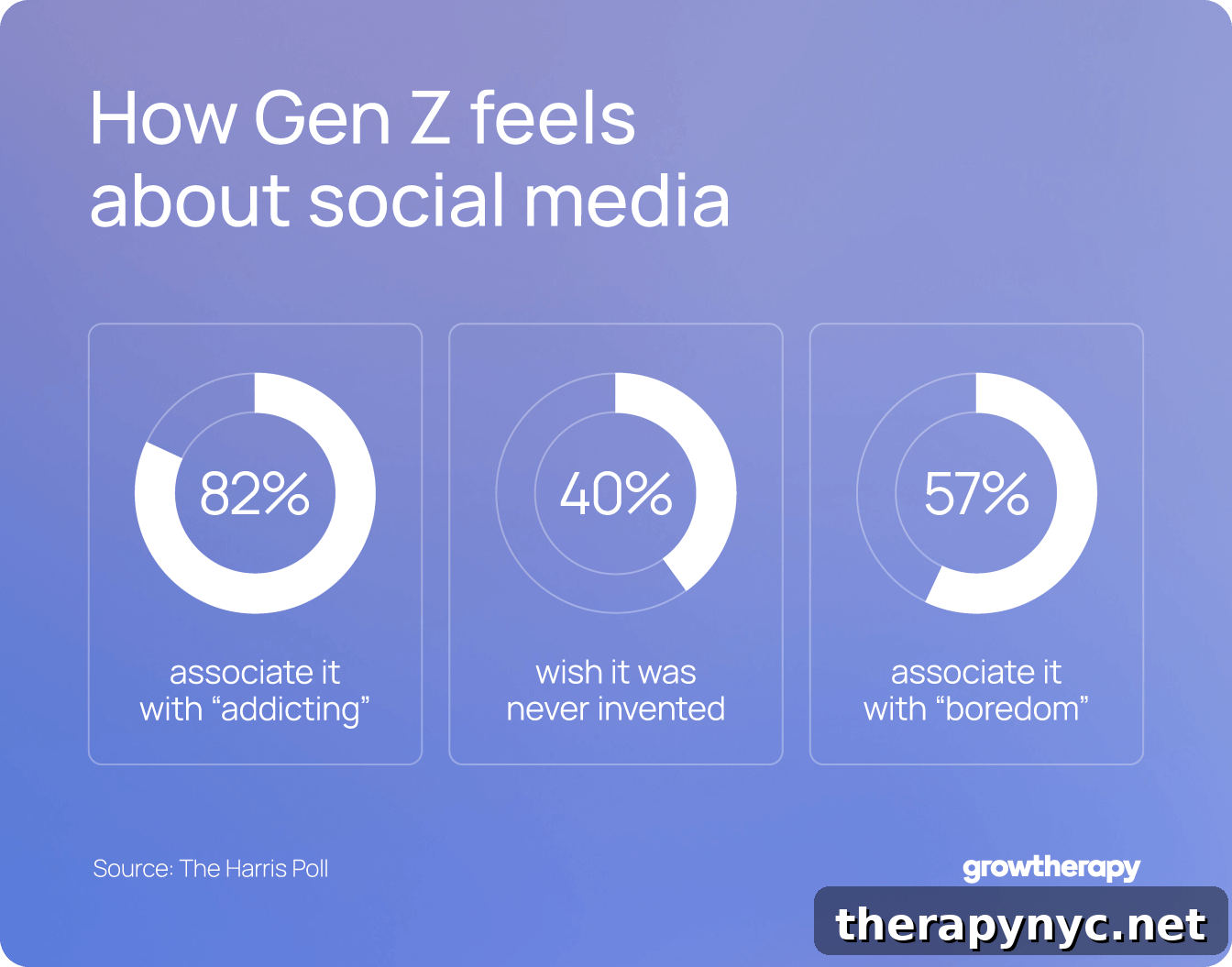
- Gen Z often labels social media “addicting” (82%) and links it to boredom and isolation, even as many rely on it for information and support (The Harris Poll, 2024).
- LGBTQ+ Gen Z are more likely than their peers to report harmful emotional effects from social platforms (Harris, 2024).
- About 34% of teens sometimes use social media to find mental health information, with TikTok, YouTube and Instagram the most common platforms they turn to (Pew Research, JED Foundation reports, 2025).
Is social media use linked to depression and anxiety in teens?
Research shows a complex relationship between heavy social media use and mental health symptoms in young people. Passive scrolling and social comparison are more likely to produce negative effects, while active, supportive online communities can be protective. For teens who find social media contributes to stress, working with a licensed therapist can help establish healthier boundaries and coping skills.
How Gen Z compares to other generations
Every generation faces mental health challenges, but Gen Z reports the lowest rates of “thriving” compared with older groups. At the same time, younger adults are more likely to seek help and use available benefits—suggesting a cultural shift toward treatment and prevention.
- Gen Z accounts for about 32% of people actively seeking therapy, making them the second-largest cohort in care after Millennials (Grow Therapy, 2025).
- Gen Z workers are more likely to deprioritize therapy during the holiday season than Baby Boomers, a sign that scheduling and financial pressures affect continuity of care (Grow Therapy, 2025).
- Grief therapy is more commonly used by younger adults: 32% of Gen Z seek professional grief support versus 23% of Baby Boomers (Grow Therapy, 2026).
- Loneliness is almost twice as common among Gen Z as among older adults (GWI, 2024).
- Only 23% of Gen Z rate their mental health as “excellent,” compared with higher shares among Gen X and Baby Boomers (Gallup, 2025).
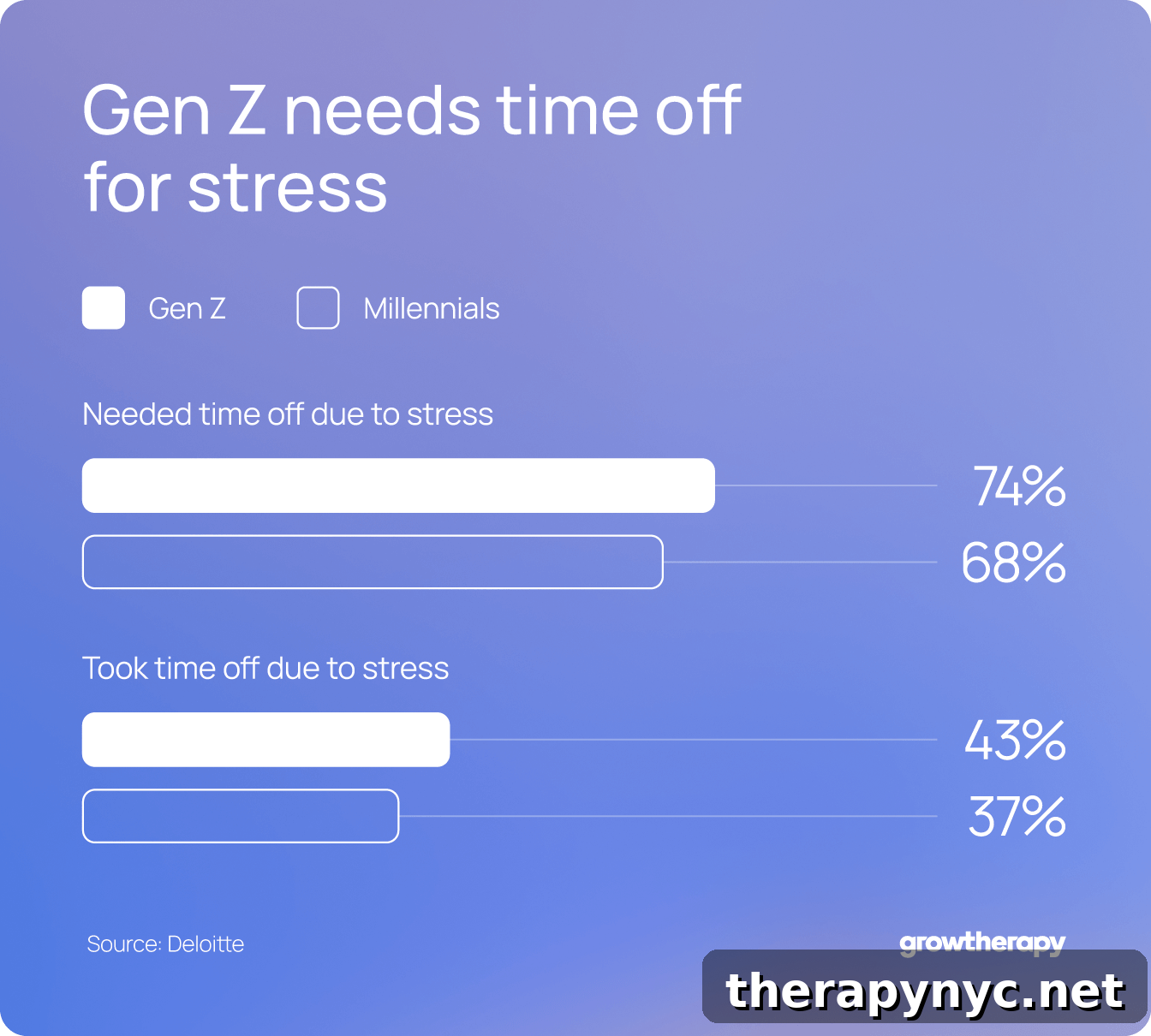
- Many Gen Z workers need time off for stress—74% say they need it, but only 43% actually take mental health breaks (Deloitte, 2025).
- Digital mental health tools attract the highest engagement from Gen Z, with 22% using such programs globally (McKinsey, 2023).
Therapy use and breaking the stigma
Gen Z has helped normalize asking for help, but barriers remain: cost, stigma and lack of clear guidance on how to find care. Removing these obstacles is essential so openness about mental health translates into meaningful treatment.
Key barriers and trends include:
- Stigma and embarrassment keep many young people from seeking help—35% of California youth who didn’t get care said embarrassment was a main reason; 23% cited cost and 21% said they didn’t know where to start (Blue Shield of California, 2025).
- Half of LGBTQ+ youth who sought help in the past year couldn’t access appropriate services (The Trevor Project, 2024).
- Peer support is common: 69% of young people have talked to a friend about their mental health (Blue Shield of California, 2025).
- Shame and fear of judgment prevent many Gen Z workers from using workplace mental health services (The Hartford, 2025).
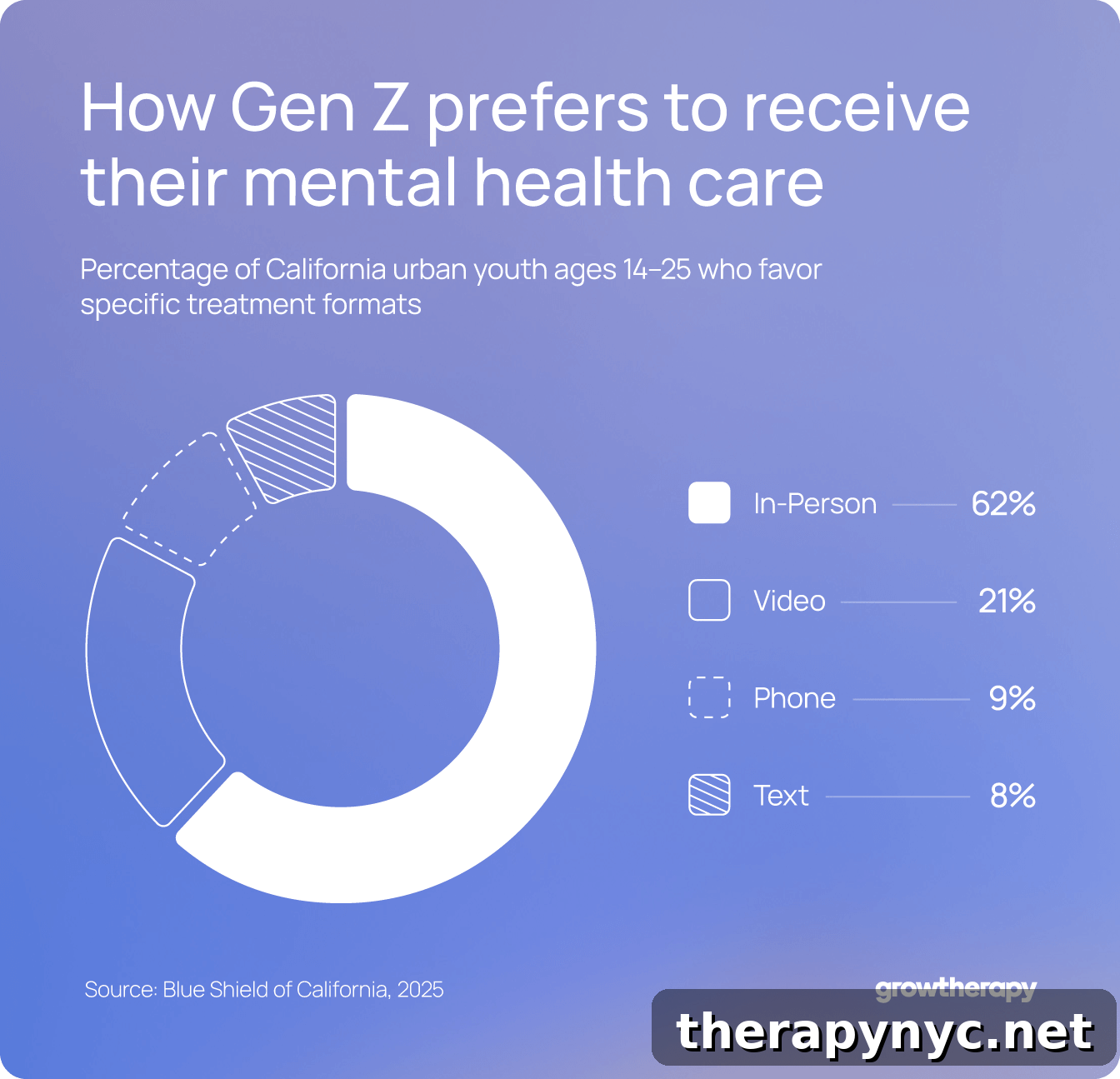
- Despite being a digitally native generation, a majority of urban California youth prefer in-person therapy, showing that human connection remains central to treatment (Blue Shield of California, 2025).
- The National Suicide Prevention Lifeline (988) is the most widely recognized crisis resource among California youth who sought urgent help (Blue Shield of California, 2025).
- Gender-affirming, supportive environments reduce risk: transgender and nonbinary youth in affirming schools report lower rates of suicide attempts (The Trevor Project, 2024).
Finding support
The data make one thing clear: Gen Z cares about wellness but faces significant pressure. Early access to care—whether in-person, through employer benefits or via accessible online services—remains the best way to prevent problems from escalating. If you or a young person you know needs help, consider reaching out to a licensed mental health professional who specializes in anxiety, depression and the specific stresses facing young adults today.
Support is closer than it may seem: many therapists and platforms now offer flexible online sessions and targeted specialties for youth, grief, LGBTQ+ care and crisis support. Taking a first step—asking a trusted adult, using a recognized crisis line, or searching for a clinician with expertise in youth mental health—can make a meaningful difference.
Support is closer than you think
If you need guidance on how to find a therapist or want to explore care options, start by checking local mental health directories, community clinics, or trusted online platforms that list licensed providers and specialties.