Grow Therapy Launches AI Coach Backed by Clinician Oversight
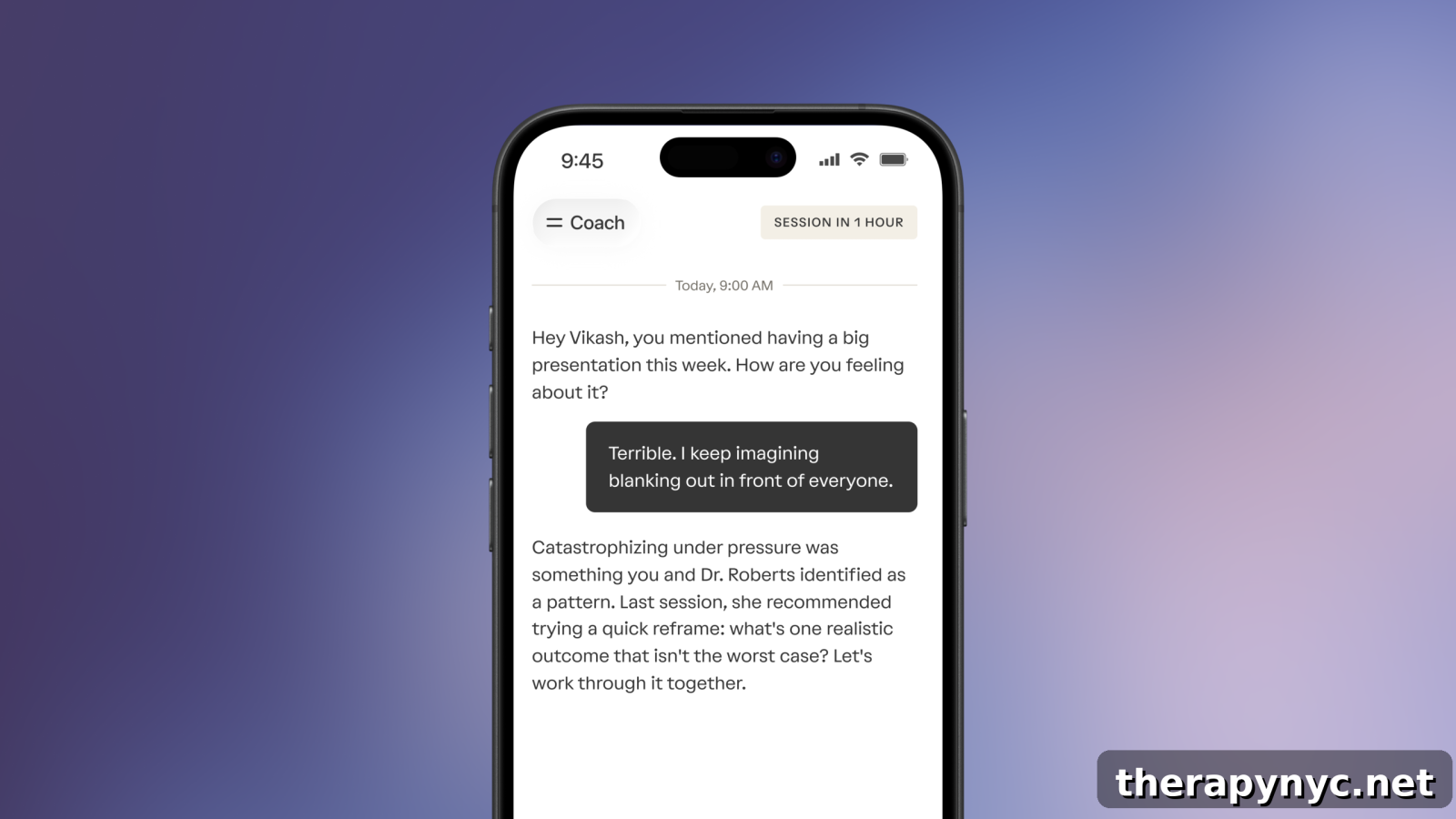
New York, NY, April 24, 2026 — As more people rely on generative AI to help manage stress, anxiety, and other mental health concerns, Grow Therapy is launching a new approach that keeps licensed clinicians at the center of care. The company today announced the rollout of an AI-powered coach (Coach), a chat feature embedded in its app designed to support clients between therapy sessions. The tool includes proprietary safety measures developed and overseen by licensed clinicians.
“Most people spend about an hour each week with their provider,” said Alan Ni, Chief Technology Officer and Co‑founder of Grow Therapy. “At Grow Therapy, we’ve been exploring what support looks like during the other 167 hours—between sessions, outside clinic hours, and in the everyday moments when people apply what they’ve learned. AI is reshaping care for our physical, mental, and emotional health. In mental healthcare, that change must be handled carefully, with licensed professionals guiding the use of these tools and human empathy remaining central.”
General-purpose chatbots adopted for mental health have in some cases outpaced safeguards, contributing to reported harms. Still, generative AI offers meaningful potential to extend support beyond clinician availability — between sessions and outside care hours. Grow’s purpose-built AI coach aims to capture that potential while preserving professional oversight and proactive risk detection.
“As more people turn to AI tools for mental health support, we’ve seen a need for an approach that keeps providers involved,” said Kevin M. Ramotar, Psy.D., CPHQ, Director of Clinical Product and AI. “Our AI coach was built to offer structured support between sessions, with clear boundaries, multiple safety layers, and clinician oversight. We designed it around what providers told us they needed: transparency, control, and technology that supports care without replacing clinical judgment. It helps clients stay engaged between sessions while giving providers greater visibility to drive better care experiences.”
Effective support before, during, and after sessions
The AI coach provides a nonjudgmental, purpose-built space for clients to practice skills, reflect, and process emotions between therapy appointments. It is not intended to diagnose or replace treatment; rather, it serves as an optional supplement to help clients remain engaged and apply therapeutic techniques between sessions. Research indicates that practicing methods learned in therapy improves outcomes, and Grow’s approach is that continuous, structured support can enhance the therapeutic relationship.
Conversations with the coach draw on evidence-based frameworks, including techniques commonly used in cognitive behavioral therapy (CBT), dialectical behavior therapy (DBT), acceptance and commitment therapy (ACT), and behavioral activation (BA). Clients can work through thoughts, practice coping strategies, and identify topics to bring to their provider. The coach also reinforces goals and helps clients complete therapeutic homework, set boundaries, and stay accountable.
Grow introduced the coach gradually across its network while closely monitoring usage, quality, and safety. Since testing began in December 2025, half of active providers have at least one client using the feature, and users have exchanged more than 800,000 messages. Early patterns from the phased national rollout show people most often use the tool for:
- Relationship navigation, representing about 20% of conversations.
- Practicing therapy skills and techniques.
- In-the-moment support for managing disruptions or stress.
- Putting emotions into words when not yet ready to raise them in session.
- Organizing thoughts and preparing for sessions to overcome the “cold start” problem of not knowing what to bring up with a therapist.
Providers introduced to the AI coach report that most would recommend it to clients, which is notable as AI begins to reshape clinical practice. The coach also addresses a visibility gap: when clients use general-purpose chatbots, clinicians have no insight into those interactions. Embedding a chat tool designed for mental health directly into the care platform enables providers to stay informed and intervene when clinically appropriate.
“Between sessions, I encourage clients to reflect on what we’ve discussed,” said Lynn Whalen, a licensed clinical social worker in Minnesota. She finds the coach especially helpful for clients who struggle with task initiation, procrastination, or perfectionism. “I explain what the Coach is and what it isn’t,” Whalen added. “I tell them this is not the resource to use if you feel unsafe or think you might harm yourself.”
Built-in safety controls and provider oversight
Safety is central to the AI coach’s design.
“We wanted to make sure we put safety first and weren’t just relying on one layer of protection. So we built multiple independent safety layers, automated quality scoring of every conversation, and ongoing review by a team of licensed clinicians,” said Matt Scult, Ph.D., Principal of Clinical AI.
When safety mechanisms are triggered, the system performs several actions:
- Automatically pauses conversations and displays appropriate crisis or support resources.
- Alerts providers with specific notifications if a potential safety concern arises, allowing clinicians to decide the next steps.
- Engages a clinical quality team of licensed clinicians to audit safety flags and random conversation samples for ongoing improvement. In quality assurance reviews to date, the safety system has correctly identified 99% of potential safety concerns in relevant conversations.
Grow forms an AI advisory panel
Grow emphasizes independent expert oversight as essential to responsible AI in mental healthcare. To support that commitment, the company created an external Advisory Panel to guide the AI coach’s ongoing oversight. The panel unites specialists in psychology, clinical AI research, mental health epidemiology, ethics, and consumer experience to provide interdisciplinary guidance grounded in scientific rigor and compassion. Their counsel informs Grow’s approach to safety, evaluation, and continuous improvement as the coach evolves.
AI advisors’ professional experience
Jacinta M. Jiménez, Psy.D., Clinical Psychology
Dr. Jacinta M. Jiménez is a Stanford-trained licensed clinical psychologist, board-certified coach, and leadership strategist who integrates behavioral science, technology, and resilience-building. With more than 15 years of experience, she has designed evidence-based frameworks that help people and organizations perform under pressure while maintaining ethical standards. At BetterUp, she led coaching innovation and helped establish the company’s first ethics committee. She also contributed to early clinically informed mobile mental health work at the National Center for PTSD and is the author of The Burnout Fix.
Ethan Goh, MD, Clinical AI Research and Scientific Evaluation
Dr. Ethan Goh is Executive Director at ARISE, a Stanford‑Harvard research network focused on translating frontier AI models into safe, real-world care. His research has received foundation support and public attention, and he serves on editorial and review boards for digital health and AI research publications.
Walter Sinnott‑Armstrong, Ph.D., Ethics Scholar
Walter Sinnott‑Armstrong is the Chauncey Stillman Professor of Practical Ethics at Duke University, with secondary appointments in law and psychology and neuroscience. He is also affiliated with several interdisciplinary centers at Duke and has a long academic career focused on applied ethics and decision science.
Valerie Hoffman, Ph.D., MPH, Mental Health Epidemiology
Valerie Hoffman is founder and CEO of Pogo Research and a psychiatric epidemiologist by training. She works with digital behavioral health companies to design robust data assessments and evaluation strategies to measure access, efficacy, equity, satisfaction, and cost. She has published extensively and previously held leadership research roles at Woebot Health and Meru Health.
Steve Duke, Insights and Strategy
Steve Duke founded Hemingway, which supports behavioral health innovators, and publishes industry analysis for behavioral health leaders. His work focuses on translating data about technology, markets, and clinical innovation into practical insights. He previously worked in management consulting and led growth teams at technology companies.
Media Contacts:
Kristina McPherson — [email protected]
*Coach is available to eligible adult clients. Availability may vary by location and insurance plan.