Nearly 40% of Online Therapy Clients Join Sessions from Bed

Key takeaways
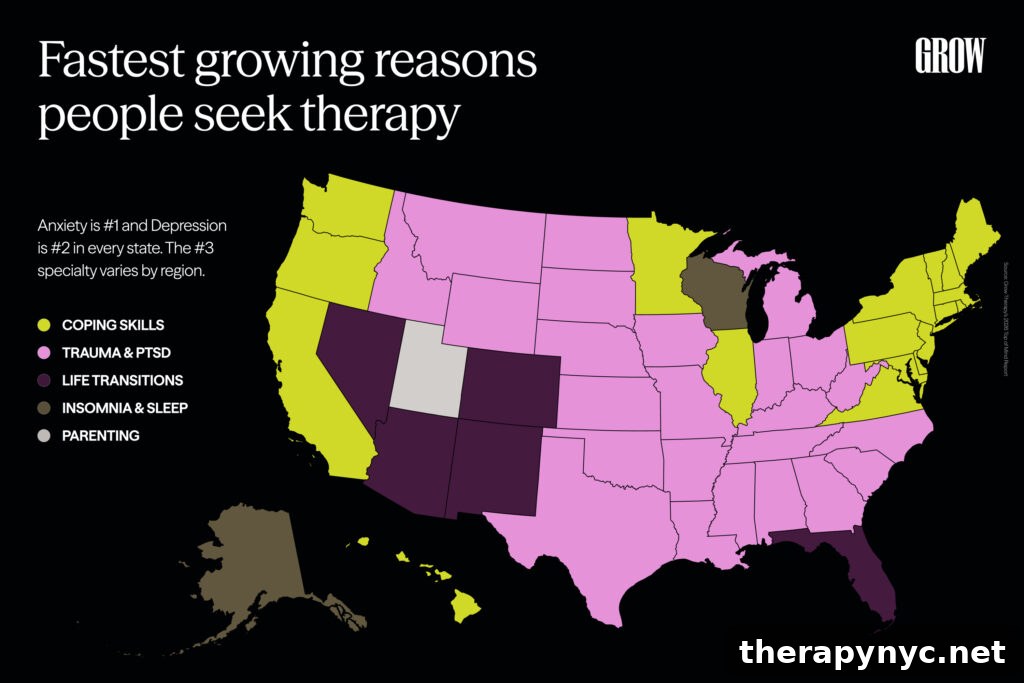
- Regional patterns differ: West Coast residents emphasize coping skills, Utah highlights parenting, Wisconsin reports insomnia concerns, and the South and Midwest see more trauma-related care.
- People report meaningful benefits from therapy, including greater optimism, stronger boundaries, improved relationships, better sleep, and increased creativity.
- Barriers related to stigma are now rare; access and affordability are improving, with fast appointment times and low average session costs for many.
NEW YORK, July 20, 2026 – Grow Therapy today released Top of Mind, a national report that analyzes how Americans seek mental health support, what issues they bring to therapy, and the outcomes they experience. The report combines Grow’s anonymized platform data representing 15 million patient hours with a nationally representative survey of 1,243 U.S. adults conducted by YouGov in November 2025. Together, these sources illuminate shifts in care-seeking, regional differences in needs, and the everyday role therapy plays in people’s lives.
The report finds that therapy is increasingly used for routine well-being and personal development, not only for crisis care. People are turning to therapy for life transitions, parenting, sleep issues, trauma recovery, and to build practical coping skills. The data suggest a broader cultural shift: mental health care is becoming more integrated into daily life through virtual sessions and flexible scheduling, while measurable improvements are occurring more quickly than many expect.
Among the findings
- Rising reasons for care: Life transitions were the fastest-growing reason for seeking therapy, increasing 168% year-over-year. Other rapidly growing topics included coping skills (+152%), trauma and PTSD (+152%), insomnia and sleep concerns (+151%), parenting (+145%), and postpartum issues (+128%).
- Most common benefits: Optimism was the single most frequently reported benefit, cited by 38% of therapy attendees. Respondents also reported stronger boundaries (34%), improved relationships (32%), better sleep and self-care (29%), greater creativity (23%), and enhanced work productivity (16%).
- Regional variation: Anxiety and depression remain the leading reasons for care nationwide, but other top searches vary by region. Coping skills dominated searches across much of the Northeast and West Coast; trauma and PTSD were more prevalent in large parts of the South and Midwest; life transitions were especially common in the Southwest and Florida; parenting stood out in Utah; and insomnia was notably common in Wisconsin and Alaska.
- Faster-than-expected progress: Many clients notice improvement quickly. More than two-thirds of people who reported improvement said they observed positive change within their first nine therapy sessions, and 28% reported improvement within four sessions.
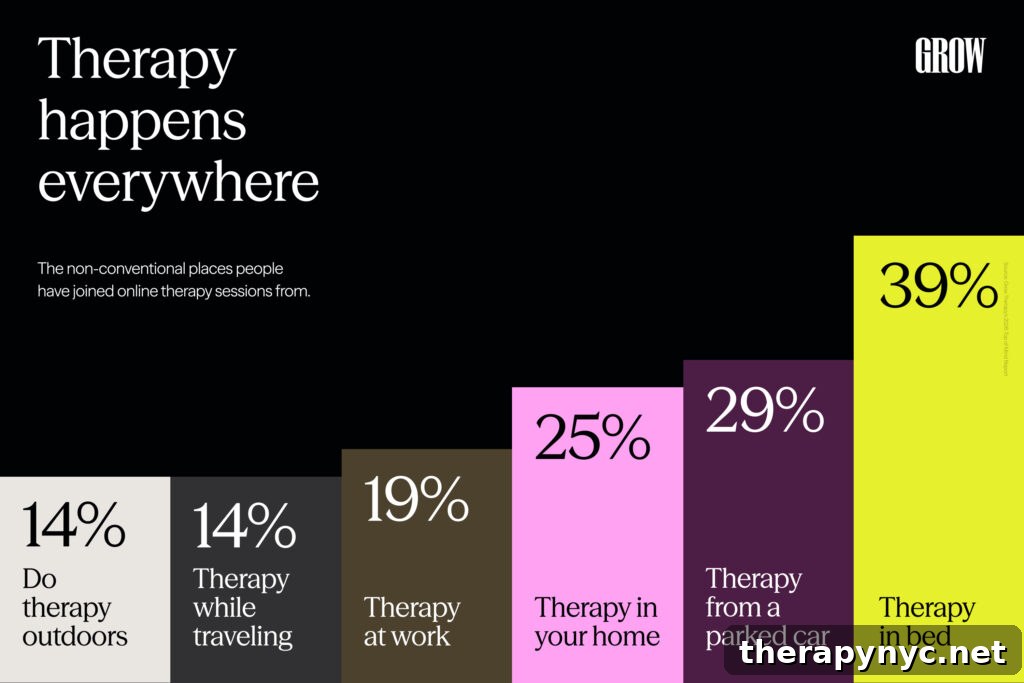
- Therapy fits modern life: Virtual care enables sessions from many everyday settings: 39% reported joining sessions from bed, 29% from parked cars, 19% from the workplace, 14% outdoors, and 14% while traveling. This flexibility reflects how teletherapy supports continuity of care.
- Access and affordability: Stigma is now a minimal barrier—only 2% of Americans not currently in therapy cited shame or stigma as a reason for not seeking help. On Grow’s platform the median wait for a first session is two days versus a 48-day national average, and the average session cost with private insurance, Medicaid, or Medicare on Grow is $21, with some clients receiving care at no cost.
“When we started Grow, we set out to build the kind of mental health care we’d want for our own loved ones: care that is easy to access, fits into real life, and helps people make progress,” said Jake Cooper, CEO and Co-Founder of Grow. “This report shows therapy is becoming exactly that for more people, whether they’re navigating a major life transition, building coping skills, improving sleep, or finding support in a way that works for them.”
The Top of Mind report offers a snapshot of evolving therapy trends and highlights practical implications for providers, employers, and policymakers focused on improving access to evidence-based mental health care. By combining platform activity with nationally representative survey data, the report aims to inform conversations about how to make therapy more timely, affordable, and effective for diverse communities across the United States.
Additional insights in the full report include generational breakdowns, seasonal patterns in therapy topics, and state-by-state summaries of what people are seeking from care. These findings can help clinicians tailor services, employers design supportive benefits, and communities plan targeted outreach where needs are growing.
Media Contact
Kristina McPherson [email protected]
Methodology
This analysis compares mental health trends between 2024 and 2025 using Grow’s internal platform data (representing 15 million patient hours) alongside a nationally representative YouGov survey of 1,243 U.S. adults conducted in November 2025. Survey results are weighted to reflect the U.S. adult population. The margin of error for the survey is approximately ±2.8 percentage points at the 95% confidence level.