Nearly Half of US Workers Cut or Cancel Vacations for Work

Summer is supposed to be a season for rest and recovery, but many people return from vacation feeling just as exhausted as when they left. New survey data shows that work stress often begins before time off even starts, and for many workers, that pre-vacation anxiety prevents real rest from ever arriving.
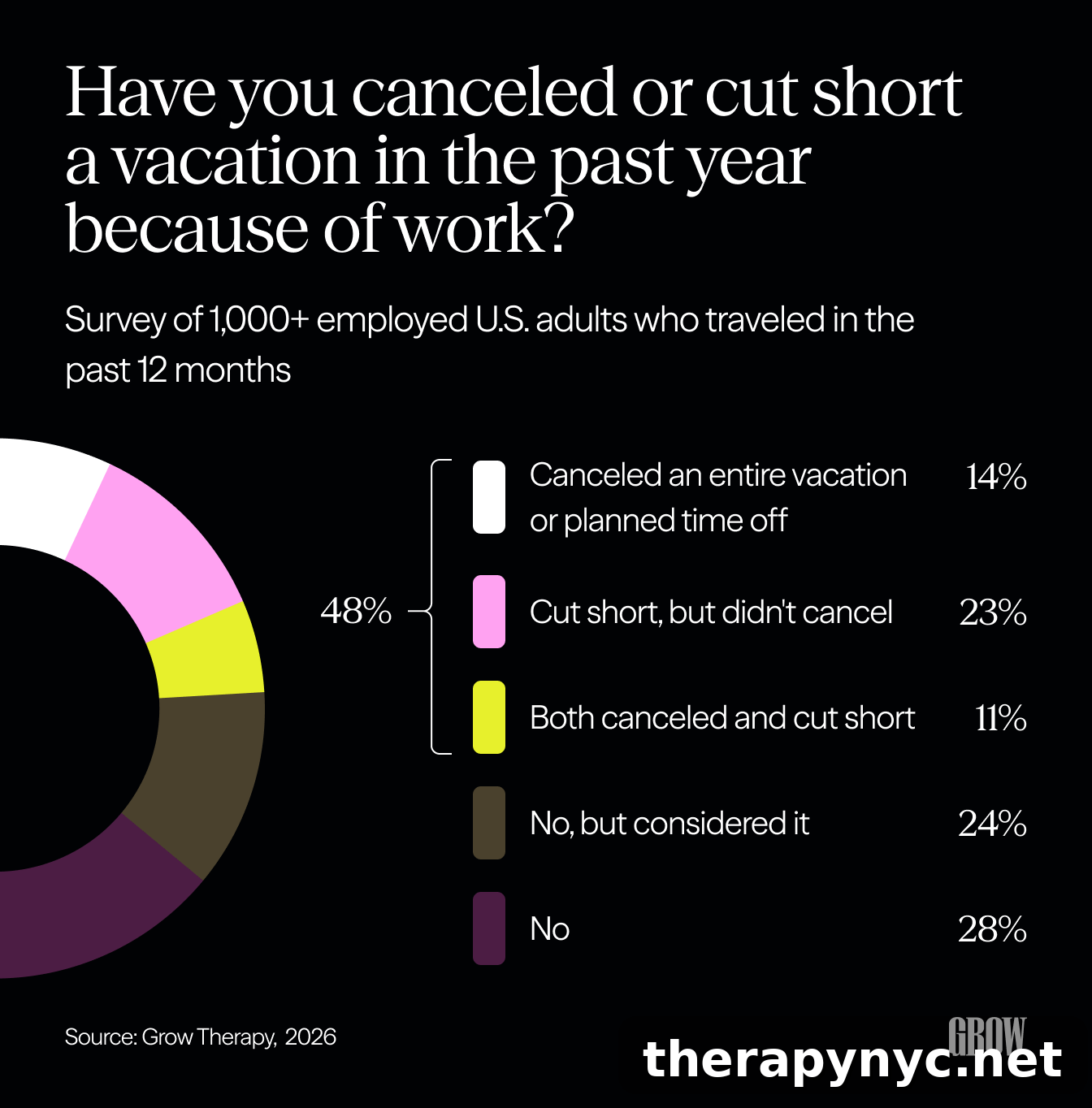
A national online survey of 1,035 employed U.S. adults who took vacation or extended time off in the past 12 months found clear patterns in how stress changes before, during, and after PTO. Nearly half (48%) of respondents say they’ve canceled an entire vacation, cut one short, or done both in the past year because work demands interfered.
“I think so many people feel anxious when taking time off, even if they know they’ve earned it, for the same reason people feel anxious sitting still or sitting in silence. As a society, we’ve gotten so used to scrolling, swiping, managing multiple screens, and functioning at such a fast pace that the stillness and the downtime can confuse our nervous system.”
Heather Rafanello, LCSW
Key takeaways
- Nearly half of respondents say they’ve canceled an entire vacation, cut one short, or done both in the past year because of work demands.
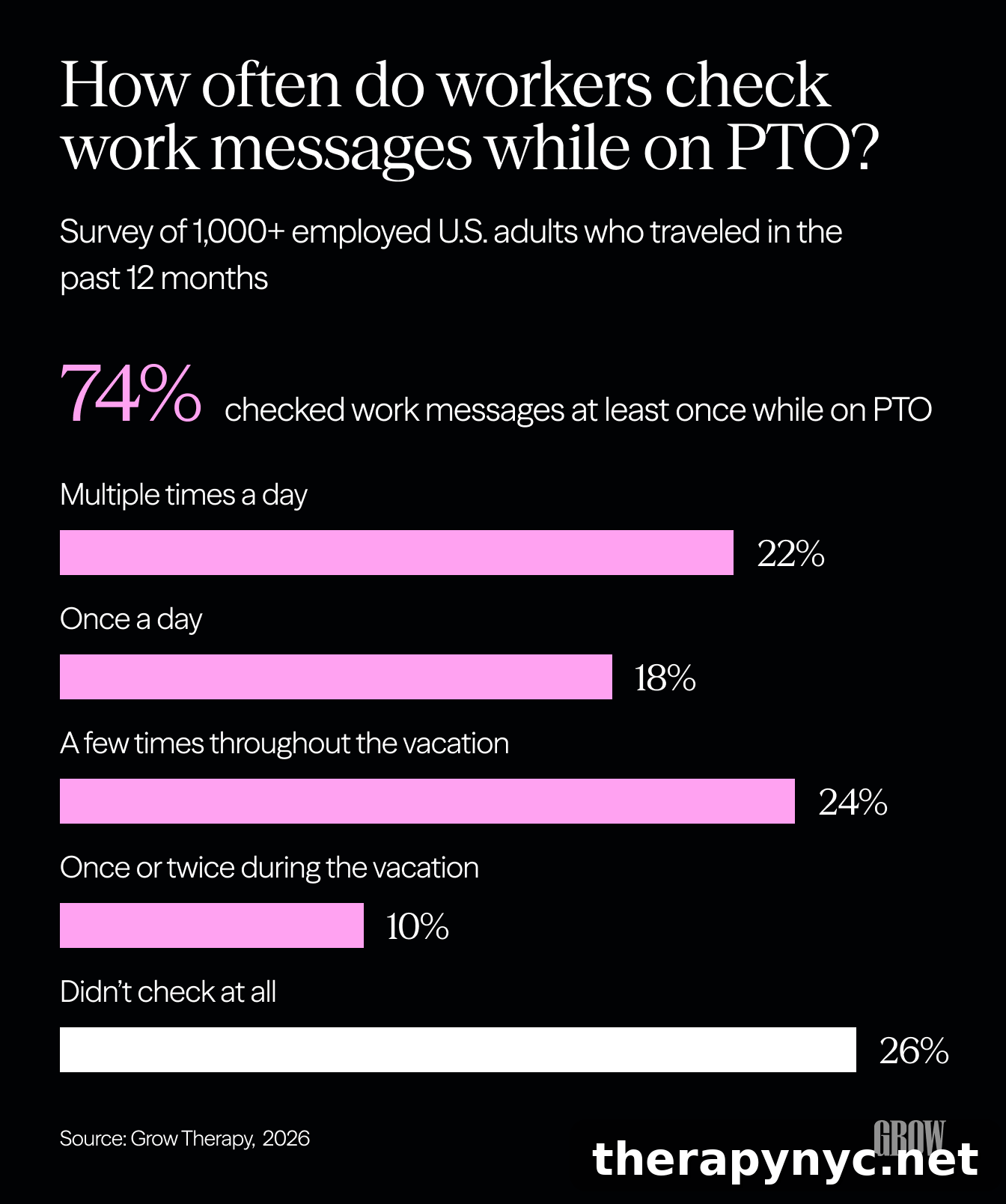
- 74% of employees check work messages while on vacation, with 40% of them checking at least once a day.
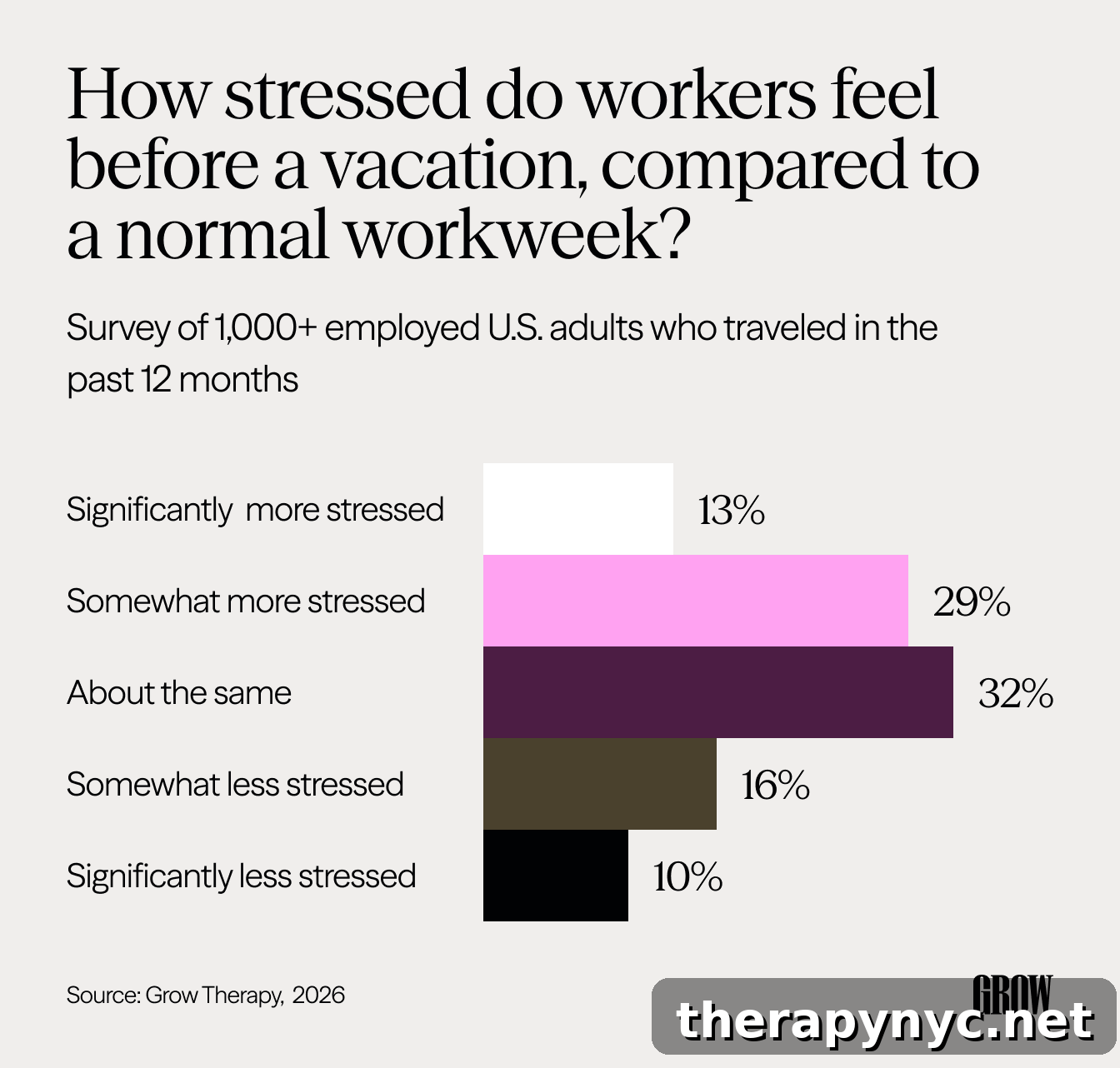
- 42% of workers feel more stressed in the week or two leading up to a vacation than during a typical workweek, and 47% returned from vacation feeling the same stress, or even worse.
- 68% would consider therapy to help them manage workplace stress and improve boundaries around time off.
Anxious workers skip vacation nearly twice as often as everyone else
Vacation should be the commitment you don’t break. Research has long linked time away from work with improved health, lower stress, and higher productivity, yet many workers still let job demands erode their plans. In this survey, 48% reported canceling, cutting short, or otherwise compromising their time off in the past year due to work.
Beyond workplace demands, practical pressures like cost and family responsibilities matter too: financial concerns about a trip affected 69% of respondents, and family or personal obligations at home affected 68%. Those layers of stress make it harder to prepare for time away and to fully disengage when the trip begins.
42% feel more stressed before vacation than during a normal workweek
The survey shows that stress commonly builds in the one to two weeks before a vacation: 42% of workers said they felt more stressed in that lead-up period than they do in a typical workweek. Those who felt significantly more stressed before their last vacation were much more likely to have canceled or shortened a trip in the past year (68% vs. 38% for those who felt less stressed).
These patterns repeat across different trips and different people, suggesting a recurring relationship between anxiety and time off rather than isolated incidents. That persistent pre-trip stress helps explain why 47% of workers return from vacation feeling the same level of stress or even worse.
Who feels this stress the most
Certain groups report higher pre-vacation stress. Parents with children under 18 are more likely to feel stressed before PTO (48%) compared with workers who don’t have caregiving responsibilities (36%). Caregivers for aging or ill family members report similar stress levels, indicating caregiving in general raises the logistical and emotional load ahead of time off.
Remote workers were more likely than hybrid workers to report significant pre-vacation stress (20% vs. 12%). Younger workers also reported higher levels of pre-trip stress: 44% of Gen Z respondents (ages 18–29) felt more stressed before their last vacation versus 33% of Gen X (ages 46–61). Gen Z was also more likely to have canceled or cut short a vacation in the past year (58% compared to 34% of Gen X), suggesting that anxiety about stepping away may ease as people gain experience in their careers.
The people who need rest the most struggle to unplug
Even when workers take vacation, many never fully disconnect. In the survey, 74% checked work messages at least once while on PTO, and 40% checked at least once a day. Remaining reachable—even briefly—keeps work in the background and undermines the restorative purpose of time away.
Those who were highly stressed before leaving checked messages far more often: respondents who felt very stressed beforehand checked multiple times a day at nearly five times the rate of those who felt only somewhat stressed (49% vs. 10%). Hybrid workers were the most likely arrangement to check messages during time off, followed by remote and in-office workers, making hybrid arrangements the hardest to fully step away from for many people.
“Do not bring your work phone/Slack/email unless you HAVE to. Set clear boundaries and a plan at work to support [with] feelings of guilt. Taking time to unplug literally takes practice and exposure!”
Alexandra Pelazza, LCSW
68% would consider therapy to learn how to manage workplace stress
Many workers view therapy as a helpful tool for building the boundaries and habits that make real rest possible. In the survey, 68% said they would consider therapy for work-related rest, boundary-setting, and burnout recovery. Interest was particularly high among those who felt the most stressed before vacation and among those who felt the least stressed, likely reflecting both acute need and confidence in preventive habits.
Among respondents who felt significantly more stressed before their most recent vacation, 55% said they’d definitely consider therapy, while 40% of those who felt significantly less stressed said the same. Fewer workers actually sought therapy to recover from work stress: only 19% reported doing so, while common responses for managing return-from-vacation fatigue were exercise (48%) and sleep (44%).
Therapy can help people develop clearer boundaries, build coping skills, and practice the exposure and habits required to unplug successfully. For many, professional guidance makes time off more restorative.
A few ways to protect time off before it starts
Practical boundaries put rest within reach. Below are small, practical steps that can reduce pre-trip stress and improve the chances of returning refreshed.
- Set clear work hours. Choose a start and end to your workday and communicate that to colleagues. When you consistently protect those hours, it becomes easier to stop working before a vacation.
- Treat PTO like any other work commitment. Block it on your calendar and treat it as nonnegotiable—like a client meeting—so others plan around your absence.
- Say no concisely. You don’t owe a long explanation for protecting your time. A brief, firm “no” sets the boundary without opening negotiation.
- Set expectations before leaving. Let your team know whether you will check messages, and, if so, how often. Use an out-of-office reply that states a return date and when you’ll respond, rather than an ambiguous “I’m out.”
- Limit devices and notifications. If possible, leave work devices at home or silence notifications. The fewer prompts you receive, the easier it becomes to be present and recover.
Rest needs more than just a day off
Time off doesn’t automatically become rest. Many workers carry stress into vacation and stay tethered to work through frequent message checks. Adding more vacation days won’t solve that if the habits and boundaries around work stay the same. The survey suggests the solution lies in shifting how people and organizations treat work—before, during, and after time away—so rest can actually happen.
Methodology
The survey was conducted online by Centiment with a total sample size of 1,035 employed U.S.-based adults aged 18 years old and older who have taken a vacation and/or extended time off in the past 12 months. The results are unweighted and have a ±3% margin of error. Fieldwork was undertaken from July 1 to July 9, 2026.